Loading...
Alexandre Petion vs Heydar Aliyev
Alexandre Petion leads by 0.0 pts · 2 figures compared
…

Alexandre Petion
Politician · Modern
59.0Total
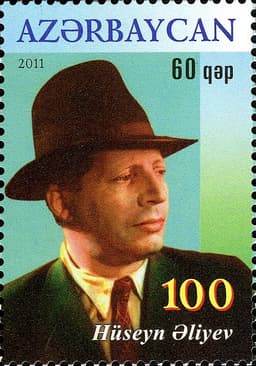
Heydar Aliyev
Politician · Modern
59.0Total
Basic Information
Born
1770
1923
Died
1818
—
Era
Modern
Modern
Nationality
Haiti
Azerbaijan
Occupation
Politician
Politician
Civilization
Other
Eastern
Score Comparison
Military (10%)
45.0
38.3
Political (20%)
70.0
70.0
Influence (20%)
60.0
62.0
Legacy (20%)
50.0
52.0
Leadership (15%)
70.0
78.0
Strategy (15%)
60.0
45.0
TOTAL
59.0
59.0
Alexandre Petion — Complete Timeline
1806 AD
Elected President of the Republic of HaitiPolitical Action◆ Major
Alexandre Petion was elected President of the Republic of Haiti after the assassination of Emperor Jacques I. He led the southern part of the country, while Henri Christophe ruled the north.
PresidencyHaitiRepublic
Impact: national
1809 AD
Land Reform PolicyReform◆ Major
Petion implemented a land reform policy that redistributed large estates to small farmers. This created a class of peasant smallholders but also led to economic stagnation and reduced agricultural exports.
Land ReformAgricultureEconomy
Impact: nationalconstructive
1815 AD
Supported Simón Bolívar's Independence CampaignPolitical Action◆ Major
Petion provided asylum, financial aid, and military support to Sim
Simón BolívarIndependenceSlavery Abolition
Impact: globalconstructive
Heydar Aliyev — Complete Timeline
1993 AD
Became President of AzerbaijanPolitical Action◆ Major
Heydar Aliyev was elected President of Azerbaijan after a military coup ousted the previous government. He had previously served as a KGB general and First Secretary of the Communist Party of Azerbaijan. His presidency stabilized the country after the chaos of the post-Soviet period and the Nagorno-Karabakh war.
Rise to PowerPost-Soviet TransitionStabilization
Impact: national
1994 AD
Negotiated Ceasefire in Nagorno-KarabakhWar◆ Major
Aliyev brokered a ceasefire agreement with Armenia, ending the active phase of the Nagorno-Karabakh war. The ceasefire left Armenia in control of the disputed region and surrounding territories. Aliyev used the ceasefire to consolidate power and begin rebuilding the Azerbaijani military.
CeasefireNagorno-KarabakhConflict Resolution
Impact: regional
Signed 'Contract of the Century'Political Action◆ Major
Aliyev signed a major oil production sharing agreement with a consortium of international oil companies, known as the 'Contract of the Century.' The deal opened Azerbaijan's oil sector to foreign investment and laid the foundation for the country's economic growth. It was a key element of his economic strategy.
Oil AgreementForeign InvestmentEconomic Development
Impact: globalconstructive
1995 AD
Established Authoritarian RegimePolitical Action◆ Major
Aliyev consolidated authoritarian rule by suppressing political opposition, controlling the media, and rigging elections. He amended the constitution to extend presidential powers and ensure his continued rule. His regime was characterized by nepotism and corruption, but also provided stability.
AuthoritarianismPolitical RepressionCorruption
Impact: nationaldestructive
2003 AD
Appointed Son as Prime MinisterPolitical Action◆ Major
Heydar Aliyev appointed his son Ilham Aliyev as Prime Minister of Azerbaijan, setting the stage for a dynastic succession. Heydar's health was failing, and he stepped down as president later that year, with Ilham winning the subsequent election. This established the Aliyev family's political dynasty.
Dynastic SuccessionPolitical DynastyPower Transfer
Impact: national
Expert Analysis
Origins
Alexandre Petion was born in 1770 in Port-au-Prince, Saint-Domingue (modern Haiti). His father was a French colonist and his mother a free woman of color. Petion was educated in France, where he absorbed Enlightenment ideals. He returned to Saint-Domingue and joined the free colored militias, later aligning with the Haitian Revolution. Heydar Aliyev was born in 1923 in Nakhchivan, Azerbaijan, then part of the Soviet Union. His father was a railway worker. Aliyev joined the Communist Party and the KGB, rising through the ranks. He graduated from the Azerbaijan State University and later studied at the KGB's Higher School in Moscow.
Rise to Power
Petion rose to prominence during the Haitian Revolution. He fought under Toussaint Louverture and later under Jean-Jacques Dessalines. After Dessalines' assassination in 1806, Petion became president of the southern Republic of Haiti, while Henri Christophe ruled the north. Aliyev's rise came through the Soviet apparatus. He became First Secretary of the Communist Party of Azerbaijan in 1969, a position he held until 1982. He then served as First Deputy Premier of the USSR. After the Soviet Union's collapse, Aliyev returned to power in 1993, being elected president following a military coup that ousted the previous government.
Leadership & Governance
Petion governed the southern part of Haiti from 1806 to 1818. He implemented land reform, breaking up large estates and distributing land to small farmers. This created a peasant smallholder class but led to economic stagnation and low agricultural productivity. Petion also established a liberal constitution with a strong legislature, but his rule was marked by political instability and conflict with Christophe's northern kingdom. Aliyev's governance was authoritarian. He suppressed political opposition, controlled the media, and rigged elections. He amended the constitution to extend presidential term limits and appointed his son Ilham as prime minister in 2003. His economic policy focused on oil, signing the "Contract of the Century" in 1994 with foreign oil companies, which brought significant revenue but increased dependency on hydrocarbons.
Triumph & Tragedy
Petion's greatest triumph was his support for Simón Bolívar. In 1815, he provided asylum, arms, and financial aid to Bolívar in exchange for Bolívar's promise to abolish slavery in the territories he liberated. This aid was crucial for Bolívar's eventual success in South America. Petion's tragedy was Haiti's economic decline due to his land reform and isolation. The fragmentation of land into small plots and the international recognition of Christophe's kingdom weakened Haiti. Aliyev's triumph was brokering a ceasefire in the Nagorno-Karabakh war in 1994, ending active hostilities. He also stabilized Azerbaijan's economy through oil contracts. His tragedy was the entrenchment of authoritarianism and corruption, and the failure to regain Nagorno-Karabakh, leaving it under Armenian control. The ceasefire did not resolve the conflict, and the region remained a frozen conflict.
Character & Destiny
Petion was a liberal reformer, committed to equality and democracy, but his idealism clashed with Haiti's harsh realities. He scored 70.0 in leadership and 60.0 in strategy, reflecting his ability to inspire but limited tactical acumen. Aliyev was a pragmatic autocrat, skilled at navigating Soviet and post-Soviet politics. He scored 78.0 in leadership and 45.0 in strategy. His KGB background made him cautious and secretive, focusing on consolidation of power rather than bold reforms. Petion's destiny was to be remembered as a founding father of Haiti and a supporter of Latin American independence, while Aliyev's destiny was to shape modern Azerbaijan as an oil-rich, authoritarian state.
Legacy
Petion's legacy is mixed. In Haiti, he is remembered for land reform and democratic ideals, but also for economic stagnation. His support for Bolívar is celebrated in Latin America, where he is seen as a key figure in the fight against slavery. His influence score is 60.0. Aliyev's legacy is one of stability and economic growth through oil, but at the cost of political freedoms. He established a dynastic succession, with his son Ilham continuing his rule. His legacy score is 52.0. The "Contract of the Century" transformed Azerbaijan into an energy exporter, but also tied its economy to volatile oil prices.
Conclusion
Alexandre Petion, with a total score of 59.0, had a broader ideological impact, aiding Bolívar and promoting anti-slavery ideals, but his domestic policies failed to create sustainable development. Heydar Aliyev, also scoring 59.0, had a more tangible impact on Azerbaijan's geopolitical and economic trajectory, stabilizing the country and securing oil wealth. However, his authoritarian methods and lack of democratic progress limit his legacy. In terms of lasting global influence, Petion's support for Bolívar and his role in Haiti's early republic give him a slight edge. His ideas of land reform and abolition resonated beyond Haiti. Aliyev's achievements were more localized and pragmatic. Therefore, Petion had a greater impact on the broader course of history, despite similar total scores.
Rankings
🥇
Alexandre PetionLeader
Mil: 45.0Pol: 70.0Inf: 60.0
59.0
🥈
Heydar Aliyev
Mil: 38.3Pol: 70.0Inf: 62.0
59.0
How This Comparison Works
Algorithm
Each figure is scored on 6 dimensions (0—100 scale) based on structured historical data: Military (10%), Political (20%), Influence (20%), Legacy (20%), Leadership (15%), Strategy (15%). The weighted total produces the final ranking.
Data Sources
Scores are computed from structured sub-indicators in the database. Scale factors adjust for era (Ancient ×0.85, Modern ×1.0) and civilization size (Eastern ×1.05, Other ×0.80) to account for differences in population and military scale.
Maximum 3 Figures
Comparisons are limited to 2—3 figures to ensure readability and statistical meaningfulness.
Error Margins
±5 points per dimension — Sub-scores are derived from historical records with inherent uncertainty. Two figures within 5 points on a dimension should be considered roughly equivalent in that area.
Total Score Accuracy
±3 points overall — The weighted combination of 6 dimensions produces a total score with approximately ±3 points of uncertainty. Differences of less than 3 points are not statistically significant— the figures are effectively tied.
Known Limitations
- Historical records are incomplete and uneven across civilizations
- Figures from oral-tradition societies may be underrepresented
- Occupation labels can misclassify multi-role figures
- Scores measure capability and impact, not moral character
- Quantitative scoring is a comparison tool, not absolute truth
Capability Radar
Military (10%) — Battles & Warfare
Battles
40
5
Win Rate
45
5
Expansion
30
10
Political (20%) — Governance & Reform
Reform
70
70
Diplomacy
65
75
Economy
50
70
Influence (20%) — Cultural & Global Reach
Cultural
50
55
Global
50
55
Legacy (20%) — Historical Impact
Historical
55
60
Longevity
45
50
Leadership (15%) — Power & Stability
Tenure
55
75
Stability
40
65
Strategy (15%) — Tactics & Innovation
Strategy
55
15
Tactics
50
10
Reform
60
20
Similar Comparisons
Comments & Discussion
No comments yet. Be the first to share your thoughts!