Loading...
Alfonso I of Aragon vs Gwangjong of Goryeo
Alfonso I of Aragon leads by 2.3 pts · 2 figures compared
…
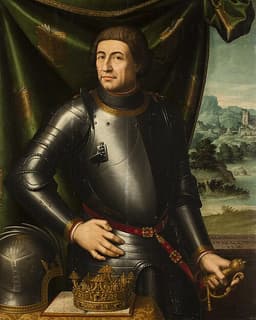
Alfonso I of Aragon
Emperor · Medieval
57.2Total
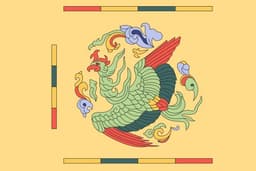
Gwangjong of Goryeo
Emperor · Medieval
54.9Total
Basic Information
Born
1073
925
Died
1134
975
Era
Medieval
Medieval
Nationality
Aragon
Korea
Occupation
Emperor
Emperor
Civilization
Western
Eastern
Score Comparison
Military (10%)
60.0
38.3
Political (20%)
48.0
59.3
Influence (20%)
55.7
55.7
Legacy (20%)
49.2
52.0
Leadership (15%)
74.0
62.0
Strategy (15%)
66.3
60.0
TOTAL
57.2
54.9
Alfonso I of Aragon — Complete Timeline
1109 AD
Marriage to Urraca of Leon and CastilePolitical Action◆ Major
Alfonso I married Queen Urraca of Leon and Castile, uniting the kingdoms of Aragon, Navarre, Leon, and Castile. The union was politically unstable, leading to conflict with Urraca and the Church, and was annulled by the Pope in 1114.
MarriagePolitical UnionConflict
Impact: regional
1118 AD
Conquest of ZaragozaWar◆ Major
Alfonso I led a coalition of Aragonese, Navarrese, and French crusaders to capture the city of Zaragoza from the Almoravid Moors. This victory made Zaragoza the capital of Aragon and significantly expanded Christian territory in the Ebro valley.
ReconquistaConquestAragon
Impact: regionalconstructive
1120 AD
Battle of CutandaWar◆ Major
Alfonso I defeated a large Almoravid army at Cutanda, near Calamocha. This victory consolidated Christian control over the Ebro valley and opened the way for further Aragonese advances into Moorish territory.
ReconquistaBattleAragon
Impact: regionalconstructive
1134 AD
Battle of FragaWar◆ Major
Alfonso I was defeated and killed by Almoravid forces near Fraga while attempting to besiege the town. His death without direct heirs led to a succession crisis in Aragon and Navarre, separating the two kingdoms.
ReconquistaBattleDeath
Impact: regionaltragic
Gwangjong of Goryeo — Complete Timeline
956 AD
Promulgation of the Slave Emancipation DecreeReform
King Gwangjong issued a decree freeing thousands of slaves and commoners who had been unjustly enslaved. This reform weakened the power of the aristocratic clans, strengthened the central monarchy, and increased the tax-paying population of Goryeo.
Social ReformSlaveryGoryeo
Impact: nationalprogressive
958 AD
Implementation of the Civil Service Examination SystemReform
Gwangjong introduced a Chinese-style civil service examination (gwageo) to select government officials based on merit rather than birth. This reform reduced the influence of the entrenched aristocracy and promoted a more centralized, bureaucratic state.
Bureaucratic ReformMeritocracyGoryeo
Impact: nationalprogressive
960 AD
Purge of the Aristocratic FactionsPolitical Action◆ Major
King Gwangjong ordered the execution or exile of numerous powerful nobles and their families, including many who had opposed his reforms. This violent purge eliminated opposition to his centralization policies but created a climate of fear and resentment among the elite.
PurgePolitical RepressionGoryeo
Impact: nationaldestructive
Expert Analysis
Origins
Alfonso I of Aragon (born 1073) was the second son of King Sancho Ramírez of Aragon and Navarre. Raised in a frontier kingdom constantly at war with Muslim taifas, Alfonso learned military tactics early. His older brother Pedro I died in 1104, leaving Alfonso heir to a realm already expanded by his father's campaigns. Gwangjong of Goryeo (born 925) was the fourth son of King Taejo, founder of the Goryeo dynasty. His mother was Queen Janghwa, and he grew up amid the consolidation of a newly unified Korean peninsula, where powerful aristocratic clans posed constant threats to royal authority.
Rise to Power
Alfonso I inherited the throne of Aragon and Navarre in 1104. He immediately launched campaigns against the Almoravids, achieving a major victory at the Battle of Valtierra in 1105. His reputation soared after the conquest of Zaragoza in 1118, a key city that had been under Muslim control for centuries. He led a coalition including Pope Gelasius II's crusaders and captured the city after a siege. In 1120, he defeated a large Almoravid army at Cutanda, securing the Ebro valley. Gwangjong became king in 949 after his half-brother Jeongjong died without an heir. He faced entrenched aristocratic families who had accumulated power through land grants and slave-holding. To strengthen royal authority, he began plotting reforms. In 956, he issued the Slave Emancipation Decree, freeing thousands of slaves and commoners who had been enslaved illegally, undermining the economic base of the nobles.
Leadership & Governance
Alfonso I was a warrior king who led from the front. His leadership style was direct and aggressive, focusing on military expansion. He granted fueros (charters) to towns like Zaragoza to secure loyalty, but his governance was largely reactive to war needs. His marriage to Queen Urraca of León and Castile in 1109 was a political disaster, leading to civil war as he tried to claim her lands. He spent years fighting his wife and her supporters, diverting resources from the Reconquista. Gwangjong was a reformer who used institutional changes to centralize power. He introduced the civil service examination (gwageo) in 958, based on the Chinese model, to select officials by merit rather than birth. This weakened the aristocracy and created a loyal bureaucracy. He also purged opposing nobles in a series of bloody executions and exiles (e.g., in 960, he executed several key figures). His governance was methodical but ruthless.
Triumph & Tragedy
Alfonso I's greatest triumph was the conquest of Zaragoza in 1118, a city that became the capital of the Kingdom of Aragon. This victory opened the Ebro valley to Christian settlement and boosted his prestige. His tragedy came at the Battle of Fraga in 1134, where he was defeated and killed by Almoravid forces while besieging the town. His death without direct heirs led to a succession crisis, splitting his kingdoms. Gwangjong's triumph was the successful implementation of the Slave Emancipation Decree and the gwageo, which laid the foundation for a stronger monarchy. His tragedy was the violent purge of the aristocracy, which created lasting resentment and instability. After his death in 975, his reforms were partially reversed by his successors.
Character & Destiny
Alfonso I was impulsive and driven by martial glory. His decision to marry Urraca showed poor political judgment, as he sought to control her kingdoms through force rather than diplomacy. His character as a 'battler' (El Batallador) defined his reign: he won battles but lost the peace. Gwangjong was calculating and ruthless. He systematically dismantled aristocratic power, but his paranoia led to excessive violence. According to the Goryeosa, he executed even loyal officials on suspicion. His character was shaped by the constant threat of rebellion, and his destiny was to reform but not fully stabilize the kingdom.
Legacy
Alfonso I's legacy is mixed. He expanded Aragon's territory significantly, but his failure to produce an heir led to the separation of Aragon and Navarre. His conquests paved the way for later Aragonese expansion under James I. He scored 49.2 in legacy. Gwangjong's legacy is more institutional. The civil service examination system continued in Korea for centuries, and his slave reforms reduced the power of the aristocracy. He is remembered as a strong king who strengthened the monarchy. He scored 52.0 in legacy.
Conclusion
While Alfonso I scored higher overall (57.2 vs 54.9), Gwangjong had greater long-term impact. Alfonso's military victories (60.0 military) were impressive but temporary, as his kingdom fragmented after his death. Gwangjong's political and institutional reforms (59.3 political) created a framework for centralized governance that influenced Korea for centuries. The civil service exam and slave emancipation were transformative, whereas Alfonso's conquests were part of a broader Reconquista that would continue with or without him. Thus, Gwangjong's legacy is more enduring and significant.
Rankings
🥇
Alfonso I of AragonLeader
Mil: 60.0Pol: 48.0Inf: 55.7
57.2
🥈
Gwangjong of Goryeo
Mil: 38.3Pol: 59.3Inf: 55.7
54.9
+2.3 behind
How This Comparison Works
Algorithm
Each figure is scored on 6 dimensions (0—100 scale) based on structured historical data: Military (10%), Political (20%), Influence (20%), Legacy (20%), Leadership (15%), Strategy (15%). The weighted total produces the final ranking.
Data Sources
Scores are computed from structured sub-indicators in the database. Scale factors adjust for era (Ancient ×0.85, Modern ×1.0) and civilization size (Eastern ×1.05, Other ×0.80) to account for differences in population and military scale.
Maximum 3 Figures
Comparisons are limited to 2—3 figures to ensure readability and statistical meaningfulness.
Error Margins
±5 points per dimension — Sub-scores are derived from historical records with inherent uncertainty. Two figures within 5 points on a dimension should be considered roughly equivalent in that area.
Total Score Accuracy
±3 points overall — The weighted combination of 6 dimensions produces a total score with approximately ±3 points of uncertainty. Differences of less than 3 points are not statistically significant— the figures are effectively tied.
Known Limitations
- Historical records are incomplete and uneven across civilizations
- Figures from oral-tradition societies may be underrepresented
- Occupation labels can misclassify multi-role figures
- Scores measure capability and impact, not moral character
- Quantitative scoring is a comparison tool, not absolute truth
Capability Radar
Military (10%) — Battles & Warfare
Battles
70
30
Win Rate
75
40
Expansion
65
30
Political (20%) — Governance & Reform
Reform
45
85
Diplomacy
50
60
Economy
40
65
Influence (20%) — Cultural & Global Reach
Cultural
40
45
Global
35
30
Legacy (20%) — Historical Impact
Historical
55
60
Longevity
40
50
Leadership (15%) — Power & Stability
Tenure
60
70
Stability
45
55
Strategy (15%) — Tactics & Innovation
Strategy
70
40
Tactics
65
35
Reform
40
50
Similar Comparisons
Comments & Discussion
No comments yet. Be the first to share your thoughts!