Loading...
Alfonso I of Asturias vs Edward the Confessor
Edward the Confessor leads by 5.6 pts · 2 figures compared
…

Alfonso I of Asturias
Emperor · Medieval
44.6Total
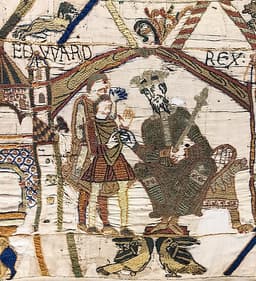
Edward the Confessor
Emperor · Medieval
50.2Total
Basic Information
Born
693
1003
Died
757
1066
Era
Medieval
Medieval
Nationality
Asturias
England
Occupation
Emperor
Emperor
Civilization
Western
Western
Score Comparison
Military (10%)
55.0
20.0
Political (20%)
27.9
45.1
Influence (20%)
49.4
57.2
Legacy (20%)
42.5
52.0
Leadership (15%)
51.9
64.0
Strategy (15%)
41.7
45.0
TOTAL
44.6
50.2
Alfonso I of Asturias — Complete Timeline
730 AD
Married Ermesinda, daughter of PelagiusPolitical Action
Alfonso married Ermesinda, the daughter of Pelagius, the first king of Asturias. This marriage allied him with the founding dynasty and legitimized his claim to the throne, which he later inherited after Pelagius's death.
MarriageDynastyAsturias
Impact: nationalconstructive
740 AD
Expanded the Kingdom of Asturias into Galicia and LeónWar◆ Major
Alfonso I launched military campaigns that extended Asturian control over Galicia, Le
Territorial ExpansionAsturiasReconquista
Impact: regionalconstructive
750 AD
Established the policy of depopulating the Duero ValleyPolitical Action◆ Major
Alfonso I implemented a strategy of depopulating the Duero River valley by relocating Christian populations northward. This created a buffer zone between Asturias and Muslim-controlled lands, hindering Umayyad incursions and shaping the region's demographic landscape.
Demographic PolicyAsturiasReconquista
Impact: regionaldestructive
Edward the Confessor — Complete Timeline
1043 AD
Coronation of Edward the ConfessorPolitical Action◆ Major
Edward was crowned king of England at Winchester Cathedral on April 3, 1043. His reign marked the restoration of the Anglo-Saxon monarchy after 27 years of Danish rule.
CoronationRestorationAnglo-Saxon
Impact: nationalconstructive
1045 AD
Construction of Westminster AbbeyCultural◆ Major
Edward began rebuilding Westminster Abbey in the Norman Romanesque style. The abbey was consecrated in 1065, just before his death, and became the coronation church of English monarchs.
ArchitectureReligionLegacy
Impact: nationalconstructive
1051 AD
Conflict with Godwin of WessexPolitical Action◆ Major
Edward exiled Earl Godwin and his sons after a dispute over the treatment of Norman favorites. Godwin returned with a fleet in 1052, forcing Edward to restore their lands and power.
ExilePower StruggleGodwin
Impact: nationaldestructive
Promise of Throne to William of NormandyPolitical Action◆ Major
Edward allegedly promised the English throne to his cousin William, Duke of Normandy, during a visit by William to England. This promise later became the basis for William's claim to the throne.
SuccessionNorman ClaimPromise
Impact: regional
1066 AD
Death of Edward the ConfessorPolitical Action
Edward died on January 5, 1066, at Westminster. His death without a clear heir triggered a succession crisis, leading to the Norman Conquest of England later that year.
DeathSuccession CrisisNorman Conquest
Impact: globaltragic
Expert Analysis
Origins
Alfonso I of Asturias, born around 693, was the son of Duke Peter of Cantabria. His early life is obscure, but he married Ermesinda, daughter of Pelagius, the first king of Asturias, linking him to the founding dynasty. Edward the Confessor, born around 1003, was the son of King Æthelred the Unready and Emma of Normandy. He spent much of his youth in exile in Normandy after the Danish conquest of England. Both men inherited precarious situations: Alfonso a small mountain kingdom, Edward a kingdom recently recovered from Danish rule.
Rise to Power
Alfonso I became king of Asturias in 739 after the death of his brother-in-law, Favila. His marriage to Ermesinda gave him legitimacy, and he quickly launched campaigns to expand Asturian control. Edward's rise was more complex: he was recalled from exile in 1041 by King Harthacnut, who made him co-ruler. Upon Harthacnut's death in 1042, Edward was crowned king at Winchester on April 3, 1043. His reign marked the restoration of the Anglo-Saxon monarchy after 27 years of Danish rule.
Leadership & Governance
Alfonso I was a military leader focused on territorial expansion. He launched campaigns into Galicia and León, taking advantage of internal Muslim conflicts. His most notable policy was depopulating the Duero River valley: he relocated Christian populations northward, creating a buffer zone between Asturias and Muslim-controlled lands. This strategy scored 41.7 in strategy, reflecting its long-term impact but also its harshness. In contrast, Edward the Confessor focused on consolidating his rule through diplomacy and religious patronage. He faced conflicts with powerful earls, especially Godwin of Wessex, whom he exiled in 1051 only to be forced to restore him in 1052. Edward's political score of 45.1 reflects his struggles with the nobility. He also began rebuilding Westminster Abbey in the Norman Romanesque style, consecrated in 1065, which became his lasting architectural legacy.
Triumph & Tragedy
Alfonso I's greatest success was expanding the Kingdom of Asturias to include Galicia and León, laying the groundwork for the Reconquista. His depopulation policy created a buffer zone that hindered Muslim raids for centuries. However, his strategy also caused suffering for relocated populations and left the Duero valley largely empty for generations. Edward the Confessor's reign was relatively peaceful, but his greatest failure was his lack of a clear heir. His death on January 5, 1066, triggered a succession crisis that led to the Norman Conquest. Edward's alleged promise of the throne to William of Normandy became a key justification for the invasion. His score of 52.0 in legacy reflects how his death changed English history.
Character & Destiny
Alfonso I was a pragmatic and ruthless ruler, willing to sacrifice short-term comfort for long-term security. His depopulation policy shows a calculating mind focused on strategic advantage. Edward the Confessor was more pious and conciliatory, earning his nickname "Confessor" for his religious devotion. His tendency to favor Norman advisors alienated English nobles, leading to the Godwin crisis. Edward's character, while personally devout, contributed to political instability. Alfonso's leadership score of 51.9 reflects his effective but harsh governance; Edward's 64.0 indicates his ability to maintain peace, albeit at a cost.
Legacy
Alfonso I's legacy is the expansion of Asturias into a major Christian kingdom that would eventually become León and Castile. His depopulation policy shaped the demographic and military landscape of northern Iberia for centuries. Edward the Confessor's legacy is more indirect: his death triggered the Norman Conquest, which brought feudalism, the English language's transformation, and a new ruling class. Westminster Abbey remains a symbol of his reign. Edward's overall score of 50.2 slightly edges out Alfonso's 44.6, but this reflects different metrics: Edward's influence (57.2) and legacy (52.0) are higher, while Alfonso scores better in military (55.0) and strategy (41.7).
Conclusion
Edward the Confessor had greater impact on world history. While Alfonso I's expansion was crucial for the Reconquista, Edward's death directly led to the Norman Conquest, which fundamentally altered English language, law, and society. Edward's influence score of 57.2 versus Alfonso's 49.4 supports this. Alfonso's military achievements were significant but regional, whereas Edward's legacy is global through the spread of Norman institutions. Therefore, Edward the Confessor's historical impact surpasses Alfonso I of Asturias.
Rankings
🥇
Edward the ConfessorLeader
Mil: 20.0Pol: 45.1Inf: 57.2
50.2
🥈
Alfonso I of Asturias
Mil: 55.0Pol: 27.9Inf: 49.4
44.6
+5.6 behind
How This Comparison Works
Algorithm
Each figure is scored on 6 dimensions (0—100 scale) based on structured historical data: Military (10%), Political (20%), Influence (20%), Legacy (20%), Leadership (15%), Strategy (15%). The weighted total produces the final ranking.
Data Sources
Scores are computed from structured sub-indicators in the database. Scale factors adjust for era (Ancient ×0.85, Modern ×1.0) and civilization size (Eastern ×1.05, Other ×0.80) to account for differences in population and military scale.
Maximum 3 Figures
Comparisons are limited to 2—3 figures to ensure readability and statistical meaningfulness.
Error Margins
±5 points per dimension — Sub-scores are derived from historical records with inherent uncertainty. Two figures within 5 points on a dimension should be considered roughly equivalent in that area.
Total Score Accuracy
±3 points overall — The weighted combination of 6 dimensions produces a total score with approximately ±3 points of uncertainty. Differences of less than 3 points are not statistically significant— the figures are effectively tied.
Known Limitations
- Historical records are incomplete and uneven across civilizations
- Figures from oral-tradition societies may be underrepresented
- Occupation labels can misclassify multi-role figures
- Scores measure capability and impact, not moral character
- Quantitative scoring is a comparison tool, not absolute truth
Capability Radar
Military (10%) — Battles & Warfare
Battles
30
5
Win Rate
35
5
Expansion
40
5
Political (20%) — Governance & Reform
Reform
20
40
Diplomacy
25
45
Economy
20
40
Influence (20%) — Cultural & Global Reach
Cultural
20
30
Global
15
55
Legacy (20%) — Historical Impact
Historical
30
70
Longevity
25
60
Leadership (15%) — Power & Stability
Tenure
35
60
Stability
30
35
Strategy (15%) — Tactics & Innovation
Strategy
30
5
Tactics
25
5
Reform
20
5
Similar Comparisons
Comments & Discussion
No comments yet. Be the first to share your thoughts!