Loading...
This comparison has not been analyzed yet.
One-time AI generation (~1 minute). Scores and timeline are already available below.
Ali Hassan Mwinyi vs Chang Myon
Ali Hassan Mwinyi leads by 9.6 pts · 2 figures compared
…

Ali Hassan Mwinyi
Politician · Modern
51.4Total
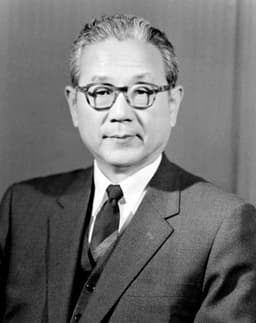
Chang Myon
Politician · Modern
41.8Total
Basic Information
Born
1925
1899
Died
—
1966
Era
Modern
Modern
Nationality
Tanzania
South Korea
Occupation
Politician
Politician
Civilization
Other
Eastern
Score Comparison
Military (10%)
44.7
12.0
Political (20%)
55.0
43.7
Influence (20%)
54.1
47.9
Legacy (20%)
45.0
40.8
Leadership (15%)
66.0
55.3
Strategy (15%)
39.6
35.6
TOTAL
51.4
41.8
Ali Hassan Mwinyi — Complete Timeline
1985 AD
Economic liberalization reformsReform◆ Major
Upon becoming President of Tanzania in 1985, Mwinyi initiated economic liberalization policies, moving away from the socialist Ujamaa system. He introduced market-oriented reforms, including devaluation of the currency, removal of price controls, and encouragement of private enterprise, which shifted Tanzania's economy towards capitalism.
Economic ReformLiberalizationTanzania
Impact: nationalconstructive
Presidency of TanzaniaPolitical Action◆ Major
Mwinyi succeeded Julius Nyerere as President of Tanzania in 1985, serving two terms until 1995. His presidency marked a transition from socialist policies to economic liberalization and political pluralism, though he faced criticism for corruption and economic difficulties.
PresidencyTransitionTanzania
Impact: national
1991 AD
Signing of the Zanzibar DeclarationPolitical Action◆ Major
Mwinyi signed the Zanzibar Declaration in 1991, which allowed the return of multiparty politics in Tanzania. This ended the one-party rule of the Chama Cha Mapinduzi (CCM) party and paved the way for the first multiparty elections in 1995.
Multiparty PoliticsDemocratizationTanzania
Impact: nationalprogressive
Chang Myon — Complete Timeline
1950 AD
Appointed Prime Minister of South KoreaPolitical Action◆ Major
Chang Myon was appointed Prime Minister of the Second Republic of South Korea in 1950, serving under President Syngman Rhee. His tenure was marked by political instability and the ongoing Korean War, which strained the government's capacity.
Korean PoliticsSecond RepublicPrime Minister
Impact: national
1960 AD
Led the Democratic Party to victory in 1960 electionsPolitical Action◆ Major
After the April Revolution overthrew Syngman Rhee, Chang Myon's Democratic Party won the parliamentary elections. He became Prime Minister of the Second Republic, leading a democratic government that promised reforms and civilian rule.
Korean PoliticsDemocracyApril Revolution
Impact: nationalconstructive
1961 AD
Deposed by Park Chung-hee's military coupPolitical Action◆ Major
On May 16, 1961, a military coup led by General Park Chung-hee overthrew Chang Myon's government. The coup ended the Second Republic and established a military junta, forcing Chang into retirement and political obscurity.
Coup d'étatKorean PoliticsMilitary Rule
Impact: nationaldestructive
This comparison has not been analyzed yet.
One-time AI generation (~1 minute). Scores and timeline are already available below.
Rankings
🥇
Ali Hassan MwinyiLeader
Mil: 44.7Pol: 55.0Inf: 54.1
51.4
🥈
Chang Myon
Mil: 12.0Pol: 43.7Inf: 47.9
41.8
+9.6 behind
How This Comparison Works
Algorithm
Each figure is scored on 6 dimensions (0—100 scale) based on structured historical data: Military (10%), Political (20%), Influence (20%), Legacy (20%), Leadership (15%), Strategy (15%). The weighted total produces the final ranking.
Data Sources
Scores are computed from structured sub-indicators in the database. Scale factors adjust for era (Ancient ×0.85, Modern ×1.0) and civilization size (Eastern ×1.05, Other ×0.80) to account for differences in population and military scale.
Maximum 3 Figures
Comparisons are limited to 2—3 figures to ensure readability and statistical meaningfulness.
Error Margins
±5 points per dimension — Sub-scores are derived from historical records with inherent uncertainty. Two figures within 5 points on a dimension should be considered roughly equivalent in that area.
Total Score Accuracy
±3 points overall — The weighted combination of 6 dimensions produces a total score with approximately ±3 points of uncertainty. Differences of less than 3 points are not statistically significant— the figures are effectively tied.
Known Limitations
- Historical records are incomplete and uneven across civilizations
- Figures from oral-tradition societies may be underrepresented
- Occupation labels can misclassify multi-role figures
- Scores measure capability and impact, not moral character
- Quantitative scoring is a comparison tool, not absolute truth
Capability Radar
Military (10%) — Battles & Warfare
Battles
24
13
Win Rate
25
20
Expansion
26
20
Political (20%) — Governance & Reform
Reform
70
40
Diplomacy
55
35
Economy
75
30
Influence (20%) — Cultural & Global Reach
Cultural
30
15
Global
35
10
Legacy (20%) — Historical Impact
Historical
40
25
Longevity
30
20
Leadership (15%) — Power & Stability
Tenure
65
30
Stability
50
20
Strategy (15%) — Tactics & Innovation
Strategy
33
25
Tactics
35
24
Reform
36
28
Similar Comparisons
Comments & Discussion
No comments yet. Be the first to share your thoughts!