Loading...
This comparison has not been analyzed yet.
One-time AI generation (~1 minute). Scores and timeline are already available below.
Ali Pasha of Ioannina vs Muhammad VIII al-Amin
Ali Pasha of Ioannina leads by 18.6 pts · 2 figures compared
…

Ali Pasha of Ioannina
Emperor · Modern
58.6Total
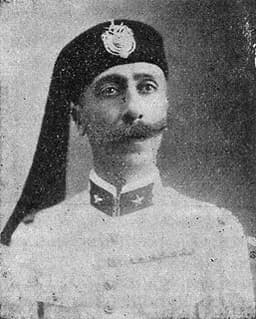
Muhammad VIII al-Amin
Emperor · Modern
40.0Total
Basic Information
Born
1740
1881
Died
1822
1962
Era
Modern
Modern
Nationality
Ottoman Empire
Tunisia
Occupation
Emperor
Emperor
Civilization
Middle Eastern
Middle Eastern
Score Comparison
Military (10%)
65.0
21.1
Political (20%)
55.0
26.4
Influence (20%)
58.0
51.8
Legacy (20%)
48.3
39.2
Leadership (15%)
72.0
34.6
Strategy (15%)
65.0
60.0
TOTAL
58.6
40.0
Ali Pasha of Ioannina — Complete Timeline
1788 AD
Appointment as Pasha of IoanninaPolitical Action◆ Major
Ali Pasha was appointed as the Pasha of Ioannina in 1788, consolidating his control over a large territory in Epirus and Thessaly. He established a semi-independent state within the Ottoman Empire, ruling with a combination of diplomacy, military force, and patronage.
AppointmentProvincial RuleIoannina
Impact: regional
1790 AD
Expansion of Territory in GreeceWar◆ Major
Ali Pasha expanded his territory through military campaigns in the 1790s, conquering parts of central Greece, including Arta and Preveza. He also subdued rival Albanian lords and extended his influence over the Peloponnese, becoming the de facto ruler of much of mainland Greece.
ConquestTerritorial ExpansionGreece
Impact: regional
1820 AD
Conflict with the Ottoman Central GovernmentWar
In 1820, Sultan Mahmud II ordered Ali Pasha's removal, accusing him of disloyalty. Ali Pasha resisted, leading to a two-year siege of Ioannina by Ottoman forces. His rebellion weakened Ottoman control in Greece and indirectly aided the Greek War of Independence, which began in 1821.
RebellionSiegeGreek War of Independence
Impact: regionaldestructive
1822 AD
Death and ExecutionPolitical Action◆ Major
Ali Pasha was killed in 1822 during the Ottoman siege of Ioannina. He was shot after a failed negotiation, and his head was sent to Istanbul. His death ended his 34-year rule and allowed the Ottomans to reassert control over his territories, though the Greek revolt continued.
DeathExecutionOttoman-Greek Conflict
Impact: regionaltragic
Muhammad VIII al-Amin — Complete Timeline
1943 AD
Accession as Bey of TunisPolitical Action◆ Major
Muhammad VIII al-Amin became the Bey of Tunis in 1943, ruling under the French protectorate. His reign coincided with the rise of Tunisian nationalism and the Neo Destour party's demands for independence.
Tunisian monarchyFrench protectorate
Impact: national
1956 AD
Signing of the Tunisian Independence AccordsPolitical Action
As Bey, Muhammad VIII al-Amin formally signed the agreements that ended the French protectorate and granted Tunisia independence on March 20, 1956. This made him the last monarch of an independent Tunisia.
IndependenceDecolonization
Impact: nationalconstructive
1957 AD
Deposition and Abolition of the MonarchyPolitical Action
On July 25, 1957, the Tunisian Constituent Assembly voted to abolish the monarchy and declare a republic. Muhammad VIII al-Amin was deposed and placed under house arrest, ending the Husainid dynasty's rule.
Monarchy abolishedRepublic declared
Impact: nationaldestructive
This comparison has not been analyzed yet.
One-time AI generation (~1 minute). Scores and timeline are already available below.
Rankings
🥇
Ali Pasha of IoanninaLeader
Mil: 65.0Pol: 55.0Inf: 58.0
58.6
🥈
Muhammad VIII al-Amin
Mil: 21.1Pol: 26.4Inf: 51.8
40.0
+18.6 behind
How This Comparison Works
Algorithm
Each figure is scored on 6 dimensions (0—100 scale) based on structured historical data: Military (10%), Political (20%), Influence (20%), Legacy (20%), Leadership (15%), Strategy (15%). The weighted total produces the final ranking.
Data Sources
Scores are computed from structured sub-indicators in the database. Scale factors adjust for era (Ancient ×0.85, Modern ×1.0) and civilization size (Eastern ×1.05, Other ×0.80) to account for differences in population and military scale.
Maximum 3 Figures
Comparisons are limited to 2—3 figures to ensure readability and statistical meaningfulness.
Error Margins
±5 points per dimension — Sub-scores are derived from historical records with inherent uncertainty. Two figures within 5 points on a dimension should be considered roughly equivalent in that area.
Total Score Accuracy
±3 points overall — The weighted combination of 6 dimensions produces a total score with approximately ±3 points of uncertainty. Differences of less than 3 points are not statistically significant— the figures are effectively tied.
Known Limitations
- Historical records are incomplete and uneven across civilizations
- Figures from oral-tradition societies may be underrepresented
- Occupation labels can misclassify multi-role figures
- Scores measure capability and impact, not moral character
- Quantitative scoring is a comparison tool, not absolute truth
Capability Radar
Military (10%) — Battles & Warfare
Battles
65
41
Win Rate
60
46
Expansion
70
49
Political (20%) — Governance & Reform
Reform
55
15
Diplomacy
70
20
Economy
60
10
Influence (20%) — Cultural & Global Reach
Cultural
45
10
Global
35
10
Legacy (20%) — Historical Impact
Historical
50
15
Longevity
40
10
Leadership (15%) — Power & Stability
Tenure
75
10
Stability
50
10
Strategy (15%) — Tactics & Innovation
Strategy
75
48
Tactics
70
51
Reform
60
55
Similar Comparisons
Comments & Discussion
No comments yet. Be the first to share your thoughts!