Loading...
This comparison has not been analyzed yet.
One-time AI generation (~1 minute). Scores and timeline are already available below.
Ali Salim al-Beidh vs Atiku Abubakar
Atiku Abubakar leads by 1.8 pts · 2 figures compared
…

Ali Salim al-Beidh
Politician · Modern
44.0Total
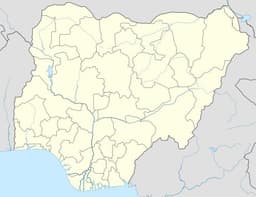
Atiku Abubakar
Politician · Modern
45.8Total
Basic Information
Born
1939
1946
Died
—
—
Era
Modern
Modern
Nationality
South Yemen
Nigeria
Occupation
Politician
Politician
Civilization
Middle Eastern
Other
Score Comparison
Military (10%)
41.6
50.0
Political (20%)
30.8
39.4
Influence (20%)
47.9
49.4
Legacy (20%)
38.3
39.2
Leadership (15%)
55.3
55.3
Strategy (15%)
53.5
44.7
TOTAL
44.0
45.8
Ali Salim al-Beidh — Complete Timeline
1986 AD
Became Vice President of South YemenPolitical Action◆ Major
Ali Salim al-Beidh became Vice President of South Yemen after the 1986 civil war, serving under President Haidar Abu Bakr al-Attas. He was a key figure in the ruling Yemeni Socialist Party.
South YemenVice PresidentSocialist
Impact: national
1990 AD
Opposed Yemeni UnificationPolitical Action◆ Major
Al-Beidh opposed the unification of North and South Yemen in 1990, fearing marginalization of southern interests. He became a leading voice for southern separatism.
YemenUnificationSeparatism
Impact: regionaldestructive
1994 AD
Led the 1994 Secession AttemptWar
Ali Salim al-Beidh declared the secession of South Yemen in May 1994, leading to a brief civil war. Northern forces defeated the southern army, and al-Beidh fled into exile in Oman.
YemenCivil WarSecession
Impact: regionaldestructive
Atiku Abubakar — Complete Timeline
1999 AD
Appointed Vice President of NigeriaPolitical Action◆ Major
Atiku Abubakar was elected Vice President under President Olusegun Obasanjo on the People's Democratic Party (PDP) platform. He served two terms from 1999 to 2007, overseeing economic reforms and privatization efforts.
Nigerian PoliticsVice PresidencyObasanjo Administration
Impact: nationalconstructive
2007 AD
Defected to the Action CongressPolitical Action
After failing to secure the PDP presidential nomination, Atiku Abubakar defected to the Action Congress (AC) and ran as its presidential candidate in the 2007 election. He lost to Umaru Yar'Adua of the PDP.
Nigerian PoliticsParty Defection2007 Election
Impact: national
2019 AD
Presidential Campaign 2019Political Action◆ Major
Atiku Abubakar ran as the PDP presidential candidate against incumbent Muhammadu Buhari. He lost the election, which was marked by allegations of irregularities and legal challenges that reached the Supreme Court.
Nigerian PoliticsPresidential ElectionPDP
Impact: national
This comparison has not been analyzed yet.
One-time AI generation (~1 minute). Scores and timeline are already available below.
Rankings
🥇
Atiku AbubakarLeader
Mil: 50.0Pol: 39.4Inf: 49.4
45.8
🥈
Ali Salim al-Beidh
Mil: 41.6Pol: 30.8Inf: 47.9
44.0
+1.8 behind
How This Comparison Works
Algorithm
Each figure is scored on 6 dimensions (0—100 scale) based on structured historical data: Military (10%), Political (20%), Influence (20%), Legacy (20%), Leadership (15%), Strategy (15%). The weighted total produces the final ranking.
Data Sources
Scores are computed from structured sub-indicators in the database. Scale factors adjust for era (Ancient ×0.85, Modern ×1.0) and civilization size (Eastern ×1.05, Other ×0.80) to account for differences in population and military scale.
Maximum 3 Figures
Comparisons are limited to 2—3 figures to ensure readability and statistical meaningfulness.
Error Margins
±5 points per dimension — Sub-scores are derived from historical records with inherent uncertainty. Two figures within 5 points on a dimension should be considered roughly equivalent in that area.
Total Score Accuracy
±3 points overall — The weighted combination of 6 dimensions produces a total score with approximately ±3 points of uncertainty. Differences of less than 3 points are not statistically significant— the figures are effectively tied.
Known Limitations
- Historical records are incomplete and uneven across civilizations
- Figures from oral-tradition societies may be underrepresented
- Occupation labels can misclassify multi-role figures
- Scores measure capability and impact, not moral character
- Quantitative scoring is a comparison tool, not absolute truth
Capability Radar
Military (10%) — Battles & Warfare
Battles
15
20
Win Rate
10
27
Expansion
5
30
Political (20%) — Governance & Reform
Reform
20
25
Diplomacy
25
35
Economy
15
30
Influence (20%) — Cultural & Global Reach
Cultural
15
15
Global
10
20
Legacy (20%) — Historical Impact
Historical
20
20
Longevity
10
15
Leadership (15%) — Power & Stability
Tenure
40
30
Stability
10
20
Strategy (15%) — Tactics & Innovation
Strategy
10
32
Tactics
15
31
Reform
5
36
Similar Comparisons
Comments & Discussion
No comments yet. Be the first to share your thoughts!