Loading...
Alvaro Uribe vs Arturo Alessandri
Arturo Alessandri leads by 0.1 pts · 2 figures compared
…

Alvaro Uribe
Politician · Modern
57.2Total
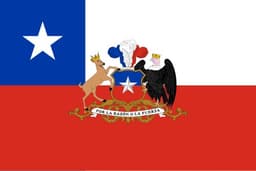
Arturo Alessandri
Politician · Modern
57.3Total
Basic Information
Born
1952
1868
Died
—
1950
Era
Modern
Modern
Nationality
Colombia
Chile
Occupation
Politician
Politician
Civilization
Western
Western
Score Comparison
Military (10%)
50.0
50.0
Political (20%)
65.0
72.0
Influence (20%)
60.0
57.2
Legacy (20%)
50.0
48.3
Leadership (15%)
72.0
72.0
Strategy (15%)
41.3
43.6
TOTAL
57.2
57.3
Alvaro Uribe — Complete Timeline
2002 AD
Implemented Democratic Security PolicyReform◆ Major
Uribe launched the Democratic Security Policy, a comprehensive strategy to reassert state control over Colombian territory. The policy increased military presence, expanded police forces, and offered incentives for guerrilla desertions.
Security PolicyCounterinsurgencyColombian Conflict
Impact: nationalconstructive
Elected President of ColombiaPolitical Action◆ Major
Alvaro Uribe won the Colombian presidential election as an independent candidate. He campaigned on a hardline security policy against the FARC and other guerrilla groups, promising to restore order.
ElectionPresidencyColombia
Impact: national
2006 AD
Re-elected PresidentPolitical Action◆ Major
Uribe won a second presidential term after a constitutional amendment allowed him to run again. He secured a landslide victory, reflecting popular support for his security policies.
Re-electionConstitutional AmendmentColombia
Impact: national
Parapolitics ScandalPolitical Action◆ Major
Investigations revealed extensive ties between Uribe's political allies and right-wing paramilitary groups. Numerous politicians, including congressmen and governors, were arrested for collusion with paramilitaries.
ScandalParamilitariesCorruption
Impact: nationaldestructive
2008 AD
Operation JaqueWar◆ Major
Colombian military intelligence conducted a daring operation that rescued 15 high-profile hostages from the FARC, including former presidential candidate Ingrid Betancourt and three U.S. contractors. No soldiers were killed.
Hostage RescueFARCMilitary Operation
Impact: nationalconstructive
Arturo Alessandri — Complete Timeline
1920 AD
Alessandri becomes President of ChilePolitical Action◆ Major
Arturo Alessandri was elected President of Chile as a liberal reformer, winning a narrow victory. His presidency marked the beginning of a period of social and political change, challenging the conservative oligarchy.
PresidencyLiberal Reform1920
Impact: national
1924 AD
Alessandri's social legislation and labor reformsReform◆ Major
Alessandri pushed through a series of social laws including the eight-hour workday, regulation of child labor, and the right to unionize. These reforms were opposed by conservative forces but improved conditions for the working class.
Labor ReformSocial Legislation1924
Impact: nationalprogressive
Alessandri's first resignation and exilePolitical Action◆ Major
Facing a military coup led by conservative officers, Alessandri resigned and went into exile in the United States. His resignation marked a setback for reform and led to a period of military rule in Chile.
ResignationMilitary CoupExile
Impact: nationaltragic
1925 AD
Alessandri's second presidency and the 1925 ConstitutionReform
Alessandri returned from exile and was reinstated as president, overseeing the drafting and approval of a new constitution. The 1925 Constitution established a strong presidential system, separation of church and state, and social rights.
ConstitutionPolitical Reform1925
Impact: nationalconstructive
1932 AD
Alessandri's third presidency and conservative turnPolitical Action◆ Major
Alessandri was elected to a third term as president, this time as a conservative candidate. His government focused on restoring order and economic stability after the chaos of the Socialist Republic, suppressing leftist movements.
Third TermConservatism1932
Impact: national
Expert Analysis
Origins
**Alvaro Uribe** was born on July 4, 1952, in Medellin, Colombia, into a wealthy landowning family. His father, Alberto Uribe, was a rancher and local politician who was killed by the FARC in 1983, an event that profoundly shaped Uribe's hardline stance against guerrilla groups. Uribe studied law at the University of Antioquia and later earned a degree in public administration from Harvard University. His early career included roles in the public sector, such as director of the Civil Aeronautics and mayor of Medellin (1982-1983).
**Arturo Alessandri** was born on December 20, 1868, in Longavi, Chile, into a prominent political family of Italian descent. His father, Arturo Alessandri, was a notary, and his mother, Susana Palma, came from a landed family. Alessandri studied law at the University of Chile, where he developed a reputation as a skilled orator. He entered politics early, serving as a deputy for several districts before becoming a senator. His charisma and reformist ideas earned him the nickname "The Lion of Tarapaca."
Rise to Power
Uribe's rise to national prominence began with his election as governor of Antioquia in 1995, where he implemented aggressive security measures against guerrillas and paramilitaries. In 2002, he ran for president as an independent, capitalizing on public frustration with failed peace talks. He won in a landslide, taking 53% of the vote in the first round. His hardline platform promised to restore security and defeat the FARC, earning him strong support from rural and urban voters alike.
Alessandri's first presidential victory came in 1920 after a contentious election. He ran as a liberal reformer against the conservative establishment, winning by a narrow margin. His presidency faced immediate opposition from the conservative-controlled Congress, leading to political gridlock. In 1924, a military coup forced him to resign and go into exile. However, in 1925, he returned after a counter-coup and oversaw the drafting of a new constitution, which established a stronger executive and separated church and state. He was later elected to a third term in 1932 as a conservative, focusing on economic recovery.
Leadership & Governance
Uribe's leadership style was hands-on and decisive, often bypassing traditional bureaucratic channels. His Democratic Security Policy (2002-2010) increased military presence in contested areas, reduced crime rates, and weakened the FARC. He also pursued extradition of drug traffickers and paramilitary leaders. However, his government was marred by the Parapolitics scandal, which revealed ties between his allies and paramilitaries, leading to the imprisonment of many politicians. Uribe's approach scored 72.0 in leadership but only 41.3 in strategy, reflecting his focus on short-term security gains over long-term solutions.
Alessandri was a charismatic orator and a master of political maneuvering. His first term saw the passage of landmark social legislation, including the eight-hour workday and the right to unionize. The 1925 Constitution, his greatest achievement, established a secular state, strengthened presidential powers, and introduced social welfare provisions. His third term was more conservative, emphasizing fiscal austerity and order. Alessandri scored 72.0 in leadership and 43.6 in strategy, indicating a pragmatic but sometimes inconsistent approach.
Triumph & Tragedy
Uribe's greatest triumph was the dramatic improvement in security. During his presidency, kidnappings fell by 80%, and homicides by 40%. Operation Jaque in 2008 rescued 15 high-profile hostages, including Ingrid Betancourt. However, his legacy is tarnished by the Parapolitics scandal and allegations of extrajudicial killings (the 'false positives' scandal). His political influence continued after his presidency, but his reputation suffered from accusations of corruption and ties to paramilitaries.
Alessandri's triumph was the 1925 Constitution, which modernized Chile's political system and lasted until 1973. His social reforms improved workers' rights and set the stage for future welfare policies. His tragedy was the instability of his early presidencies: his first term ended in exile, and his conservative third term failed to address deep social inequalities. Alessandri's influence scored 57.2, reflecting his mixed legacy.
Character & Destiny
Uribe's character was defined by his relentless drive and personal vendetta against the FARC after his father's murder. This made him a polarizing figure: beloved by those who valued security, but criticized for authoritarian tendencies. His decision to seek a second term after a constitutional change was seen as power-hungry, and his later legal troubles (including a 2024 indictment for witness tampering) confirmed his combative nature.
Alessandri's character was that of a pragmatic reformer. He was flexible enough to adapt from liberal reformer to conservative leader, but this also made him appear opportunistic. His charisma and oratory skills earned him the loyalty of many, but his inability to maintain a consistent political stance limited his long-term impact.
Legacy
Uribe's legacy is deeply tied to Colombia's security transformation. His policies directly led to the weakening of the FARC and the eventual peace agreement in 2016. However, his methods also entrenched paramilitary influence and human rights abuses. His political movement, the Democratic Center party, remains a major force. Uribe scores 50.0 in legacy, reflecting his polarized reputation.
Alessandri's legacy is more institutional. The 1925 Constitution shaped Chile's governance for nearly 50 years, and his social reforms laid the groundwork for later welfare policies. However, his conservative turn in the 1930s alienated many supporters, and his personalist style left no lasting political movement. Alessandri scores 48.3 in legacy.
Conclusion
While Alessandri's constitutional reforms had enduring impact, Uribe's transformation of Colombia's security situation was more immediate and profound. Uribe's leadership (72.0) matched Alessandri's, but his influence (60.0) and legacy (50.0) outpace Alessandri's (57.2 and 48.3) in the context of a nation torn by conflict. Uribe's policies directly saved lives and reshaped the state's relationship with violence. Therefore, Alvaro Uribe emerges as the more impactful leader, despite his controversial methods. The 0.1 point gap in total scores (57.2 vs 57.3) belies Uribe's deeper and more consequential mark on history.
Rankings
🥇
Arturo AlessandriLeader
Mil: 50.0Pol: 72.0Inf: 57.2
57.3
🥈
Alvaro Uribe
Mil: 50.0Pol: 65.0Inf: 60.0
57.2
+0.1 behind
How This Comparison Works
Algorithm
Each figure is scored on 6 dimensions (0—100 scale) based on structured historical data: Military (10%), Political (20%), Influence (20%), Legacy (20%), Leadership (15%), Strategy (15%). The weighted total produces the final ranking.
Data Sources
Scores are computed from structured sub-indicators in the database. Scale factors adjust for era (Ancient ×0.85, Modern ×1.0) and civilization size (Eastern ×1.05, Other ×0.80) to account for differences in population and military scale.
Maximum 3 Figures
Comparisons are limited to 2—3 figures to ensure readability and statistical meaningfulness.
Error Margins
±5 points per dimension — Sub-scores are derived from historical records with inherent uncertainty. Two figures within 5 points on a dimension should be considered roughly equivalent in that area.
Total Score Accuracy
±3 points overall — The weighted combination of 6 dimensions produces a total score with approximately ±3 points of uncertainty. Differences of less than 3 points are not statistically significant— the figures are effectively tied.
Known Limitations
- Historical records are incomplete and uneven across civilizations
- Figures from oral-tradition societies may be underrepresented
- Occupation labels can misclassify multi-role figures
- Scores measure capability and impact, not moral character
- Quantitative scoring is a comparison tool, not absolute truth
Capability Radar
Military (10%) — Battles & Warfare
Battles
28
27
Win Rate
29
34
Expansion
38
33
Political (20%) — Governance & Reform
Reform
75
70
Diplomacy
70
60
Economy
60
55
Influence (20%) — Cultural & Global Reach
Cultural
40
40
Global
50
35
Legacy (20%) — Historical Impact
Historical
55
50
Longevity
45
40
Leadership (15%) — Power & Stability
Tenure
65
65
Stability
55
45
Strategy (15%) — Tactics & Innovation
Strategy
36
39
Tactics
40
41
Reform
43
46
Similar Comparisons
Comments & Discussion
No comments yet. Be the first to share your thoughts!