Loading...
Anastasio Somoza Garcia vs Hyazinth von Strachwitz
Anastasio Somoza Garcia leads by 3.7 pts · 2 figures compared
…

Anastasio Somoza Garcia
General · Modern
46.7Total
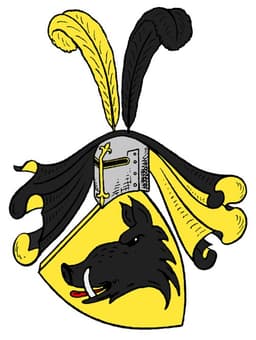
Hyazinth von Strachwitz
General · Modern
43.0Total
Basic Information
Born
1896
1893
Died
1956
1968
Era
Modern
Modern
Nationality
Nicaragua
Germany
Occupation
General
General
Civilization
Western
Western
Score Comparison
Military (10%)
50.0
52.5
Political (20%)
46.6
25.0
Influence (20%)
56.4
51.8
Legacy (20%)
48.3
44.2
Leadership (15%)
40.0
30.0
Strategy (15%)
25.0
55.0
TOTAL
46.7
43.0
Anastasio Somoza Garcia — Complete Timeline
1934 AD
Assassination of Sandino (1934)Political Action◆ Major
Anastasio Somoza Garc
AssassinationSandinoNational Guard
Impact: nationaldestructive
1937 AD
Presidency and Consolidation of Power (1937-1956)Political Action◆ Major
Somoza Garc
DictatorshipSomoza DynastyCorruption
Impact: nationaldestructive
1956 AD
Assassination (1956)Other◆ Major
Somoza Garc
AssassinationRigoberto López PérezDynasty
Impact: nationaltragic
Hyazinth von Strachwitz — Complete Timeline
1943 AD
Command of the Panzer Regiment GrossdeutschlandWar◆ Major
Von Strachwitz commanded the panzer regiment of the Grossdeutschland Division during the Battle of Kursk. He led armored assaults that achieved local breakthroughs, but the offensive ultimately failed against Soviet defenses.
Battle of KurskArmored WarfareEastern Front
Impact: regional
1944 AD
Award of the Knight's Cross with Oak Leaves, Swords, and DiamondsPolitical Action◆ Major
Von Strachwitz was awarded the Knight's Cross of the Iron Cross with Oak Leaves, Swords, and Diamonds on April 15, 1944, one of the highest military decorations in Nazi Germany, for his leadership and personal bravery in tank battles.
AwardMilitary HonorRecognition
Impact: national
Expert Analysis
Origins
Anastasio Somoza García was born on February 1, 1896, in San Marcos, Nicaragua, to a coffee planter family. He received education in the United States at the Pierce School of Business Administration in Philadelphia, which exposed him to American business and political methods. His father, Anastasio Somoza Reyes, was a wealthy landowner, providing young Somoza with connections and resources. His early career included work as a bookkeeper and later as a manager of his family's estates, but he sought political influence through marriage to Salvadora Debayle Sacasa, niece of future president Juan Bautista Sacasa.
Hyazinth Graf Strachwitz von Groß-Zauche und Camminetz was born on July 30, 1893, in Groß Stein, Silesia, Prussia (now Kamień Śląski, Poland), into an ancient Silesian noble family. He was raised on the family estate with a strong military tradition. He attended the Prussian Cadet Corps and served as a cavalry officer in World War I, earning the Iron Cross 1st Class. After the war, he managed his family's agricultural estates, but rejoined the Wehrmacht in 1935 as a major in the reserves, bringing his aristocratic background and cavalry experience to the new panzer forces.
Rise to Power
Somoza's rise began in 1926 when his uncle-in-law, Juan Bautista Sacasa, became president. Somoza was appointed as a deputy and later as the head of the National Guard in 1933, a position he used to build a loyal military force. His key turning point was the assassination of Augusto C. Sandino on February 21, 1934, which he ordered. This eliminated the main opposition and allowed him to consolidate power. In 1936, he forced Sacasa to resign and took control, officially becoming president in 1937. He maintained power through rigged elections and control of the National Guard until his assassination in 1956.
Von Strachwitz rose to prominence through his exceptional performance as a tank commander. He commanded the 1st Panzer Battalion of the 1st Panzer Division during the invasion of Poland in 1939 and the Battle of France in 1940. His major breakthrough came during Operation Barbarossa in 1941, where he led armored spearheads, earning the Knight's Cross of the Iron Cross on August 25, 1941. By 1943, he commanded the Panzer Regiment Grossdeutschland, leading assaults at the Battle of Kursk. His aggressive tactics and personal bravery earned him the rare Knight's Cross with Oak Leaves, Swords, and Diamonds on April 15, 1944, making him one of only 27 recipients in German history.
Leadership & Governance
Somoza's leadership style was authoritarian and corrupt. He used the National Guard as a personal army to suppress dissent and enrich his family. During his presidency (1937-1956), he implemented economic policies that benefited his family and foreign investors, particularly United States companies. He maintained close ties with the U.S., receiving support under the Good Neighbor policy. His governance was marked by nepotism: his son Luis Somoza Debayle succeeded him, and another son, Anastasio Somoza Debayle, later became president. His regime scored 46.6 in political metrics, reflecting his ability to maintain power but with low legitimacy.
Von Strachwitz's leadership was tactical and focused on leading from the front. He scored 25.0 in political metrics, as he held no significant political role. His military leadership score of 30.0 reflects his effectiveness at the regimental level rather than higher command. He commanded by personal example, often riding in a command tank in the thick of battle. His governance was limited to military discipline, but he was respected by his men for his courage and tactical acumen. He was known to disregard orders to retreat, preferring to hold ground aggressively.
Triumph & Tragedy
Somoza's greatest success was establishing a dynasty that controlled Nicaragua for over 40 years, accumulating vast wealth and power. He modernized some infrastructure, such as roads and the Port of Corinto, with U.S. aid. However, his greatest failure was his oppressive rule, which led to widespread opposition and ultimately his assassination. His regime's corruption and brutality fueled the Sandinista revolution that overthrew his son in 1979. His legacy score of 48.3 reflects the long-term negative impact.
Von Strachwitz's greatest success was his tactical brilliance in armored warfare, achieving numerous breakthroughs against numerically superior Soviet forces. He was awarded the highest German military decoration. His tragedy was fighting for a criminal regime; after the war, he was imprisoned by the Allies and later lived in Syria as a military advisor, dying in 1968 in relative obscurity. His military score of 52.5 is modest compared to higher-ranked generals, but his influence on armored tactics is noted.
Character & Destiny
Somoza was pragmatic, ruthless, and ambitious. He centralized power by eliminating rivals and using patronage. His character shaped Nicaragua's destiny: his greed and corruption created a legacy of instability. He was assassinated at age 60, but his dynasty continued until 1979. Historical assessments label him a dictator who prioritized personal gain over national development.
Von Strachwitz was a traditional Prussian aristocrat: brave, loyal, and tactically skilled. His character led him to excel in combat but also to be politically naive. He fought for Nazi Germany without questioning its ideology, and his post-war life was marked by displacement and marginalization. His destiny was to be a celebrated warrior in a lost cause.
Legacy
Somoza's legacy is the Somoza family dynasty, which left Nicaragua with a legacy of poverty, inequality, and political violence. The Sandinista revolution directly opposed his regime's abuses. His influence score of 56.4 reflects the enduring impact of his dictatorship on Nicaraguan history.
Von Strachwitz's legacy is as a symbol of German armored prowess. His tactical innovations influenced post-war tank doctrine. However, his association with the Nazi regime limits his recognition. He is remembered by military historians but not by the general public. His legacy score of 44.2 is lower than Somoza's.
Conclusion
Anastasio Somoza García had a greater impact on world history than Hyazinth von Strachwitz, despite a narrow total score difference of 3.7 points (46.7 vs 43.0). Somoza's actions shaped a nation for decades, influencing U.S. foreign policy and Central American politics. Von Strachwitz, while an exceptional soldier, operated within a system that ultimately collapsed, and his tactical achievements did not alter the course of the war. Somoza's political and influence scores (46.6 and 56.4) outweigh von Strachwitz's military and strategy scores (52.5 and 55.0). The Somoza dynasty's 40-year rule had concrete, long-lasting effects on millions of people, whereas von Strachwitz's legacy is confined to military history enthusiasts. Therefore, Somoza's impact is greater.
Rankings
🥇
Anastasio Somoza GarciaLeader
Mil: 50.0Pol: 46.6Inf: 56.4
46.7
🥈
Hyazinth von Strachwitz
Mil: 52.5Pol: 25.0Inf: 51.8
43.0
+3.7 behind
How This Comparison Works
Algorithm
Each figure is scored on 6 dimensions (0—100 scale) based on structured historical data: Military (10%), Political (20%), Influence (20%), Legacy (20%), Leadership (15%), Strategy (15%). The weighted total produces the final ranking.
Data Sources
Scores are computed from structured sub-indicators in the database. Scale factors adjust for era (Ancient ×0.85, Modern ×1.0) and civilization size (Eastern ×1.05, Other ×0.80) to account for differences in population and military scale.
Maximum 3 Figures
Comparisons are limited to 2—3 figures to ensure readability and statistical meaningfulness.
Error Margins
±5 points per dimension — Sub-scores are derived from historical records with inherent uncertainty. Two figures within 5 points on a dimension should be considered roughly equivalent in that area.
Total Score Accuracy
±3 points overall — The weighted combination of 6 dimensions produces a total score with approximately ±3 points of uncertainty. Differences of less than 3 points are not statistically significant— the figures are effectively tied.
Known Limitations
- Historical records are incomplete and uneven across civilizations
- Figures from oral-tradition societies may be underrepresented
- Occupation labels can misclassify multi-role figures
- Scores measure capability and impact, not moral character
- Quantitative scoring is a comparison tool, not absolute truth
Capability Radar
Military (10%) — Battles & Warfare
Battles
15
60
Win Rate
20
65
Expansion
10
30
Political (20%) — Governance & Reform
Reform
20
5
Diplomacy
50
15
Economy
30
5
Influence (20%) — Cultural & Global Reach
Cultural
20
25
Global
30
15
Legacy (20%) — Historical Impact
Historical
40
35
Longevity
40
20
Leadership (15%) — Power & Stability
Tenure
70
10
Stability
25
10
Strategy (15%) — Tactics & Innovation
Strategy
15
55
Tactics
10
75
Reform
10
20
Similar Comparisons
Comments & Discussion
No comments yet. Be the first to share your thoughts!