Loading...
Analysis will be generated on first visit.
Scores and timeline are available below. The page will refresh automatically when ready.
Anastasius I vs Julius Caesar
Julius Caesar leads by 21.3 pts · 2 figures compared
…

Anastasius I
Emperor · Ancient
62.0Total
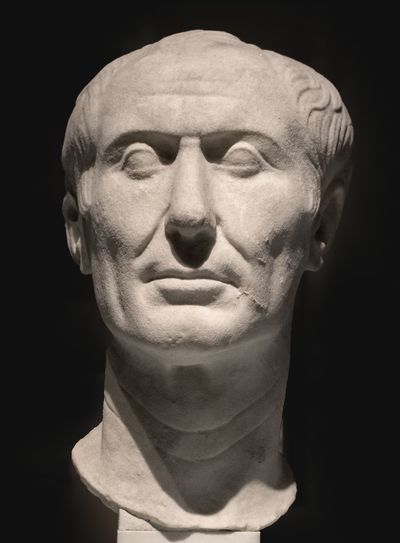
Julius Caesar
General · Ancient
83.3Total
Basic Information
Born
431
-100
Died
518
-44
Era
Ancient
Ancient
Nationality
Byzantine Empire
Roman Republic
Occupation
Emperor
General
Civilization
Western
Western
Score Comparison
Military (10%)
37.8
88.0
Political (20%)
60.6
78.0
Influence (20%)
73.5
85.0
Legacy (20%)
64.3
82.0
Leadership (15%)
79.3
82.0
Strategy (15%)
44.6
88.0
TOTAL
62.0
83.3
Rankings
🥇
Julius CaesarLeader
Mil: 88.0Pol: 78.0Inf: 85.0
83.3
🥈
Anastasius I
Mil: 37.8Pol: 60.6Inf: 73.5
62.0
+21.3 behind
How This Comparison Works
Algorithm
Each figure is scored on 6 dimensions (0—100 scale) based on structured historical data: Military (10%), Political (20%), Influence (20%), Legacy (20%), Leadership (15%), Strategy (15%). The weighted total produces the final ranking.
Data Sources
Scores are computed from structured sub-indicators in the database. Scale factors adjust for era (Ancient ×0.85, Modern ×1.0) and civilization size (Eastern ×1.05, Other ×0.80) to account for differences in population and military scale.
Maximum 3 Figures
Comparisons are limited to 2—3 figures to ensure readability and statistical meaningfulness.
Error Margins
±5 points per dimension — Sub-scores are derived from historical records with inherent uncertainty. Two figures within 5 points on a dimension should be considered roughly equivalent in that area.
Total Score Accuracy
±3 points overall — The weighted combination of 6 dimensions produces a total score with approximately ±3 points of uncertainty. Differences of less than 3 points are not statistically significant— the figures are effectively tied.
Known Limitations
- Historical records are incomplete and uneven across civilizations
- Figures from oral-tradition societies may be underrepresented
- Occupation labels can misclassify multi-role figures
- Scores measure capability and impact, not moral character
- Quantitative scoring is a comparison tool, not absolute truth
Capability Radar
Military (10%) — Battles & Warfare
Battles
20
95
Win Rate
25
92
Expansion
15
97
Political (20%) — Governance & Reform
Reform
85
90
Diplomacy
75
85
Economy
90
82
Influence (20%) — Cultural & Global Reach
Cultural
50
88
Global
45
94
Legacy (20%) — Historical Impact
Historical
55
95
Longevity
40
96
Leadership (15%) — Power & Stability
Tenure
70
75
Stability
80
60
Strategy (15%) — Tactics & Innovation
Strategy
35
94
Tactics
30
96
Reform
40
88
Analysis will be generated on first visit.
Scores and timeline are available below. The page will refresh automatically when ready.
Anastasius I — Complete Timeline
498 AD
Suppressed the Isaurian RevoltWar◆ Major
Anastasius defeated the Isaurian rebels who had opposed his accession. The war ended with the capture and execution of the rebel leaders, and the Isaurians were forcibly resettled, ending their threat to imperial authority.
RebellionCivil WarByzantine Empire
Impact: national
Abolished the chrysargyron taxReform◆ Major
Emperor Anastasius I abolished the chrysargyron, a highly unpopular tax on trade and commerce that was collected every four years. This reform, along with others, improved the financial stability of the empire and left a substantial surplus in the treasury upon his death.
Tax ReformEconomic PolicyByzantine Empire
Impact: nationalprogressive
Reformed the coinage systemReform◆ Major
Anastasius introduced a new system of bronze coinage, including the follis and its fractions. This reform stabilized the currency and facilitated trade, becoming a standard for Byzantine coinage for centuries.
Currency ReformEconomic PolicyByzantine Empire
Impact: regionalconstructive
507 AD
Built the Anastasian WallOther
Anastasius ordered the construction of a long defensive wall, the Anastasian Wall, stretching from the Sea of Marmara to the Black Sea. The wall was intended to protect Constantinople from barbarian incursions, but it proved difficult to maintain and was eventually abandoned.
FortificationDefenseByzantine Empire
Similar Comparisons
Comments & Discussion
No comments yet. Be the first to share your thoughts!