Loading...
Andreas Papandreou vs Miriam Defensor Santiago
Andreas Papandreou leads by 14.4 pts · 2 figures compared
…
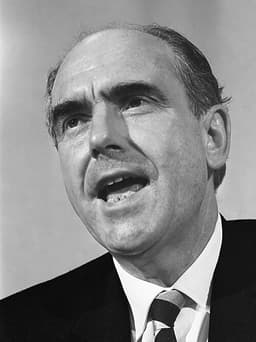
Andreas Papandreou
Politician · Modern
63.9Total

Miriam Defensor Santiago
Politician · Modern
49.5Total
Basic Information
Born
1919
1945
Died
1996
—
Era
Modern
Modern
Nationality
Greece
Philippines
Occupation
Politician
Politician
Civilization
Western
Eastern
Score Comparison
Military (10%)
50.0
14.2
Political (20%)
65.0
53.8
Influence (20%)
82.0
62.0
Legacy (20%)
56.0
46.7
Leadership (15%)
68.0
65.7
Strategy (15%)
44.0
30.0
TOTAL
63.9
49.5
Andreas Papandreou — Complete Timeline
1974 AD
Founded the Panhellenic Socialist Movement (PASOK)Political Action◆ Major
Andreas Papandreou founded PASOK, a socialist political party that advocated for national independence, social justice, and democratic reforms. The party quickly became a major force in Greek politics, challenging the conservative establishment.
Political PartySocialismThird Way
Impact: nationalconstructive
1981 AD
Elected Prime Minister of GreecePolitical Action◆ Major
Papandreou led PASOK to a landslide victory in the 1981 elections, becoming the first socialist Prime Minister of Greece. His government implemented sweeping reforms, including the establishment of the National Health System and the legalization of civil marriage.
ElectionSocial ReformWelfare State
Impact: nationalconstructive
1982 AD
Legalized Civil MarriageReform◆ Major
Papandreou's government passed Law 1250/1982, which legalized civil marriage in Greece, ending the monopoly of the Orthodox Church over marriage. The reform was part of a broader secularization agenda that also included divorce reform.
SecularizationSocial ReformChurch-State Relations
Impact: nationalconstructive
1983 AD
Introduced the National Health System (ESY)Reform◆ Major
Papandreou's government established the National Health System (ESY), providing universal healthcare to all Greek citizens. The reform was a cornerstone of PASOK's social policy, significantly improving access to medical services.
HealthcareSocial PolicyReform
Impact: nationalconstructive
1985 AD
Economic Crisis and Austerity MeasuresPolitical Action◆ Major
Facing economic crisis, Papandreou's government implemented austerity measures, including wage freezes and currency devaluation. The policies caused internal party dissent and led to a decline in PASOK's popularity, though they stabilized the economy temporarily.
Economic PolicyAusterityCrisis
Impact: nationaldestructive
1989 AD
Imprisonment and Acquittal in Koskotas ScandalPolitical Action◆ Major
Papandreou was implicated in the Koskotas financial scandal, involving embezzlement and bribery. He was tried and acquitted in 1992, but the scandal damaged his reputation and contributed to PASOK's electoral defeat in 1989.
ScandalCorruptionTrial
Impact: nationaldestructive
Miriam Defensor Santiago — Complete Timeline
1988 AD
Won the Ramon Magsaysay AwardCultural
Santiago received the Ramon Magsaysay Award for Government Service. The award recognized her work as a judge and her efforts to reform the Philippine legal system, including her campaign against graft and corruption in the judiciary.
AwardJudiciaryReform
Impact: nationalconstructive
1995 AD
Authored the Anti-Sexual Harassment ActReform◆ Major
As a senator, Santiago authored Republic Act 7877, the Anti-Sexual Harassment Act. The law defined sexual harassment in workplaces and educational institutions and established penalties. It was a landmark piece of legislation for women's rights in the Philippines.
Women's RightsLegislationWorkplace
Impact: nationalprogressive
2012 AD
Elected to the International Criminal CourtPolitical Action◆ Major
Santiago was elected as a judge of the International Criminal Court in The Hague. She was the first Filipino and first Asian woman to hold the position. She served until 2014, when she resigned due to health reasons.
ICCInternational LawJudiciary
Impact: globalconstructive
2016 AD
Ran for President of the PhilippinesPolitical Action◆ Major
Santiago ran for president under the People's Reform Party. She campaigned on anti-corruption and good governance but finished 6th out of 5 candidates (one withdrew). Her campaign was hampered by her battle with lung cancer.
ElectionPresidencyCampaign
Impact: national
Expert Analysis
Origins
Andreas Papandreou was born on February 5, 1919, in Chios, Greece, into a prominent political family. His father, Georgios Papandreou, served as Prime Minister of Greece. Andreas studied at the University of Athens and later earned a PhD in economics from Harvard University. He taught at several US universities, including the University of Minnesota and the University of California, Berkeley. His early career was academic, but he returned to Greece in 1961 and entered politics, serving as an economic advisor and later as a minister.
Miriam Defensor Santiago was born on June 15, 1945, in Iloilo City, Philippines. She earned a Bachelor of Arts in political science from the University of the Philippines, then a law degree from the same institution. She later obtained a Master of Laws from the University of Michigan and a Doctor of Juridical Science from the University of Oxford. She began her career as a lawyer and professor, later serving as a trial judge. Her early life was marked by academic excellence and a drive for public service.
Rise to Power
Papandreou's rise to power accelerated after the Greek military junta (1967-1974). He was arrested and exiled, but returned after the junta's fall. He founded the Panhellenic Socialist Movement (PASOK) in 1974, advocating for national independence, social justice, and democratic reforms. PASOK quickly became a major force, and in the 1981 elections, Papandreou led the party to a landslide victory, becoming Greece's first socialist Prime Minister. His charisma and populist rhetoric resonated with the Greek public.
Santiago's rise was more gradual. She gained prominence as a judge, known for her integrity and efficiency. She was appointed as Commissioner of Immigration and Deportation in 1988, where she earned the nickname "Iron Lady" for her anti-corruption drive. In 1995, she was elected to the Philippine Senate, where she authored significant legislation. She ran for president in 1998, finishing 6th out of 5 candidates (a unique outcome due to electoral peculiarities). Her international recognition grew when she was elected as a judge of the International Criminal Court in 2011, the first Filipino and first Asian woman to hold that position.
Leadership & Governance
Papandreou's leadership style was charismatic and populist. He centralized power within PASOK and pursued a socialist agenda. Domestically, he introduced major reforms: the National Health System (ESY) in 1983 providing universal healthcare, legalization of civil marriage (Law 1250/1982) reducing church influence, and equal rights for women. However, his economic management was criticized. Facing inflation and debt, his government implemented austerity measures, including wage freezes and currency devaluation, which caused social unrest. His foreign policy was anti-American and pro-detente, including withdrawal from NATO's military wing.
Santiago's leadership was principled and combative. As a senator, she focused on anti-corruption and legal reforms. She authored the Anti-Sexual Harassment Act (RA 7877) and the Anti-Plunder Act. She was known for her fiery speeches and willingness to challenge the establishment. However, her political influence was limited by her independent stance and poor electoral performance. She scored 53.8 in political influence, compared to Papandreou's 65.0, reflecting her lower party-building capacity.
Triumph & Tragedy
Papandreou's greatest success was founding PASOK and implementing transformative social reforms. The ESY remains a cornerstone of Greek welfare. His tragedy was the economic mismanagement that led to crisis, and his later years were marred by scandals and health issues. He died in 1996, leaving a mixed legacy.
Santiago's triumph was her international recognition: the Ramon Magsaysay Award for Government Service in 1998 and her ICC judgeship. Her Anti-Sexual Harassment Act is a landmark law. Her tragedy was her failed presidential run—she placed 6th despite high expectations—and her inability to translate her legal acumen into broader political power. She scored 49.5 overall, below Papandreou's 63.9.
Character & Destiny
Papandreou was a charismatic risk-taker, driven by a vision of a socialist Greece. His character combined intellectual rigor with populist appeal, but his hubris contributed to economic crises. He was a polarizing figure, admired by supporters but criticized for nepotism and corruption.
Santiago was fiercely independent and intellectual. Her refusal to compromise limited her political advancement. She was a principled maverick, but her combative style alienated allies. Her destiny was to be a moral force rather than a powerful officeholder.
Legacy
Papandreou's legacy is enduring: PASOK dominated Greek politics for decades, and his social reforms reshaped Greek society. However, the economic problems he left contributed to the later debt crisis. His overall legacy score is 56.0.
Santiago's legacy is more legal than political. Her anti-sexual harassment law influenced other countries. She is remembered as a symbol of integrity. Her legacy score is 46.7, reflecting narrower impact.
Conclusion
Andreas Papandreou had greater impact on his country and beyond. His political score of 65.0 and influence of 82.0 dwarf Santiago's 53.8 and 62.0. While Santiago's legal contributions are significant, Papandreou's structural reforms in healthcare and civil rights transformed Greece. He built a lasting political movement, whereas Santiago remained a lone voice. Papandreou's total score of 63.9 versus 49.5 reflects his broader and deeper influence.
Rankings
🥇
Andreas PapandreouLeader
Mil: 50.0Pol: 65.0Inf: 82.0
63.9
🥈
Miriam Defensor Santiago
Mil: 14.2Pol: 53.8Inf: 62.0
49.5
+14.4 behind
How This Comparison Works
Algorithm
Each figure is scored on 6 dimensions (0—100 scale) based on structured historical data: Military (10%), Political (20%), Influence (20%), Legacy (20%), Leadership (15%), Strategy (15%). The weighted total produces the final ranking.
Data Sources
Scores are computed from structured sub-indicators in the database. Scale factors adjust for era (Ancient ×0.85, Modern ×1.0) and civilization size (Eastern ×1.05, Other ×0.80) to account for differences in population and military scale.
Maximum 3 Figures
Comparisons are limited to 2—3 figures to ensure readability and statistical meaningfulness.
Error Margins
±5 points per dimension — Sub-scores are derived from historical records with inherent uncertainty. Two figures within 5 points on a dimension should be considered roughly equivalent in that area.
Total Score Accuracy
±3 points overall — The weighted combination of 6 dimensions produces a total score with approximately ±3 points of uncertainty. Differences of less than 3 points are not statistically significant— the figures are effectively tied.
Known Limitations
- Historical records are incomplete and uneven across civilizations
- Figures from oral-tradition societies may be underrepresented
- Occupation labels can misclassify multi-role figures
- Scores measure capability and impact, not moral character
- Quantitative scoring is a comparison tool, not absolute truth
Capability Radar
Military (10%) — Battles & Warfare
Battles
26
16
Win Rate
32
17
Expansion
32
18
Political (20%) — Governance & Reform
Reform
75
70
Diplomacy
70
65
Economy
60
40
Influence (20%) — Cultural & Global Reach
Cultural
55
55
Global
55
45
Legacy (20%) — Historical Impact
Historical
60
50
Longevity
50
30
Leadership (15%) — Power & Stability
Tenure
65
30
Stability
40
35
Strategy (15%) — Tactics & Innovation
Strategy
41
23
Tactics
40
25
Reform
47
32
Similar Comparisons
Comments & Discussion
No comments yet. Be the first to share your thoughts!