Loading...
This comparison has not been analyzed yet.
One-time AI generation (~1 minute). Scores and timeline are already available below.
Andrei Gromyko vs Mario Garcia Menocal
Andrei Gromyko leads by 11.2 pts · 2 figures compared
…

Andrei Gromyko
Politician · Modern
58.9Total
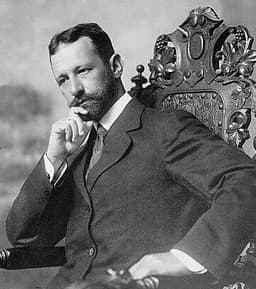
Mario Garcia Menocal
Politician · Modern
47.7Total
Basic Information
Born
1909
1866
Died
1989
1941
Era
Modern
Modern
Nationality
Russia
Cuba
Occupation
Politician
Politician
Civilization
Western
Western
Score Comparison
Military (10%)
48.2
49.5
Political (20%)
68.0
46.6
Influence (20%)
58.3
48.6
Legacy (20%)
52.0
38.3
Leadership (15%)
80.0
65.0
Strategy (15%)
42.6
43.2
TOTAL
58.9
47.7
Andrei Gromyko — Complete Timeline
1943 AD
Appointed Soviet Ambassador to the United StatesPolitical Action◆ Major
Gromyko became Soviet ambassador to the US during World War II, participating in the Tehran, Yalta, and Potsdam conferences. This role established him as a key Soviet diplomat in shaping post-war relations with the Western Allies.
DiplomacyWorld War IICold War Origins
Impact: global
1957 AD
Appointed Soviet Foreign MinisterPolitical Action◆ Major
Gromyko succeeded Dmitri Shepilov as Minister of Foreign Affairs of the Soviet Union. He held this position for 28 years, becoming the longest-serving foreign minister in Soviet history and a central figure in Cold War diplomacy.
Cold WarDiplomacySoviet Government
Impact: global
1962 AD
Cuban Missile Crisis NegotiationsPolitical Action
Gromyko met with US President John F. Kennedy during the Cuban Missile Crisis, initially denying the presence of Soviet missiles in Cuba. He later participated in the secret negotiations that led to the removal of missiles, averting nuclear war.
Cold WarNuclear CrisisDiplomacy
Impact: global
1968 AD
Signed the Nuclear Non-Proliferation TreatyPolitical Action◆ Major
Gromyko signed the Treaty on the Non-Proliferation of Nuclear Weapons on behalf of the Soviet Union. The treaty aimed to prevent the spread of nuclear weapons and promote disarmament, becoming a cornerstone of international arms control.
Arms ControlCold WarTreaty
Impact: globalconstructive
1975 AD
Negotiated the Helsinki AccordsPolitical Action◆ Major
Gromyko played a key role in the Conference on Security and Co-operation in Europe, which produced the Helsinki Final Act. The accords recognized post-World War II borders in Europe and included commitments to human rights, influencing Soviet bloc dissidents.
DétenteHuman RightsCold War
Impact: globalconstructive
1985 AD
Appointed Chairman of the Presidium of the Supreme SovietPolitical Action
Gromyko became the nominal head of state of the Soviet Union as Chairman of the Presidium. He held this largely ceremonial position until 1988, during the early years of Mikhail Gorbachev's reforms, before retiring.
Soviet GovernmentGorbachev EraTransition
Impact: national
Mario Garcia Menocal — Complete Timeline
1912 AD
Election as President of CubaPolitical Action◆ Major
Mario Garcia Menocal was elected president of Cuba as the Conservative Party candidate. His presidency focused on economic development and infrastructure projects, leveraging his engineering background.
Cuban PoliticsElectionConservative Party
Impact: nationalconstructive
1915 AD
Construction of the Central HighwayReform◆ Major
Menocal oversaw the construction of the Central Highway, a major infrastructure project connecting Havana to eastern Cuba. The highway improved transportation and trade, but was criticized for high costs and corruption.
InfrastructureDevelopmentTransportation
Impact: nationalconstructive
1916 AD
Re-election Amidst Fraud AllegationsPolitical Action◆ Major
Menocal was re-elected in a disputed election marked by allegations of fraud and voter intimidation. The opposition Liberal Party claimed the election was stolen, leading to political instability and the failed coup by Jose Miguel Gomez.
Election FraudPolitical CrisisCoup Attempt
Impact: nationaldestructive
1917 AD
Cuban Entry into World War IPolitical Action
Menocal declared war on Germany in 1917, aligning Cuba with the Allied powers. Cuba's involvement was largely symbolic, but it strengthened ties with the United States and led to economic benefits from sugar exports.
World War IForeign PolicyUS-Cuba Relations
Impact: global
This comparison has not been analyzed yet.
One-time AI generation (~1 minute). Scores and timeline are already available below.
Rankings
🥇
Andrei GromykoLeader
Mil: 48.2Pol: 68.0Inf: 58.3
58.9
🥈
Mario Garcia Menocal
Mil: 49.5Pol: 46.6Inf: 48.6
47.7
+11.2 behind
How This Comparison Works
Algorithm
Each figure is scored on 6 dimensions (0—100 scale) based on structured historical data: Military (10%), Political (20%), Influence (20%), Legacy (20%), Leadership (15%), Strategy (15%). The weighted total produces the final ranking.
Data Sources
Scores are computed from structured sub-indicators in the database. Scale factors adjust for era (Ancient ×0.85, Modern ×1.0) and civilization size (Eastern ×1.05, Other ×0.80) to account for differences in population and military scale.
Maximum 3 Figures
Comparisons are limited to 2—3 figures to ensure readability and statistical meaningfulness.
Error Margins
±5 points per dimension — Sub-scores are derived from historical records with inherent uncertainty. Two figures within 5 points on a dimension should be considered roughly equivalent in that area.
Total Score Accuracy
±3 points overall — The weighted combination of 6 dimensions produces a total score with approximately ±3 points of uncertainty. Differences of less than 3 points are not statistically significant— the figures are effectively tied.
Known Limitations
- Historical records are incomplete and uneven across civilizations
- Figures from oral-tradition societies may be underrepresented
- Occupation labels can misclassify multi-role figures
- Scores measure capability and impact, not moral character
- Quantitative scoring is a comparison tool, not absolute truth
Capability Radar
Military (10%) — Battles & Warfare
Battles
29
30
Win Rate
33
29
Expansion
37
36
Political (20%) — Governance & Reform
Reform
20
30
Diplomacy
90
40
Economy
30
45
Influence (20%) — Cultural & Global Reach
Cultural
30
15
Global
80
15
Legacy (20%) — Historical Impact
Historical
75
20
Longevity
60
10
Leadership (15%) — Power & Stability
Tenure
85
55
Stability
70
25
Strategy (15%) — Tactics & Innovation
Strategy
35
37
Tactics
43
42
Reform
45
46
Similar Comparisons
Comments & Discussion
No comments yet. Be the first to share your thoughts!