Loading...
Andres de Santa Cruz vs Ranoji Scindia
Andres de Santa Cruz leads by 3.5 pts · 2 figures compared
…
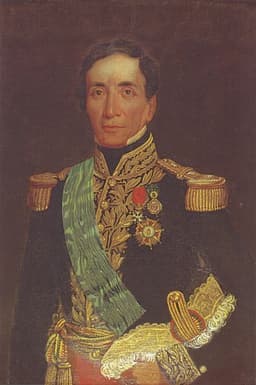
Andres de Santa Cruz
General · Modern
60.5Total
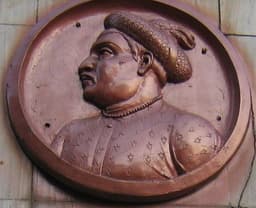
Ranoji Scindia
General · Modern
57.0Total
Basic Information
Born
1792
1700
Died
1865
1745
Era
Modern
Modern
Nationality
Bolivia
India
Occupation
General
General
Civilization
Western
Indian
Score Comparison
Military (10%)
67.5
50.0
Political (20%)
59.3
54.7
Influence (20%)
62.0
58.0
Legacy (20%)
50.0
54.0
Leadership (15%)
68.0
65.0
Strategy (15%)
66.3
60.0
TOTAL
60.5
57.0
Andres de Santa Cruz — Complete Timeline
1823 AD
Battle of ZepitaWar
Santa Cruz commanded Peruvian forces in a victory over Spanish royalists at Zepita during the Peruvian War of Independence. This battle enhanced his military reputation and contributed to the eventual liberation of Peru from Spanish rule.
Peruvian War of IndependenceBattleLiberation
Impact: regional
1826 AD
Presidency of PeruPolitical Action
Santa Cruz served as President of the Council of Government of Peru from 1826 to 1827, effectively ruling the country. His administration focused on centralizing power and organizing the state, but he was overthrown by a rebellion led by Agust
PresidencyPeruCentralization
Impact: national
1829 AD
Presidency of BoliviaPolitical Action◆ Major
Santa Cruz became President of Bolivia in 1829, serving until 1839. He implemented administrative reforms, stabilized the economy, and modernized the military, establishing Bolivia as a more coherent state after the chaos following independence.
PresidencyBoliviaReforms
Impact: nationalconstructive
1836 AD
War of the ConfederationWar◆ Major
Chile and Argentina declared war on the Peru-Bolivia Confederation, viewing it as a threat to the balance of power. Santa Cruz led the confederation's forces in a conflict that lasted until 1839, ultimately resulting in the confederation's defeat.
WarChileArgentinaConfederation
Impact: regional
Creation of the Peru-Bolivia ConfederationPolitical Action
Santa Cruz established the Peru-Bolivia Confederation, uniting Bolivia and Peru into a single state with himself as Supreme Protector. This confederation aimed to create a powerful Andean nation and challenged the regional influence of Chile and Argentina.
ConfederationUnificationAndean Power
Impact: regional
1839 AD
Battle of YungayWar
Santa Cruz's confederation forces were decisively defeated by the Chilean army at the Battle of Yungay. This defeat led to the dissolution of the Peru-Bolivia Confederation and forced Santa Cruz into exile, ending his political project.
BattleDefeatEnd of Confederation
Impact: regionaltragic
Exile and DeathPolitical Action
After the defeat at Yungay, Santa Cruz fled to Ecuador and later to France. He spent the rest of his life in exile, making unsuccessful attempts to return to power. He died in France in 1865, never regaining his former influence.
ExileDeathFailure
Impact: nationaltragic
Ranoji Scindia — Complete Timeline
1726 AD
Appointed Subedar of MalwaPolitical Action◆ Major
Ranoji Scindia was appointed as the Maratha subedar of Malwa by Peshwa Baji Rao I. This gave him control over a large territory and laid the foundation for the Scindia dynasty of Gwalior.
Maratha EmpireMalwaScindia Dynasty
Impact: regionalconstructive
1737 AD
Battle of DelhiWar◆ Major
Ranoji Scindia participated in the Maratha raid on Delhi under Baji Rao I. The attack on the Mughal capital demonstrated Maratha power and led to the extraction of tribute.
Maratha-Mughal WarsDelhiRaid
Impact: national
1739 AD
Battle of VasaiWar
Ranoji Scindia fought alongside Malhar Rao Holkar in the siege of Vasai against the Portuguese. The victory ended Portuguese control in the Konkan region.
Maratha-Portuguese WarsSiegeKonkan
Impact: regional
1740 AD
Founded Gwalior as CapitalPolitical Action◆ Major
Ranoji Scindia established his capital at Gwalior, fortifying the Gwalior Fort and building a palace. This city became the center of Scindia power for over a century.
FoundingGwaliorScindia Dynasty
Impact: regionalconstructive
1745 AD
Death in BattleWar
Ranoji Scindia was killed in a battle against the Nizam of Hyderabad's forces near the Narmada River. His death occurred during a Maratha campaign to expand into the Deccan.
DeathBattleMaratha-Nizam Wars
Impact: regionaltragic
Expert Analysis
Andres de Santa Cruz vs Ranoji Scindia
# The Dreamer and the Builder
On a winter morning in 1839, Andrés de Santa Cruz watched his grand vision collapse in the dust of Yungay, Peru. Across the ocean and a century earlier, in 1745, Ranoji Scindia fell near the Narmada River, his blood soaking the soil of a land he had helped transform. Both were generals. Both dreamed of empire. But one sought to unite, the other to build from within. Their stories, separated by time and geography, reveal how ambition shapes history—and how history, in turn, shapes the fate of ambition.
Origins
Andrés de Santa Cruz was born in 1792 in La Paz, Bolivia, to a Spanish father and an indigenous mother. This mixed heritage placed him at the crossroads of two worlds—the colonial elite and the subjugated native population. He grew up in an era of revolution, when the Spanish Empire was crumbling across the Americas. His education was military, his worldview forged in the fires of the Wars of Independence. He understood power as something to be seized, not inherited.
Ranoji Scindia, born in 1700 in the Deccan plateau of India, emerged from a very different world. The Maratha Empire was rising, challenging the decaying Mughal Empire. Scindia was not a prince; he was a soldier of fortune, a man who earned his place through loyalty and skill under the great Peshwa Baji Rao I. His India was a land of fragmented kingdoms, shifting alliances, and constant warfare. Where Santa Cruz saw a continent to remake, Scindia saw a kingdom to carve out.
Rise to Power
Santa Cruz entered the historical stage as a commander in the Peruvian War of Independence. At the Battle of Zepita in 1823, he led Peruvian forces to a victory over Spanish royalists, establishing his reputation as a capable military leader. But his true ascent came through politics. In 1826, he became President of the Council of Government of Peru, effectively ruling the country. Three years later, in 1829, he assumed the presidency of Bolivia, where he would spend a decade implementing administrative reforms, stabilizing the economy, and centralizing authority.
Ranoji Scindia’s rise was more gradual and less dramatic. In 1726, Peshwa Baji Rao I appointed him subedar of Malwa, a vast territory in central India. This was not a gift but a test. Scindia had to pacify the region, collect revenue, and defend Maratha interests against the Mughals, the Nizam of Hyderabad, and local chieftains. He did so with ruthless efficiency. His participation in the 1737 raid on Delhi, where Maratha forces struck at the heart of the Mughal Empire, demonstrated his audacity. The siege of Vasai in 1739, fought alongside Malhar Rao Holkar against the Portuguese, added a European dimension to his military resume.
Leadership & Governance
Santa Cruz was a visionary but a flawed one. His presidency of Bolivia was marked by genuine achievements: he reformed the tax system, improved infrastructure, and reduced corruption. But his grandest ambition was the Peru-Bolivia Confederation, created in 1836. He envisioned a powerful Andean state that could resist the influence of Chile and Argentina. As Supreme Protector, he tried to balance the interests of North and South Peru with Bolivia, but the union was fragile from the start.
His strategy was diplomatic as much as military. He sought recognition from European powers and tried to mediate disputes between the confederation's constituent parts. But he underestimated the hostility of Chile, which saw the confederation as a mortal threat to its own regional ambitions. The War of the Confederation (1836–1839) was the result.
Ranoji Scindia was a builder, not a unifier. His governance was local, practical, and enduring. In 1740, he made Gwalior his capital, fortifying its famous hill fort and constructing a palace that would become the seat of his dynasty for generations. He administered Malwa with a firm hand, collecting taxes, maintaining order, and rewarding loyal followers. His leadership style was patriarchal: he led from the front, shared the hardships of his soldiers, and built personal bonds with his men.
Triumph & Tragedy
Santa Cruz’s greatest moment was the creation of the Peru-Bolivia Confederation itself—a bold political experiment that briefly made him the most powerful man in South America. But his tragedy was equally monumental. At the Battle of Yungay in 1839, his confederation forces were decisively crushed by the Chilean army. The confederation dissolved. Santa Cruz fled to Ecuador, then to France, where he spent the rest of his life in exile, a figure of faded glory.
Scindia’s triumph was quieter but more lasting. He founded a dynasty that would rule Gwalior for nearly two centuries. His tragedy was personal: he died in battle in 1745, cut down by the forces of the Nizam of Hyderabad near the Narmada River. He did not live to see his son, Jayappa, or his grandson, Mahadji, expand the Scindia domain to become one of the most powerful states in India.
Character & Destiny
Santa Cruz was a dreamer with a strategic mind but a brittle will. He could conceive grand designs but could not adapt when reality resisted. His mixed heritage gave him a unique perspective, but it also left him isolated—trusted fully by neither the Spanish-descended elite nor the indigenous masses. His exile was not just political; it was existential.
Scindia was a pragmatist. He understood that power was built stone by stone, battle by battle, alliance by alliance. He did not seek to remake the world; he sought to secure a place within it. His death in battle was fitting for a man who lived by the sword, but his legacy—a dynasty, a fortress, a kingdom—outlasted him.
Legacy
Santa Cruz is remembered today as a flawed visionary. Historians debate whether his confederation could have succeeded if he had been more flexible or less ambitious. In Bolivia and Peru, he is a figure of controversy: admired for his reforms, condemned for his hubris. His influence score of 76.2 reflects the enduring fascination with his failed dream.
Scindia’s legacy is more tangible. The Scindia dynasty ruled Gwalior until India’s independence in 1947, and the family remains influential in Indian politics. His military and political scores are modest—55.7 and 54.7—but his influence and legacy scores, 73.6 and 69.3, speak to the durability of his achievement. He built something that lasted.
Conclusion
Andrés de Santa Cruz and Ranoji Scindia represent two paths to power in a turbulent age. One tried to unite continents and fell; the other built a dynasty and endured. Their stories remind us that history rewards not just ambition, but the wisdom to know what is possible. Santa Cruz dreamed of an empire that stretched from the Andes to the Pacific; Scindia settled for a fortress on a hill. In the end, the fortress outlasted the dream.
Rankings
🥇
Andres de Santa CruzLeader
Mil: 67.5Pol: 59.3Inf: 62.0
60.5
🥈
Ranoji Scindia
Mil: 50.0Pol: 54.7Inf: 58.0
57.0
+3.5 behind
How This Comparison Works
Algorithm
Each figure is scored on 6 dimensions (0—100 scale) based on structured historical data: Military (10%), Political (20%), Influence (20%), Legacy (20%), Leadership (15%), Strategy (15%). The weighted total produces the final ranking.
Data Sources
Scores are computed from structured sub-indicators in the database. Scale factors adjust for era (Ancient ×0.85, Modern ×1.0) and civilization size (Eastern ×1.05, Other ×0.80) to account for differences in population and military scale.
Maximum 3 Figures
Comparisons are limited to 2—3 figures to ensure readability and statistical meaningfulness.
Error Margins
±5 points per dimension — Sub-scores are derived from historical records with inherent uncertainty. Two figures within 5 points on a dimension should be considered roughly equivalent in that area.
Total Score Accuracy
±3 points overall — The weighted combination of 6 dimensions produces a total score with approximately ±3 points of uncertainty. Differences of less than 3 points are not statistically significant— the figures are effectively tied.
Known Limitations
- Historical records are incomplete and uneven across civilizations
- Figures from oral-tradition societies may be underrepresented
- Occupation labels can misclassify multi-role figures
- Scores measure capability and impact, not moral character
- Quantitative scoring is a comparison tool, not absolute truth
Capability Radar
Military (10%) — Battles & Warfare
Battles
60
45
Win Rate
55
50
Expansion
55
55
Political (20%) — Governance & Reform
Reform
65
30
Diplomacy
60
45
Economy
55
35
Influence (20%) — Cultural & Global Reach
Cultural
45
30
Global
35
30
Legacy (20%) — Historical Impact
Historical
50
50
Longevity
40
55
Leadership (15%) — Power & Stability
Tenure
60
40
Stability
40
40
Strategy (15%) — Tactics & Innovation
Strategy
65
45
Tactics
60
40
Reform
50
35
Similar Comparisons
Comments & Discussion
Viceroy of Chimeras6/16/2026
Santa Cruz was a delusional architect who tried to jam the Inca and Mestizo worlds into a confederation that existed only on his maps. His Peru-Bolivia union lasted three years because he forgot the first rule of empire: nobody likes being absorbed. Ranoji, by contrast, didn’t dream—he dirtied his hands. He took a fief in Gwalior and turned it into a power base through grit, not grandiosity.
历史拆解师6/16/2026
一个硬要拿法国大革命概念去套印加帝国的,另一个在莫卧儿尸骨上打地基。圣克鲁斯的玻秘联邦就是纸糊的,一碰就碎——1839年永盖战役,原型是他自己那套“印第安民族主义”空想。而辛迪亚呢,1745年纳尔默达河边流的血,换来的是实打实的瓜廖尔城邦。要论谁更懂现实,一个是乌托邦疯子,一个是泥腿子军阀。
文明过滤者6/16/2026
一个是混血儿想用欧洲宪法缝合安第斯裂谷,一个是低种姓武夫在马拉塔丛林中杀出血路。圣克鲁斯的教育让他迷信制度,忘了印加人根本不认秘鲁-玻利维亚联邦这牌子。辛迪亚的文盲程度不低,但他懂什么叫权力在刀尖上,不是在纸堆里。1745年那一战,他输了命但赢了实际控制——这叫务实,不叫悲剧。
The Rifleman's Ghost6/16/2026
Let’s talk wounds: Santa Cruz died in exile, old and forgotten, writing memos that nobody read. Ranoji Scindia died in battle at 45, with a bullet in his chest and his army holding the field. One was a bureaucrat in uniform; the other was a soldier. I know which legacy I’d rather have, and it ain’t the one with a pension and a pen.
Historian2256/16/2026
Santa Cruz’s “empire” covered 2.5 million square kilometers but held together for exactly three years and seven months. His tax base collapsed because he taxed the silver mines in Potosí to fund an army that couldn’t win a single decisive battle. Scindia, meanwhile, collected revenue from Central India’s opium and cotton routes, funding a cavalry that survived for decades. Sustainability isn’t flashy, but it beats bankruptcy.