Loading...
Anerood Jugnauth vs Jose Maria Aznar
Anerood Jugnauth leads by 3.9 pts · 2 figures compared
…
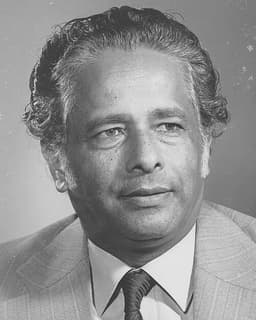
Anerood Jugnauth
Politician · Modern
59.0Total

Jose Maria Aznar
Politician · Modern
55.1Total
Basic Information
Born
1930
1953
Died
—
—
Era
Modern
Modern
Nationality
Mauritius
Spain
Occupation
Politician
Politician
Civilization
Other
Western
Score Comparison
Military (10%)
46.1
50.0
Political (20%)
70.3
59.3
Influence (20%)
59.0
58.0
Legacy (20%)
52.0
46.7
Leadership (15%)
78.0
72.0
Strategy (15%)
43.5
42.7
TOTAL
59.0
55.1
Anerood Jugnauth — Complete Timeline
1982 AD
Elected Prime Minister of MauritiusPolitical Action◆ Major
Jugnauth became Prime Minister after his Militant Socialist Movement (MSM) won the 1982 general election, defeating Seewoosagur Ramgoolam. He inherited an economy facing high unemployment and debt.
Electoral VictoryPower Transition
Impact: national
1983 AD
Established the Mauritius Export Processing ZoneReform
Jugnauth's government expanded the Export Processing Zone (EPZ) scheme, attracting foreign investment in textile manufacturing. This policy transformed Mauritius from a sugar-dependent economy to a diversified one, reducing unemployment.
Economic ReformIndustrialization
Impact: nationalconstructive
1987 AD
Re-elected Prime Minister (1987)Political Action◆ Major
Jugnauth won the 1987 general election, securing a second term. His government continued economic liberalization policies, leading to sustained growth and the emergence of Mauritius as a middle-income country.
Re-electionEconomic Growth
Impact: nationalconstructive
2003 AD
Became President of MauritiusPolitical Action
Jugnauth was elected President of Mauritius by the National Assembly, a largely ceremonial role. He served until 2012, providing a figurehead role after his long tenure as Prime Minister.
PresidencyCeremonial Role
Impact: national
2014 AD
Returned as Prime Minister (2014)Political Action◆ Major
Jugnauth returned as Prime Minister after his MSM-led alliance won the 2014 general election. At age 84, he became one of the world's oldest serving leaders, focusing on infrastructure projects.
Political ComebackInfrastructure
Impact: national
2017 AD
Resigned as Prime MinisterPolitical Action◆ Major
Jugnauth resigned as Prime Minister in January 2017, handing power to his son, Pravind Jugnauth. The succession was criticized as dynastic but was legal under the constitution.
ResignationDynastic Succession
Impact: national
Jose Maria Aznar — Complete Timeline
1996 AD
Implemented Economic Liberalization ReformsReform◆ Major
Aznar's government pursued a program of economic liberalization, including privatization of state-owned enterprises, labor market reforms, and tax cuts. These policies contributed to strong economic growth and reduced unemployment, but also increased income inequality.
Economic ReformPrivatizationLiberalization
Impact: national
Won the 1996 General ElectionPolitical Action◆ Major
Jose Maria Aznar led the People's Party (PP) to victory in the March 3, 1996 general election, defeating the incumbent PSOE. He formed a minority government with support from Catalan and Basque nationalists, ending 14 years of socialist rule.
ElectionPPChange of Government
Impact: national
2000 AD
Achieved an Absolute Majority in 2000Political Action◆ Major
Aznar's PP won an absolute majority in the March 12, 2000 general election, securing 183 seats. This allowed him to govern without relying on nationalist parties and implement a more conservative agenda, including tax cuts and privatization.
ElectionAbsolute MajorityPP
Impact: national
2003 AD
Aligned Spain with the US in the Iraq WarPolitical Action◆ Major
Aznar's government supported the US-led invasion of Iraq in March 2003, despite widespread public opposition in Spain. He participated in the Azores Summit with Bush and Blair, committing Spanish troops to the coalition, which strained relations with France and Germany.
Iraq WarForeign PolicyUS Alliance
Impact: global
2004 AD
Survived the 11-M Madrid Train BombingsPolitical Action◆ Major
On March 11, 2004, Islamist terrorists bombed commuter trains in Madrid, killing 191 people. Aznar's government initially blamed ETA, but evidence pointed to Al-Qaeda. The handling of the attacks and the subsequent election loss on March 14 marked the end of his tenure.
Terrorism11-MElection
Impact: nationaltragic
Lost the 2004 General ElectionPolitical Action◆ Major
Despite leading in polls before the 11-M attacks, Aznar's PP lost the March 14, 2004 general election to the PSOE led by Jose Luis Rodriguez Zapatero. The defeat was widely attributed to public anger over the government's handling of the bombings and support for the Iraq War.
Election Defeat11-MPP
Impact: nationaltragic
Expert Analysis
Origins
**Anerood Jugnauth** was born on March 29, 1930, in Palma, British Mauritius, into a Hindu farming family. He studied law in the UK and returned to practice as a barrister. His early political involvement began with the Independent Forward Bloc, but he later joined the Militant Socialist Movement (MSM). His background in law and grassroots politics shaped his pragmatic, development-focused approach.
**Jose Maria Aznar** was born on February 25, 1953, in Madrid, Spain, into a middle-class family. He studied law at Complutense University and became a tax inspector. His political career started in the conservative Alianza Popular, later the People's Party (PP). His technocratic background influenced his focus on economic liberalization and fiscal discipline.
Rise to Power
Jugnauth rose to prominence in the 1982 general election when his MSM-led alliance defeated the long-ruling Labour Party under Seewoosagur Ramgoolam. He became Prime Minister on June 16, 1982, inheriting an economy dependent on sugar and textiles. His key turning point was expanding the Export Processing Zone (EPZ), which attracted foreign investment and transformed Mauritius into a manufacturing hub.
Aznar's rise began with the 1996 general election on March 3, when his PP defeated the incumbent PSOE after 13 years of socialist rule. He formed a minority government with support from Catalan nationalists. His major turning point came in the 2000 election, when the PP won an absolute majority (183 seats), allowing him to pursue aggressive reforms without coalition constraints.
Leadership & Governance
Jugnauth's leadership style was pragmatic and development-oriented. He focused on economic diversification, expanding the EPZ to create jobs and reduce unemployment from over 20% in the early 1980s to single digits by the 1990s. He also promoted tourism and financial services. His governance was characterized by stability and gradual reform, often working with opposition parties to maintain consensus. However, his later years saw criticism of dynastic politics when he handed power to his son in 2017.
Aznar governed with a more confrontational style, pushing through privatization of state enterprises, labor market deregulation, and tax cuts. His economic reforms reduced public debt from 68% of GDP in 1996 to 48% in 2004, and unemployment fell from 22% to 11%. However, his alignment with the US in the Iraq War alienated many Spaniards and sparked massive protests. His government's handling of the 2004 Madrid bombings, initially blaming ETA, damaged his credibility and contributed to his party's election loss days later.
Triumph & Tragedy
Jugnauth's greatest success was transforming Mauritius from a low-income sugar-based economy to a middle-income diversified one, with GDP per capita rising from $1,200 in 1982 to over $9,000 by 2017. His EPZ policy created hundreds of thousands of jobs and attracted foreign investment. However, his legacy is marred by the perception of nepotism, as he groomed his son Pravind to succeed him, undermining democratic institutions. His return to power in 2014 at age 84 was seen as a personal victory but raised questions about political longevity.
Aznar's triumph was modernizing Spain's economy and integrating it into the Eurozone. His policies led to sustained growth and Spain's convergence with European averages. However, his greatest tragedy was the Iraq War decision, which isolated Spain internationally and domestically. The 2004 Madrid bombings and his government's flawed response led to a sudden electoral defeat, with the PP losing to PSOE just three days after the attacks.
Character & Destiny
Jugnauth was patient and strategic, often avoiding direct confrontation. He maintained power for decades by building coalitions and adapting to political shifts. His character was pragmatic, prioritizing economic growth over ideological purity. This allowed him to survive political storms but also led to accusations of authoritarian tendencies, especially in his later years.
Aznar was ideological and decisive, willing to take risks on controversial issues like Iraq. His technocratic background made him focus on economic metrics, but his foreign policy decisions revealed a stubborn streak. His destiny was shaped by the 2004 bombings, which ended his premiership prematurely despite his economic successes.
Legacy
Jugnauth's legacy is the economic transformation of Mauritius, often cited as a model for African development. The EPZ policy inspired similar zones in other developing countries. However, his dynastic succession has raised concerns about democratic backsliding. His political system remains stable but increasingly family-dominated.
Aznar's legacy is mixed: he is credited with economic modernization but criticized for foreign policy misadventures. His reforms laid the groundwork for Spain's growth, but his support for the Iraq War and the 2004 bombing aftermath tarnished his reputation. The PP later distanced itself from his more controversial stances.
Conclusion
Anerood Jugnauth had a greater impact on his nation than Jose Maria Aznar. Despite scoring only 3.9 points higher overall (59.0 vs 55.1), Jugnauth's leadership score of 78.0 compared to Aznar's 72.0 reflects his long tenure and transformative economic policies. Jugnauth fundamentally altered Mauritius's economic structure and lifted millions out of poverty, while Aznar's reforms, though significant, were part of a broader European trend and were overshadowed by foreign policy failures. Jugnauth's legacy of sustained growth and poverty reduction outweighs Aznar's more ideologically driven but ultimately divisive tenure.
Rankings
🥇
Anerood JugnauthLeader
Mil: 46.1Pol: 70.3Inf: 59.0
59.0
🥈
Jose Maria Aznar
Mil: 50.0Pol: 59.3Inf: 58.0
55.1
+3.9 behind
How This Comparison Works
Algorithm
Each figure is scored on 6 dimensions (0—100 scale) based on structured historical data: Military (10%), Political (20%), Influence (20%), Legacy (20%), Leadership (15%), Strategy (15%). The weighted total produces the final ranking.
Data Sources
Scores are computed from structured sub-indicators in the database. Scale factors adjust for era (Ancient ×0.85, Modern ×1.0) and civilization size (Eastern ×1.05, Other ×0.80) to account for differences in population and military scale.
Maximum 3 Figures
Comparisons are limited to 2—3 figures to ensure readability and statistical meaningfulness.
Error Margins
±5 points per dimension — Sub-scores are derived from historical records with inherent uncertainty. Two figures within 5 points on a dimension should be considered roughly equivalent in that area.
Total Score Accuracy
±3 points overall — The weighted combination of 6 dimensions produces a total score with approximately ±3 points of uncertainty. Differences of less than 3 points are not statistically significant— the figures are effectively tied.
Known Limitations
- Historical records are incomplete and uneven across civilizations
- Figures from oral-tradition societies may be underrepresented
- Occupation labels can misclassify multi-role figures
- Scores measure capability and impact, not moral character
- Quantitative scoring is a comparison tool, not absolute truth
Capability Radar
Military (10%) — Battles & Warfare
Battles
24
29
Win Rate
23
30
Expansion
27
36
Political (20%) — Governance & Reform
Reform
70
60
Diplomacy
75
70
Economy
80
65
Influence (20%) — Cultural & Global Reach
Cultural
40
30
Global
45
50
Legacy (20%) — Historical Impact
Historical
50
40
Longevity
60
30
Leadership (15%) — Power & Stability
Tenure
85
65
Stability
75
60
Strategy (15%) — Tactics & Innovation
Strategy
31
39
Tactics
32
43
Reform
37
42
Similar Comparisons
Comments & Discussion
No comments yet. Be the first to share your thoughts!