Loading...
Angela Merkel vs Giuseppe Conte
Angela Merkel leads by 8.4 pts · 2 figures compared
…

Angela Merkel
Politician · Modern
63.8Total
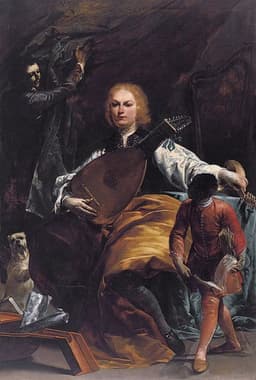
Giuseppe Conte
Politician · Modern
55.4Total
Basic Information
Born
1954
1964
Died
—
—
Era
Modern
Modern
Nationality
Germany
Italy
Occupation
Politician
Politician
Civilization
Western
Western
Score Comparison
Military (10%)
48.5
50.0
Political (20%)
78.0
68.0
Influence (20%)
68.0
56.4
Legacy (20%)
55.0
43.3
Leadership (15%)
80.7
74.0
Strategy (15%)
43.5
42.1
TOTAL
63.8
55.4
Angela Merkel — Complete Timeline
2005 AD
Election as Chancellor of GermanyPolitical Action
Merkel became the first female Chancellor of Germany after her CDU/CSU alliance won a narrow victory in federal elections. She formed a grand coalition with the SPD, marking the start of her 16-year tenure as Europe's most powerful leader.
German ElectionChancellorshipGrand Coalition
Impact: global
2010 AD
Management of the Eurozone Debt CrisisPolitical Action◆ Major
Merkel played a central role in the EU's response to the Greek debt crisis, insisting on austerity measures in exchange for bailout funds. Her policies were credited with stabilizing the euro but were criticized for causing severe economic hardship in Greece.
Eurozone CrisisAusterityGreek Bailout
Impact: regional
2015 AD
Open-Door Policy for Syrian RefugeesPolitical Action
Merkel decided to keep Germany's borders open to Syrian refugees fleeing civil war, allowing over one million asylum seekers into the country. The policy was praised as humanitarian but led to political backlash, the rise of the AfD, and strained EU relations.
Refugee CrisisSyrian WarHumanitarian Policy
Impact: globalprogressive
Giuseppe Conte — Complete Timeline
2018 AD
Appointed Prime Minister of ItalyPolitical Action◆ Major
Conte was appointed Prime Minister by President Mattarella, leading a coalition between the Five Star Movement and the League. A law professor with no prior political experience, he became the head of a populist government.
PopulismCoalitionGovernment Formation
Impact: national
2019 AD
Formed Second Government with Five Star and PDPolitical Action◆ Major
After the League left the coalition, Conte formed a new government with the Five Star Movement and the Democratic Party. This shift moved the government from right-wing populism to a more centrist, pro-European stance.
Coalition ChangeGovernment FormationPro-European
Impact: national
2020 AD
Managed COVID-19 Pandemic ResponsePolitical Action◆ Major
Conte's government implemented one of Europe's strictest lockdowns to contain the COVID-19 pandemic. Italy became the first Western country to impose a nationwide quarantine, with significant economic and social costs.
COVID-19LockdownPublic Health
Impact: national
2021 AD
Resigned as Prime MinisterPolitical Action◆ Major
Conte resigned after the Italia Viva party withdrew support from his coalition, triggering a government crisis. He was succeeded by Mario Draghi, who formed a national unity government.
Government CrisisCoalition CollapseTransition
Impact: nationaldestructive
Expert Analysis
Origins
Angela Merkel was born in 1954 in Hamburg, West Germany, but grew up in East Germany. Her father was a Lutheran pastor, and she studied physics at the University of Leipzig, earning a doctorate in quantum chemistry. She worked as a research scientist before entering politics after the fall of the Berlin Wall in 1989. Her scientific background shaped her analytical, cautious approach. Giuseppe Conte, born in 1964 in Puglia, Italy, grew up in a middle-class family. He studied law at Sapienza University of Rome and became a professor of civil law, specializing in contract law. He had no prior political experience before being appointed prime minister in 2018, a factor that both helped and hindered his leadership.
Rise to Power
Merkel entered politics in 1989 as a spokesperson for the Democratic Awakening party, which merged into the Christian Democratic Union (CDU). She was elected to the Bundestag in 1990 and served as Minister for Women and Youth under Chancellor Helmut Kohl. In 2000, she became CDU chairwoman after a party financing scandal toppled Kohl. In 2005, she narrowly won the federal election and became Germany's first female chancellor, forming a grand coalition with the SPD. Conte's rise was sudden. He was a little-known law professor when the Five Star Movement and the League nominated him as prime minister in 2018. President Mattarella appointed him on June 1, 2018, despite his lack of political experience. His first government lasted until August 2019, when the League withdrew support. He then formed a second coalition with the Five Star Movement and the Democratic Party, serving until February 2021.
Leadership & Governance
Merkel's leadership style was pragmatic and consensus-driven. She navigated multiple crises with a calm, methodical approach. During the eurozone debt crisis (2010-2015), she insisted on austerity measures for Greece, demanding structural reforms in exchange for bailouts. This policy, while stabilizing the euro, caused severe economic hardship in Greece and fueled anti-German sentiment. Her 2015 decision to keep Germany's borders open to Syrian refugees resulted in over 1 million asylum seekers entering Germany. The policy was humanitarian but politically divisive, leading to the rise of the far-right Alternative for Germany (AfD). Conte, by contrast, led during the COVID-19 pandemic. He imposed one of Europe's strictest lockdowns in March 2020, closing all non-essential businesses and restricting movement. Italy's death toll initially soared, but the lockdown eventually reduced infection rates. Conte's government also negotiated EU recovery funds, securing €209 billion for Italy. However, his coalition was unstable, and he resigned in 2021 after losing parliamentary support.
Triumph & Tragedy
Merkel's greatest triumph was her management of the eurozone crisis, preserving the euro and imposing fiscal discipline. Her refugee policy, though controversial, demonstrated moral leadership. However, her legacy is marred by Germany's slow transition to renewable energy (Energiewende) and the country's dependence on Russian gas, which backfired after the 2022 Ukraine invasion. Conte's triumph was his pandemic response, which, despite initial chaos, led to one of the world's highest vaccination rates by late 2021. His failure was his inability to maintain coalition stability, leading to his resignation during a health crisis. Italy's economy, already struggling before COVID, contracted by 8.9% in 2020 under his watch.
Character & Destiny
Merkel was known for her caution and refusal to make snap decisions. She often waited for problems to crystallize before acting, earning the nickname "the decider" (a play on "the doubter"). Her scientific training made her data-driven and risk-averse. Conte, a law professor, was detail-oriented but lacked political cunning. He navigated between rival coalition partners but was ultimately outmaneuvered by Matteo Salvini and later Mario Draghi. Historical assessments rank Merkel as the most powerful woman in the world for over a decade, while Conte is seen as a transitional figure.
Legacy
Merkel's legacy is mixed: she stabilized Europe but left Germany with infrastructure deficits and a fragmented party system. Her open-door refugee policy changed Germany's demographics but also fueled populism. Globally, she was the de facto leader of the EU. Conte's legacy is tied to COVID-19: his lockdowns saved lives but damaged the economy. He is remembered as a competent crisis manager but a weak political operator. Italy's recovery under Draghi overshadowed his tenure.
Conclusion
Angela Merkel had a significantly greater impact than Giuseppe Conte. Her total score of 63.8 dwarfs Conte's 55.4, with a gap of 8.4 points. Merkel's leadership of Europe through the eurozone and refugee crises reshaped the continent, while Conte's influence was limited to Italy's pandemic response. Merkel's political score of 78.0 reflects her decade-long dominance, whereas Conte's 68.0 shows his shorter, less stable tenure. In leadership, Merkel's 80.7 exceeds Conte's 74.0, underscoring her ability to manage multiple crises. Conte, though effective in a narrow context, lacked the strategic depth and legacy of Merkel. Therefore, Merkel stands as the more consequential leader.
Rankings
🥇
Angela MerkelLeader
Mil: 48.5Pol: 78.0Inf: 68.0
63.8
🥈
Giuseppe Conte
Mil: 50.0Pol: 68.0Inf: 56.4
55.4
+8.4 behind
How This Comparison Works
Algorithm
Each figure is scored on 6 dimensions (0—100 scale) based on structured historical data: Military (10%), Political (20%), Influence (20%), Legacy (20%), Leadership (15%), Strategy (15%). The weighted total produces the final ranking.
Data Sources
Scores are computed from structured sub-indicators in the database. Scale factors adjust for era (Ancient ×0.85, Modern ×1.0) and civilization size (Eastern ×1.05, Other ×0.80) to account for differences in population and military scale.
Maximum 3 Figures
Comparisons are limited to 2—3 figures to ensure readability and statistical meaningfulness.
Error Margins
±5 points per dimension — Sub-scores are derived from historical records with inherent uncertainty. Two figures within 5 points on a dimension should be considered roughly equivalent in that area.
Total Score Accuracy
±3 points overall — The weighted combination of 6 dimensions produces a total score with approximately ±3 points of uncertainty. Differences of less than 3 points are not statistically significant— the figures are effectively tied.
Known Limitations
- Historical records are incomplete and uneven across civilizations
- Figures from oral-tradition societies may be underrepresented
- Occupation labels can misclassify multi-role figures
- Scores measure capability and impact, not moral character
- Quantitative scoring is a comparison tool, not absolute truth
Capability Radar
Military (10%) — Battles & Warfare
Battles
31
27
Win Rate
34
29
Expansion
33
33
Political (20%) — Governance & Reform
Reform
75
45
Diplomacy
90
50
Economy
80
40
Influence (20%) — Cultural & Global Reach
Cultural
65
30
Global
75
40
Legacy (20%) — Historical Impact
Historical
70
35
Longevity
60
25
Leadership (15%) — Power & Stability
Tenure
85
55
Stability
85
35
Strategy (15%) — Tactics & Innovation
Strategy
39
37
Tactics
40
39
Reform
46
46
Similar Comparisons
Comments & Discussion
No comments yet. Be the first to share your thoughts!