Loading...
Analysis will be generated on first visit.
Scores and timeline are available below. The page will refresh automatically when ready.
Anne Robert Turgot vs Julius Caesar
Julius Caesar leads by 14.5 pts · 2 figures compared
…

Anne Robert Turgot
Politician · Modern
68.8Total
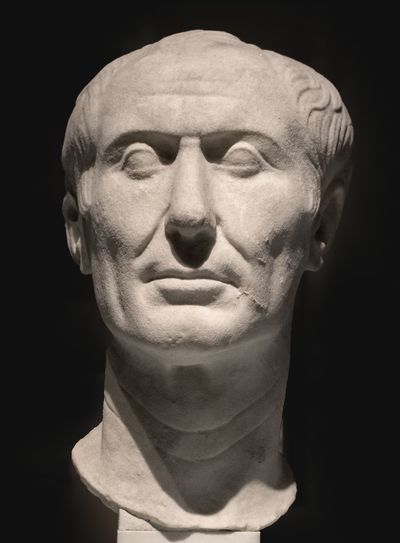
Julius Caesar
General · Ancient
83.3Total
Basic Information
Born
1727
-100
Died
1781
-44
Era
Modern
Ancient
Nationality
France
Roman Republic
Occupation
Politician
General
Civilization
Western
Western
Score Comparison
Military (10%)
37.5
88.0
Political (20%)
78.3
78.0
Influence (20%)
74.8
85.0
Legacy (20%)
67.7
82.0
Leadership (15%)
77.1
82.0
Strategy (15%)
62.3
88.0
TOTAL
68.8
83.3
Rankings
🥇
Julius CaesarLeader
Mil: 88.0Pol: 78.0Inf: 85.0
83.3
🥈
Anne Robert Turgot
Mil: 37.5Pol: 78.3Inf: 74.8
68.8
+14.5 behind
How This Comparison Works
Algorithm
Each figure is scored on 6 dimensions (0—100 scale) based on structured historical data: Military (10%), Political (20%), Influence (20%), Legacy (20%), Leadership (15%), Strategy (15%). The weighted total produces the final ranking.
Data Sources
Scores are computed from structured sub-indicators in the database. Scale factors adjust for era (Ancient ×0.85, Modern ×1.0) and civilization size (Eastern ×1.05, Other ×0.80) to account for differences in population and military scale.
Maximum 3 Figures
Comparisons are limited to 2—3 figures to ensure readability and statistical meaningfulness.
Error Margins
±5 points per dimension — Sub-scores are derived from historical records with inherent uncertainty. Two figures within 5 points on a dimension should be considered roughly equivalent in that area.
Total Score Accuracy
±3 points overall — The weighted combination of 6 dimensions produces a total score with approximately ±3 points of uncertainty. Differences of less than 3 points are not statistically significant— the figures are effectively tied.
Known Limitations
- Historical records are incomplete and uneven across civilizations
- Figures from oral-tradition societies may be underrepresented
- Occupation labels can misclassify multi-role figures
- Scores measure capability and impact, not moral character
- Quantitative scoring is a comparison tool, not absolute truth
Capability Radar
Military (10%) — Battles & Warfare
Battles
29
95
Win Rate
34
92
Expansion
37
97
Political (20%) — Governance & Reform
Reform
65
90
Diplomacy
40
85
Economy
70
82
Influence (20%) — Cultural & Global Reach
Cultural
30
88
Global
35
94
Legacy (20%) — Historical Impact
Historical
55
95
Longevity
40
96
Leadership (15%) — Power & Stability
Tenure
20
75
Stability
25
60
Strategy (15%) — Tactics & Innovation
Strategy
38
94
Tactics
38
96
Reform
43
88
Analysis will be generated on first visit.
Scores and timeline are available below. The page will refresh automatically when ready.
Anne Robert Turgot — Complete Timeline
1774 AD
Introduction of Free Grain TradeReform◆ Major
Turgot implemented the free trade of grain within France, removing internal tariffs and restrictions. This policy aimed to stabilize grain prices and prevent famines, but it led to price spikes and the 'Flour War' riots in 1775, forcing its temporary suspension.
Economic ReformFree TradeRiots
Impact: nationalconstructive
Appointed Controller-General of FinancesPolitical Action◆ Major
Turgot was appointed Controller-General of Finances by King Louis XVI, tasked with reforming the French economy. A leading Physiocrat, he advocated for free trade and the removal of feudal restrictions, aiming to modernize the ancien r
AppointmentEconomic ReformGovernment
Impact: national
1776 AD
Edict of 1776: Abolition of GuildsReform◆ Major
Turgot issued the Edict of 1776, which abolished the system of trade guilds and corporations in France. This reform aimed to promote economic freedom and competition but faced fierce opposition from vested interests, leading to its eventual repeal.
Economic ReformFree TradeGuilds
Impact: nationalconstructive
Dismissal from OfficePolitical Action◆ Major
Facing opposition from the Parlements, the court, and Queen Marie Antoinette, Turgot was dismissed by Louis XVI. His reforms were reversed, and the opportunity for peaceful fiscal reform was lost, contributing to the later financial crisis that led to the Revolution.
DismissalPolitical FailureReform Reversal
Impact: nationaldestructive
1781 AD
Death of TurgotPolitical Action
Turgot died in Paris, having retired from public life after his dismissal. His ideas on economic liberalism and reform influenced later thinkers, but his failure to implement lasting change highlighted the structural resistance to modernization in pre-revolutionary France.
DeathLegacyEconomic Thought
Impact: national
Similar Comparisons
Comments & Discussion
No comments yet. Be the first to share your thoughts!