Loading...
Antiochus IV Epiphanes vs Raneb
Antiochus IV Epiphanes leads by 17.5 pts · 2 figures compared
…

Antiochus IV Epiphanes
Emperor · Ancient
53.4Total
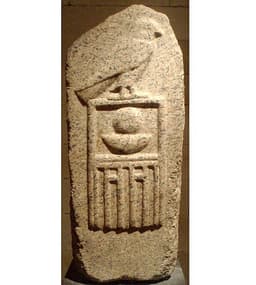
Raneb
Emperor · Ancient
35.9Total
Basic Information
Born
-215
-2850
Died
-164
-2830
Era
Ancient
Ancient
Nationality
Seleucid Empire
Early Egypt
Occupation
Emperor
Emperor
Civilization
Middle Eastern
Middle Eastern
Score Comparison
Military (10%)
72.5
10.2
Political (20%)
39.4
32.1
Influence (20%)
58.0
43.2
Legacy (20%)
52.0
34.2
Leadership (15%)
51.9
41.5
Strategy (15%)
50.0
45.0
TOTAL
53.4
35.9
Antiochus IV Epiphanes — Complete Timeline
175 BC
Accession as King of the Seleucid EmpirePolitical Action◆ Major
Antiochus IV Epiphanes became king of the Seleucid Empire after the death of his brother Seleucus IV Philopator. He seized power while the rightful heir, Demetrius I, was a hostage in Rome. His reign was marked by ambitious expansion and Hellenization policies.
AccessionSeleucid DynastyHellenization
Impact: regional
169 BC
Invasion of EgyptWar◆ Major
Antiochus IV invaded Ptolemaic Egypt, capturing much of the country and besieging Alexandria. He was forced to withdraw after the Roman envoy Gaius Popillius Laenas delivered an ultimatum, famously drawing a circle in the sand around Antiochus and demanding an answer before he left it.
InvasionEgyptRoman Ultimatum
Impact: regional
167 BC
Persecution of the Jews and Desecration of the TemplePolitical Action
Antiochus IV issued decrees forbidding Jewish religious practices, including Sabbath observance and circumcision. He ordered the erection of an altar to Zeus in the Second Temple in Jerusalem and sacrificed pigs, an act known as the 'Abomination of Desolation'. This sparked the Maccabean Revolt.
PersecutionTemple DesecrationMaccabean Revolt
Impact: regionaldestructive
164 BC
Death in PersiaWar◆ Major
Antiochus IV died during a military campaign in Persia, possibly from disease or in battle. His death left the Seleucid Empire weakened and facing internal revolts, including the ongoing Maccabean Revolt in Judea.
DeathCampaignSeleucid Decline
Impact: regional
Expert Analysis
Origins
Antiochus IV Epiphanes (c. 215–164 BCE) was born as Mithridates, the son of Antiochus III the Great of the Seleucid Empire. He was taken as a hostage to Rome after the Treaty of Apamea (188 BCE), where he spent over a decade observing Roman politics and military discipline. His brother, Seleucus IV Philopator, ruled until his assassination in 175 BCE, when Antiochus seized the throne. His upbringing in Rome gave him a pragmatic but ruthless approach to power.
Raneb (also Nebra) was the second pharaoh of Dynasty II (c. 2890–2686 BCE) of ancient Egypt. His name means "Ra is the Lord," indicating the growing prominence of the sun god. Little is known of his early life; he inherited the throne from his father, Hotepsekhemwy. No contemporary records detail his upbringing, education, or family background. His reign is attested only through a few stone vessel inscriptions and seal impressions.
Rise to Power
Antiochus IV became king in 175 BCE after his brother Seleucus IV was murdered by his minister Heliodorus. Antiochus was in Athens at the time but quickly returned, with the help of the Pergamene king Eumenes II, to claim the throne. He eliminated Heliodorus and presented himself as a savior of the empire. His rise was marked by diplomatic maneuvering and military support, not by popular acclaim. He adopted the title "Epiphanes" (God Manifest) to bolster his authority.
Raneb's rise was presumably smooth as a hereditary successor. He ruled after Hotepsekhemwy, who had unified Egypt after the turmoil of the First Dynasty. No evidence suggests any struggle for the throne. His rise was typical for early dynastic pharaohs: he inherited a stable kingdom and continued the administrative consolidation begun by his predecessor.
Leadership & Governance
Antiochus IV governed the Seleucid Empire through a blend of Hellenistic centralization and local autonomy. He founded or refounded cities, such as Antioch-on-the-Chrysorrhoas, to spread Greek culture. He also plundered temples to fund his military campaigns, including the temple of Jerusalem in 169 BCE. His decrees forbidding Jewish religious practices—including Sabbath observance, circumcision, and dietary laws—were unprecedented in their severity. This persecution was part of a strategy to impose cultural homogeneity, but it backfired, sparking the Maccabean Revolt (167–160 BCE).
Raneb's governance is poorly documented. He likely continued the administrative reforms of his father, including the standardizing of royal titulary and the promotion of the sun god Ra. His name appears on stone vessels from Saqqara, indicating royal patronage of mortuary cults. His rule seems to have been stable, with no recorded internal or external conflicts. He scored 41.5 in leadership, reflecting the lack of evidence for any innovative policies.
Triumph & Tragedy
Antiochus IV's greatest success was his military campaign against Ptolemaic Egypt in 170–168 BCE. He defeated the Egyptian army, captured Memphis, and besieged Alexandria. He was on the verge of conquering the entire country when the Roman envoy Gaius Popillius Laenas drew a circle in the sand around him and demanded withdrawal. Antiochus, humiliated, complied. This event, known as the "Day of Eleusis," marked his greatest failure: it exposed Seleucid weakness before Rome. His other failure was the Maccabean Revolt, which drained resources and secured Judean independence under the Hasmoneans. He died in 164 BCE during a campaign in Persia, possibly from disease, leaving the empire destabilized.
Raneb's triumphs and tragedies are unknown. No military campaigns, building projects, or diplomatic achievements are recorded. His reign appears to have been uneventful. His greatest failure might be the obscurity itself: he contributed nothing that survived in historical memory. He scored 10.2 in military and 34.2 in legacy, reflecting his near-total absence from the historical record.
Character & Destiny
Antiochus IV was ambitious, erratic, and ruthless. He styled himself as a god, but his decisions often lacked prudence. His time in Rome gave him a respect for Roman power, yet he repeatedly provoked them indirectly. His persecution of the Jews was driven by a desire for unity, but it was counterproductive. He was known for eccentric behavior, such as mingling with commoners and giving lavish gifts. His character—a blend of Hellenistic king and Roman pragmatist—led to both expansion and disaster. Historians assess him as a capable military commander but a flawed politician (political score 39.4).
Raneb's character is a blank. No personal anecdotes, records of his actions, or assessments by contemporaries survive. He is known only through his name and a few artifacts. His destiny was to be forgotten, a fate sealed by the lack of monumental inscriptions. His leadership score of 41.5 is based on the assumption that he was a typical early dynastic ruler.
Legacy
Antiochus IV's legacy is defined by the Maccabean Revolt, which led to the Hasmonean kingdom and shaped Jewish identity. The festival of Hanukkah commemorates the rededication of the Temple after its desecration. His persecution is a central narrative in Jewish and Christian history. He also weakened the Seleucid Empire, hastening its decline. His total score of 53.4 places him as a minor but consequential figure in ancient history.
Raneb's legacy is minimal. He is a name in the king lists of Manetho and a few archaeological finds. His promotion of Ra may have influenced later sun cults, but this is speculative. His score of 35.9 reflects his obscurity. He had no lasting impact on Egypt or the world.
Conclusion
Antiochus IV Epiphanes had a greater impact than Raneb, despite his lower leadership and political scores. His actions triggered a revolt that changed the course of Jewish history and contributed to the rise of the Hasmoneans. His total score of 53.4 versus Raneb's 35.9 reflects his documented influence. While Raneb ruled a stable Egypt, his reign left no mark. The comparison favors Antiochus IV, whose tyranny, however misguided, had lasting consequences.
Rankings
🥇
Antiochus IV EpiphanesLeader
Mil: 72.5Pol: 39.4Inf: 58.0
53.4
🥈
Raneb
Mil: 10.2Pol: 32.1Inf: 43.2
35.9
+17.5 behind
How This Comparison Works
Algorithm
Each figure is scored on 6 dimensions (0—100 scale) based on structured historical data: Military (10%), Political (20%), Influence (20%), Legacy (20%), Leadership (15%), Strategy (15%). The weighted total produces the final ranking.
Data Sources
Scores are computed from structured sub-indicators in the database. Scale factors adjust for era (Ancient ×0.85, Modern ×1.0) and civilization size (Eastern ×1.05, Other ×0.80) to account for differences in population and military scale.
Maximum 3 Figures
Comparisons are limited to 2—3 figures to ensure readability and statistical meaningfulness.
Error Margins
±5 points per dimension — Sub-scores are derived from historical records with inherent uncertainty. Two figures within 5 points on a dimension should be considered roughly equivalent in that area.
Total Score Accuracy
±3 points overall — The weighted combination of 6 dimensions produces a total score with approximately ±3 points of uncertainty. Differences of less than 3 points are not statistically significant— the figures are effectively tied.
Known Limitations
- Historical records are incomplete and uneven across civilizations
- Figures from oral-tradition societies may be underrepresented
- Occupation labels can misclassify multi-role figures
- Scores measure capability and impact, not moral character
- Quantitative scoring is a comparison tool, not absolute truth
Capability Radar
Military (10%) — Battles & Warfare
Battles
65
5
Win Rate
55
5
Expansion
50
5
Political (20%) — Governance & Reform
Reform
30
10
Diplomacy
40
10
Economy
35
10
Influence (20%) — Cultural & Global Reach
Cultural
55
10
Global
55
5
Legacy (20%) — Historical Impact
Historical
70
15
Longevity
60
10
Leadership (15%) — Power & Stability
Tenure
45
30
Stability
20
20
Strategy (15%) — Tactics & Innovation
Strategy
60
5
Tactics
70
5
Reform
40
5
Similar Comparisons
Comments & Discussion
No comments yet. Be the first to share your thoughts!