Loading...
This comparison has not been analyzed yet.
One-time AI generation (~1 minute). Scores and timeline are already available below.
Antonio Carlos Ribeiro de Andrada vs Tassos Papadopoulos
Antonio Carlos Ribeiro de Andrada leads by 4.3 pts · 2 figures compared
…
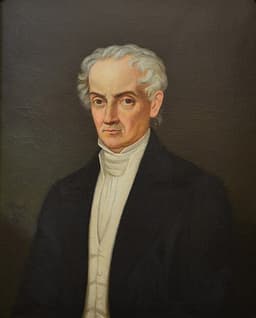
Antonio Carlos Ribeiro de Andrada
Politician · Modern
53.3Total
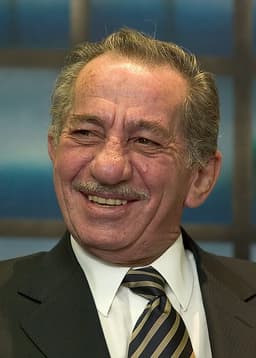
Tassos Papadopoulos
Politician · Modern
49.0Total
Basic Information
Born
1870
1934
Died
1946
—
Era
Modern
Modern
Nationality
Brazil
Cyprus
Occupation
Politician
Politician
Civilization
Western
Western
Score Comparison
Military (10%)
49.9
49.3
Political (20%)
68.0
45.1
Influence (20%)
55.7
51.0
Legacy (20%)
48.3
41.7
Leadership (15%)
53.2
65.7
Strategy (15%)
41.6
42.7
TOTAL
53.3
49.0
Antonio Carlos Ribeiro de Andrada — Complete Timeline
1926 AD
President of Minas GeraisPolitical Action◆ Major
Antonio Carlos was elected President of the state of Minas Gerais. He implemented administrative reforms, modernized the state's finances, and built a strong political base that would be crucial in the 1930 Revolution.
State GovernmentMinas GeraisReform
Impact: regionalconstructive
1929 AD
Led the Liberal AlliancePolitical Action
Antonio Carlos, as President of Minas Gerais, led the formation of the Liberal Alliance, a political coalition that opposed the S
Political Alliance1930 RevolutionVargas
Impact: nationalconstructive
1930 AD
Supported the 1930 RevolutionPolitical Action
Antonio Carlos was a key strategist of the 1930 Revolution. He coordinated the political and military uprising that overthrew President Washington Lu
RevolutionCoupEnd of Republic
Impact: national
1933 AD
Elected to the Constituent AssemblyPolitical Action◆ Major
Antonio Carlos was elected to the Constituent Assembly that drafted the 1934 Constitution. He played a leading role in the assembly, advocating for federalism and civil liberties, though his influence waned under the subsequent Estado Novo.
ConstitutionConstituent AssemblyPolitics
Impact: nationalconstructive
Tassos Papadopoulos — Complete Timeline
2003 AD
Elected President of CyprusPolitical Action◆ Major
Tassos Papadopoulos was elected President of Cyprus, defeating incumbent Glafcos Clerides. His campaign focused on a hardline stance against the Annan Plan for reunification, appealing to Greek Cypriot nationalists.
ElectionLeadershipCyprus
Impact: national
2004 AD
Rejected the Annan Plan for Cyprus reunificationPolitical Action
Papadopoulos urged Greek Cypriots to reject the Annan Plan in a referendum, arguing it did not adequately address security and property rights. The plan was overwhelmingly rejected by Greek Cypriots, while Turkish Cypriots approved it, ending the reunification effort.
ReunificationAnnan PlanReferendum
Impact: global
Oversaw Cyprus's EU accessionPolitical Action◆ Major
Papadopoulos oversaw Cyprus's accession to the European Union on May 1, 2004, despite the failure of reunification. The accession applied only to the Greek Cypriot south, deepening the division of the island.
EU AccessionCyprusIntegration
Impact: regionalconstructive
2008 AD
Lost re-election bidPolitical Action◆ Major
Papadopoulos was defeated in the presidential election by Demetris Christofias. His loss was attributed to economic concerns and a desire for renewed reunification talks, as Christofias promised a more conciliatory approach.
ElectionTransitionCyprus
Impact: national
This comparison has not been analyzed yet.
One-time AI generation (~1 minute). Scores and timeline are already available below.
Rankings
🥇
Antonio Carlos Ribeiro de AndradaLeader
Mil: 49.9Pol: 68.0Inf: 55.7
53.3
🥈
Tassos Papadopoulos
Mil: 49.3Pol: 45.1Inf: 51.0
49.0
+4.3 behind
How This Comparison Works
Algorithm
Each figure is scored on 6 dimensions (0—100 scale) based on structured historical data: Military (10%), Political (20%), Influence (20%), Legacy (20%), Leadership (15%), Strategy (15%). The weighted total produces the final ranking.
Data Sources
Scores are computed from structured sub-indicators in the database. Scale factors adjust for era (Ancient ×0.85, Modern ×1.0) and civilization size (Eastern ×1.05, Other ×0.80) to account for differences in population and military scale.
Maximum 3 Figures
Comparisons are limited to 2—3 figures to ensure readability and statistical meaningfulness.
Error Margins
±5 points per dimension — Sub-scores are derived from historical records with inherent uncertainty. Two figures within 5 points on a dimension should be considered roughly equivalent in that area.
Total Score Accuracy
±3 points overall — The weighted combination of 6 dimensions produces a total score with approximately ±3 points of uncertainty. Differences of less than 3 points are not statistically significant— the figures are effectively tied.
Known Limitations
- Historical records are incomplete and uneven across civilizations
- Figures from oral-tradition societies may be underrepresented
- Occupation labels can misclassify multi-role figures
- Scores measure capability and impact, not moral character
- Quantitative scoring is a comparison tool, not absolute truth
Capability Radar
Military (10%) — Battles & Warfare
Battles
28
32
Win Rate
34
29
Expansion
34
36
Political (20%) — Governance & Reform
Reform
60
35
Diplomacy
65
45
Economy
40
30
Influence (20%) — Cultural & Global Reach
Cultural
30
20
Global
35
25
Legacy (20%) — Historical Impact
Historical
50
30
Longevity
40
20
Leadership (15%) — Power & Stability
Tenure
55
40
Stability
45
25
Strategy (15%) — Tactics & Innovation
Strategy
35
37
Tactics
42
40
Reform
43
45
Similar Comparisons
Comments & Discussion
No comments yet. Be the first to share your thoughts!