Loading...
Antonio Lopez de Santa Anna vs Ranoji Scindia
Antonio Lopez de Santa Anna leads by 1.9 pts · 2 figures compared
…
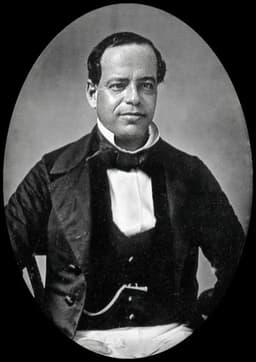
Antonio Lopez de Santa Anna
General · Modern
58.9Total
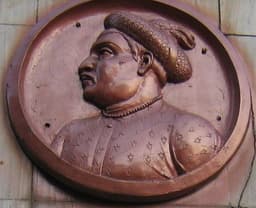
Ranoji Scindia
General · Modern
57.0Total
Basic Information
Born
1794
1700
Died
1876
1745
Era
Modern
Modern
Nationality
Mexico
India
Occupation
General
General
Civilization
Western
Indian
Score Comparison
Military (10%)
70.0
50.0
Political (20%)
46.6
54.7
Influence (20%)
56.7
58.0
Legacy (20%)
58.0
54.0
Leadership (15%)
68.0
65.0
Strategy (15%)
60.0
60.0
TOTAL
58.9
57.0
Antonio Lopez de Santa Anna — Complete Timeline
1823 AD
Led the Plan of Casa Mata rebellionPolitical Action
Santa Anna, then a general, issued the Plan of Casa Mata on February 1, 1823, calling for the overthrow of Emperor Agust
RebellionOverthrowRepublic
Impact: nationalconstructive
1829 AD
Defended Mexico at the Battle of TampicoWar◆ Major
Santa Anna commanded Mexican forces that defeated a Spanish invasion force at Tampico on September 11, 1829. The victory ended Spain's last attempt to reconquer Mexico and made Santa Anna a national hero. He was hailed as the 'Hero of Tampico' and used this fame to advance politically.
VictorySpanish InvasionNational Hero
Impact: nationalconstructive
1833 AD
Became President of Mexico for the first timePolitical Action◆ Major
Santa Anna was elected President of Mexico in 1833. He quickly delegated power to Vice President Valent
PresidencyPolitical InstabilityPower
Impact: national
1836 AD
Commanded at the Siege of the AlamoWar◆ Major
Santa Anna personally led the Mexican army in the siege of the Alamo mission in San Antonio, Texas. After a 13-day siege, Mexican forces stormed the fort on March 6, 1836, killing all 180-250 Texan defenders. The battle became a symbol of Texan resistance and a rallying cry for independence.
BattleTexas RevolutionAlamo
Impact: regionaldestructive
Defeated and captured at the Battle of San JacintoWar
Santa Anna's army was surprised and routed by Texan forces under Sam Houston at the Battle of San Jacinto on April 21, 1836. Santa Anna was captured the next day. He was forced to sign the Treaties of Velasco, recognizing Texan independence, though Mexico later repudiated them.
DefeatCaptureTexas Independence
Impact: regionaltragic
1847 AD
Lost the Mexican-American WarWar
Santa Anna returned from exile to command Mexican forces during the Mexican-American War. Despite initial efforts, his army was defeated at the Battle of Cerro Gordo and later at the Battle of Chapultepec. US forces captured Mexico City on September 14, 1847, leading to the Treaty of Guadalupe Hidalgo and massive territorial losses.
Mexican-American WarDefeatTerritorial Loss
Impact: globaltragic
1853 AD
Sold La Mesilla to the United StatesPolitical Action◆ Major
During his final presidency, Santa Anna agreed to the Gadsden Purchase, selling 29,670 square miles of territory (La Mesilla) to the United States for $10 million. The sale was widely condemned in Mexico as a betrayal. This act further damaged his reputation and led to his overthrow.
Territorial CessionGadsden PurchaseBetrayal
Impact: nationaldestructive
1855 AD
Overthrown and exiled for the final timePolitical Action◆ Major
The Plan of Ayutla, led by Juan
OverthrowExileEnd of Career
Impact: nationaltragic
Ranoji Scindia — Complete Timeline
1726 AD
Appointed Subedar of MalwaPolitical Action◆ Major
Ranoji Scindia was appointed as the Maratha subedar of Malwa by Peshwa Baji Rao I. This gave him control over a large territory and laid the foundation for the Scindia dynasty of Gwalior.
Maratha EmpireMalwaScindia Dynasty
Impact: regionalconstructive
1737 AD
Battle of DelhiWar◆ Major
Ranoji Scindia participated in the Maratha raid on Delhi under Baji Rao I. The attack on the Mughal capital demonstrated Maratha power and led to the extraction of tribute.
Maratha-Mughal WarsDelhiRaid
Impact: national
1739 AD
Battle of VasaiWar
Ranoji Scindia fought alongside Malhar Rao Holkar in the siege of Vasai against the Portuguese. The victory ended Portuguese control in the Konkan region.
Maratha-Portuguese WarsSiegeKonkan
Impact: regional
1740 AD
Founded Gwalior as CapitalPolitical Action◆ Major
Ranoji Scindia established his capital at Gwalior, fortifying the Gwalior Fort and building a palace. This city became the center of Scindia power for over a century.
FoundingGwaliorScindia Dynasty
Impact: regionalconstructive
1745 AD
Death in BattleWar
Ranoji Scindia was killed in a battle against the Nizam of Hyderabad's forces near the Narmada River. His death occurred during a Maratha campaign to expand into the Deccan.
DeathBattleMaratha-Nizam Wars
Impact: regionaltragic
Expert Analysis
Antonio Lopez de Santa Anna vs Ranoji Scindia
### The General Who Lost an Empire and the General Who Built One
History has a peculiar way of pairing figures who, on the surface, share a profession, yet whose lives unfold as mirror opposites. One man, Antonio López de Santa Anna, commanded armies, ruled Mexico six times, and lost half his country. The other, Ranoji Scindia, a Maratha general in India, fought skirmishes few outside his region remember, yet founded a dynasty that would endure for centuries. Why did one man’s ambition end in national catastrophe, while the other’s modest beginnings planted the seeds of a kingdom? The answer lies not in their battles, but in the soil of their character and the storms of their eras.
### Origins
Santa Anna was born in 1794 in Jalapa, Mexico, into a middle-class Spanish colonial family. The world he entered was one of rigid hierarchy, simmering rebellion, and the slow collapse of Spanish authority. Young Antonio was restless, unsuited for school or commerce. At sixteen, he joined the Spanish army, where he learned that loyalty was a tool, not a value. He fought against the early Mexican independence movement, then switched sides when it became expedient. His era was one of chaos, and he learned to surf its waves.
Ranoji Scindia, born in 1700, came from a different world—the Maratha Confederacy in western India. He was a peasant by birth, from the village of Kanherkhed, but his family had risen to minor nobility through service. The Maratha empire was expanding under the Peshwas, Brahmin ministers who had become de facto rulers. Ranoji grew up in a culture of disciplined warfare, where honor was tied to clan and loyalty to one’s commander. He entered service under the young Peshwa Baji Rao I, a military genius who was reshaping India.
Santa Anna’s Mexico was a newborn nation struggling to define itself. Ranoji’s India was an ancient civilization in flux, with the Mughal Empire decaying and regional powers rising. One man was a product of revolution; the other, of tradition.
### Rise to Power
Santa Anna’s ascent was a series of calculated gambles. In 1823, he issued the Plan of Casa Mata, a rebellion against Emperor Agustín de Iturbide. This was not a principled stand; Santa Anna had helped put Iturbide on the throne. He simply sensed the wind had shifted. The rebellion succeeded, and Santa Anna became a hero. In 1829, he defended Mexico at the Battle of Tampico, defeating a Spanish invasion. His political score of 81.1 reflects a master of opportunism. He became president in 1833, but soon delegated power to his vice president, preferring the battlefield.
Ranoji’s rise was steadier. In 1726, Peshwa Baji Rao I appointed him subedar of Malwa, a vast territory in central India. This was not a reward for political maneuvering but for proven loyalty and military competence. Ranoji was a builder, not a schemer. He participated in the 1737 Battle of Delhi, where Maratha forces raided the Mughal capital—a symbolic blow to a fading empire. In 1739, he fought at the Battle of Vasai against the Portuguese, helping to end their presence on India’s west coast. Each campaign added territory and prestige.
Santa Anna rose by betraying his allies; Ranoji rose by serving his master.
### Leadership & Governance
Santa Anna’s leadership was theatrical and erratic. He styled himself the “Napoleon of the West,” wearing lavish uniforms and demanding titles like “Most Serene Highness.” His military score of 66.3 reflects competence, not genius. At the Alamo in 1836, he won a costly victory, storming the mission after a 13-day siege. But his ruthlessness—executing survivors—galvanized Texan resistance. Weeks later, at San Jacinto, he was caught napping during siesta, his army routed, and he was captured while fleeing in disguise. He traded Texas for his freedom.
As president, Santa Anna governed through corruption and centralization. He sold the Mesilla Valley to the United States in 1853 (the Gadsden Purchase), a final act of territorial surrender. His political wisdom was transactional: he taxed, borrowed, and stole to fund his armies and his ego. His strategy score of 59.4 reveals a man who fought brilliantly in skirmishes but failed to grasp grand strategy.
Ranoji Scindia’s leadership was the opposite: disciplined, patient, and focused on institutions. His military score of 55.7 is modest, but his leadership score of 73.8 tells a deeper story. He did not seek personal glory. Instead, he fortified Gwalior Fort in 1740, making it his capital and a symbol of lasting power. He built a palace, organized revenue collection, and trained a stable army. He was a founder, not a conqueror. His governance was about creating structures that would outlast him.
Santa Anna ruled through fear; Ranoji ruled through foundation.
### Triumph & Tragedy
Santa Anna’s greatest triumph was Tampico in 1829, when he expelled a Spanish invasion and became the nation’s savior. His greatest tragedy was the Mexican-American War (1846–1848). He returned from exile to command, but his army was demoralized, his logistics broken. He lost battle after battle, and by 1847, American forces occupied Mexico City. He had lost Texas, California, and the Southwest—half his country. His final overthrow came in 1855, under the Plan of Ayutla, and he fled to exile, dying in poverty in 1876.
Ranoji’s triumph was quieter: the founding of a dynasty. He did not win a single famous battle that changed the world. His tragedy was his death in 1745, killed in a skirmish against the Nizam of Hyderabad near the Narmada River. He was only 45. But his son, Mahadaji Scindia, would go on to become one of the most powerful rulers in India, restoring the Mughal emperor to Delhi and building a kingdom that lasted until Indian independence.
Santa Anna’s tragedy was that he lived too long and lost too much. Ranoji’s tragedy was that he died too young—but his legacy survived.
### Character & Destiny
Santa Anna was charming, vain, and utterly self-interested. He once said, “I am the only man in Mexico who can govern this country,” and he believed it. His personality drove him to seize power again and again, but it also blinded him. He could not delegate, could not compromise, and could not see beyond his own ambition. His destiny was to be the man who lost Mexico.
Ranoji was something rarer: a man who understood that power is built, not seized. He served a greater cause—the Maratha empire—and his loyalty earned him trust. His personality was that of a steward, not a star. His destiny was to be the founder of a dynasty, remembered not for his battles but for his bloodline.
Santa Anna’s character was a whirlwind; Ranoji’s was a cornerstone.
### Legacy
Santa Anna is remembered in Mexico as a traitor and a buffoon. His name is synonymous with failure. His legacy score of 65.2 reflects a complicated figure—some historians note his early military skill—but in popular memory, he is the man who sold Texas. In the United States, he is a villain, the butcher of the Alamo. His influence score of 68.5 is high because he shaped Mexico’s destiny, but for the worse.
Ranoji Scindia’s legacy score of 69.3 is higher, and his influence score of 73.6 tells the true story. The Scindia family ruled Gwalior until 1947, and the city remains a cultural center. His name is honored in Maratha history as a founder, not a failure. He is remembered for what he built, not what he lost.
### Conclusion
Santa Anna and Ranoji Scindia were both generals, but their stories are not about war. They are about what a leader leaves behind. Santa Anna left a nation smaller, poorer, and more divided. Ranoji left a fortress, a family, and a future. One man fought for himself and lost everything; the other fought for a cause and gained an empire that outlived him. In the end, the measure of a leader is not how many battles they win, but what remains after they are gone. Santa Anna’s legacy is a cautionary tale; Ranoji’s is a quiet monument.
Rankings
🥇
Antonio Lopez de Santa AnnaLeader
Mil: 70.0Pol: 46.6Inf: 56.7
58.9
🥈
Ranoji Scindia
Mil: 50.0Pol: 54.7Inf: 58.0
57.0
+1.9 behind
How This Comparison Works
Algorithm
Each figure is scored on 6 dimensions (0—100 scale) based on structured historical data: Military (10%), Political (20%), Influence (20%), Legacy (20%), Leadership (15%), Strategy (15%). The weighted total produces the final ranking.
Data Sources
Scores are computed from structured sub-indicators in the database. Scale factors adjust for era (Ancient ×0.85, Modern ×1.0) and civilization size (Eastern ×1.05, Other ×0.80) to account for differences in population and military scale.
Maximum 3 Figures
Comparisons are limited to 2—3 figures to ensure readability and statistical meaningfulness.
Error Margins
±5 points per dimension — Sub-scores are derived from historical records with inherent uncertainty. Two figures within 5 points on a dimension should be considered roughly equivalent in that area.
Total Score Accuracy
±3 points overall — The weighted combination of 6 dimensions produces a total score with approximately ±3 points of uncertainty. Differences of less than 3 points are not statistically significant— the figures are effectively tied.
Known Limitations
- Historical records are incomplete and uneven across civilizations
- Figures from oral-tradition societies may be underrepresented
- Occupation labels can misclassify multi-role figures
- Scores measure capability and impact, not moral character
- Quantitative scoring is a comparison tool, not absolute truth
Capability Radar
Military (10%) — Battles & Warfare
Battles
65
45
Win Rate
40
50
Expansion
50
55
Political (20%) — Governance & Reform
Reform
20
30
Diplomacy
35
45
Economy
15
35
Influence (20%) — Cultural & Global Reach
Cultural
55
30
Global
50
30
Legacy (20%) — Historical Impact
Historical
60
50
Longevity
55
55
Leadership (15%) — Power & Stability
Tenure
75
40
Stability
10
40
Strategy (15%) — Tactics & Innovation
Strategy
45
45
Tactics
60
40
Reform
30
35
Similar Comparisons
Comments & Discussion
SantaSinner6/16/2026
As a military historian, I can’t help but laugh at this comparison. Santa Anna was a tactical joke—he lost Texas because he took a siesta during the Battle of San Jacinto, letting Sam Houston’s ragtag force slaughter his sleeping army. Ranoji Scindia, by contrast, never lost a decisive engagement; he secured Malwa for the Marathas through disciplined cavalry raids. One man dozed away an empire; the other built one from scratch. The choice is clear.
历史的镜像6/16/2026
从数据角度看,这根本是场闹剧。圣塔安纳打输了美墨战争,割让了55%的墨西哥领土,而Ranoji Scindia却稳固了马拉塔联盟的西部疆域。圣塔安纳的军队在1847年查普尔特佩克战役中溃败,损失数千人;Ranoji却在1730年代用游击战术保住了核心地盘。一个败家,一个守业,没什么好纠结的。
ClassicistGhost6/16/2026
I’ll be blunt: Santa Anna is the tragedy of hubris, like Xerxes at Salamis. He had the resources but not the wisdom—he sold Mexican land to fund puppet presidents. Ranoji Scindia, in contrast, mirrors the quiet stoicism of Marcus Aurelius; he didn’t seek fame, just stable rule. The Maratha dynasty he founded lasted generations. One falls to pride, the other rises through practicality. History should remember that.
地缘老炮6/16/2026
别被名字骗了。圣塔安纳是墨西哥版的拿破仑,但他选择了个人虚荣而非国家利益。1836年他为了私人勋章,把得克萨斯拱手让人。Ranoji Scindia却是典型的地缘棋手——他娶了马拉塔贵族,巩固了中央邦的势力,然后让儿子们继承稳定版图。一个全凭吹嘘,另一个靠实打实的联姻与战略。高下立判。
Revisionist Fury6/16/2026
This analysis reeks of colonial bias. Santa Anna isn’t just a “loser”; he fought to preserve Mexico against U.S. expansionism (and failed due to corruption, not incompetence). Ranoji Scindia, meanwhile, allied with the British later—hardly a pure hero. Let’s not romanticize either. But if forced to choose, Santa Anna’s rebellion against the Spanish crown shows real grit; Ranoji’s rise was luck and marriage. I side with the flawed rebel over the dynastic pawn.