Loading...
This comparison has not been analyzed yet.
One-time AI generation (~1 minute). Scores and timeline are already available below.
Antonio Segni vs Manuel Zelaya
Antonio Segni leads by 7.1 pts · 2 figures compared
…

Antonio Segni
Politician · Modern
52.6Total
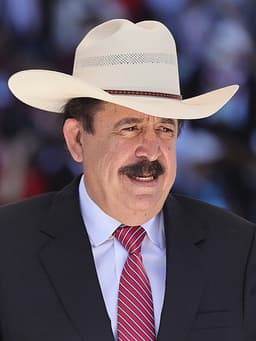
Manuel Zelaya
Politician · Modern
45.5Total
Basic Information
Born
1891
1952
Died
1972
—
Era
Modern
Modern
Nationality
Italy
Honduras
Occupation
Politician
Politician
Civilization
Western
Western
Score Comparison
Military (10%)
49.7
50.0
Political (20%)
68.0
43.7
Influence (20%)
51.8
50.2
Legacy (20%)
42.5
40.0
Leadership (15%)
64.0
48.4
Strategy (15%)
42.7
41.7
TOTAL
52.6
45.5
Antonio Segni — Complete Timeline
1946 AD
Minister of AgriculturePolitical Action
Segni served as Minister of Agriculture in the early post-war governments. He oversaw land reform policies aimed at redistributing large estates to peasants, particularly in southern Italy, which aimed to reduce rural poverty and social unrest.
Land ReformAgriculturePost-War Reconstruction
Impact: nationalconstructive
1955 AD
Prime Minister of ItalyPolitical Action◆ Major
Segni served as Prime Minister of Italy from 1955 to 1957, leading a Christian Democrat-led coalition. His government focused on economic development and European integration, including Italy's participation in the Treaty of Rome negotiations that established the European Economic Community.
Prime MinisterEuropean IntegrationEconomic Policy
Impact: nationalconstructive
1962 AD
Elected President of ItalyPolitical Action◆ Major
Segni was elected as the fourth President of Italy on May 6, 1962. His presidency was short and marked by his declining health, which ultimately led to his resignation in 1964, making him the first Italian president to resign from office.
PresidencyItalian RepublicResignation
Impact: national
1964 AD
Resigned as President due to ill healthPolitical Action◆ Major
Segni resigned from the presidency on December 6, 1964, citing serious health problems, including a stroke he suffered earlier that year. His resignation triggered a constitutional crisis and led to the election of Giuseppe Saragat as his successor.
ResignationHealth CrisisConstitutional Precedent
Impact: nationaltragic
Manuel Zelaya — Complete Timeline
2005 AD
Election as President of HondurasPolitical Action◆ Major
Zelaya was elected president as the candidate of the Liberal Party, defeating Porfirio Pepe Lobo. His campaign focused on poverty reduction and social programs, and he initially governed as a centrist before shifting leftward.
ElectionLiberal PartyPresidency
Impact: nationalconstructive
2008 AD
Ally with ALBA and Hugo ChávezPolitical Action◆ Major
Zelaya aligned Honduras with the Bolivarian Alliance for the Peoples of Our America (ALBA), led by Venezuela's Hugo Ch
ALBAChávezLeftist ShiftPetrocaribe
Impact: regional
2009 AD
2009 Honduran coup d'étatPolitical Action
Zelaya was ousted in a military coup and forced into exile in Costa Rica. The coup occurred after he pushed for a non-binding referendum on constitutional reform, which was deemed illegal by the Supreme Court. The OAS and UN condemned the coup.
CoupConstitutional CrisisExileOAS
Impact: regionaldestructive
This comparison has not been analyzed yet.
One-time AI generation (~1 minute). Scores and timeline are already available below.
Rankings
🥇
Antonio SegniLeader
Mil: 49.7Pol: 68.0Inf: 51.8
52.6
🥈
Manuel Zelaya
Mil: 50.0Pol: 43.7Inf: 50.2
45.5
+7.1 behind
How This Comparison Works
Algorithm
Each figure is scored on 6 dimensions (0—100 scale) based on structured historical data: Military (10%), Political (20%), Influence (20%), Legacy (20%), Leadership (15%), Strategy (15%). The weighted total produces the final ranking.
Data Sources
Scores are computed from structured sub-indicators in the database. Scale factors adjust for era (Ancient ×0.85, Modern ×1.0) and civilization size (Eastern ×1.05, Other ×0.80) to account for differences in population and military scale.
Maximum 3 Figures
Comparisons are limited to 2—3 figures to ensure readability and statistical meaningfulness.
Error Margins
±5 points per dimension — Sub-scores are derived from historical records with inherent uncertainty. Two figures within 5 points on a dimension should be considered roughly equivalent in that area.
Total Score Accuracy
±3 points overall — The weighted combination of 6 dimensions produces a total score with approximately ±3 points of uncertainty. Differences of less than 3 points are not statistically significant— the figures are effectively tied.
Known Limitations
- Historical records are incomplete and uneven across civilizations
- Figures from oral-tradition societies may be underrepresented
- Occupation labels can misclassify multi-role figures
- Scores measure capability and impact, not moral character
- Quantitative scoring is a comparison tool, not absolute truth
Capability Radar
Military (10%) — Battles & Warfare
Battles
26
28
Win Rate
35
31
Expansion
35
36
Political (20%) — Governance & Reform
Reform
45
40
Diplomacy
50
35
Economy
40
30
Influence (20%) — Cultural & Global Reach
Cultural
20
20
Global
20
20
Legacy (20%) — Historical Impact
Historical
25
25
Longevity
20
15
Leadership (15%) — Power & Stability
Tenure
40
30
Stability
35
10
Strategy (15%) — Tactics & Innovation
Strategy
37
36
Tactics
42
40
Reform
44
44
Similar Comparisons
Comments & Discussion
No comments yet. Be the first to share your thoughts!