Loading...
Anwar Sadat vs Ngozi Okonjo-Iweala
Ngozi Okonjo-Iweala leads by 3.1 pts · 2 figures compared
…

Anwar Sadat
Politician · Modern
60.2Total
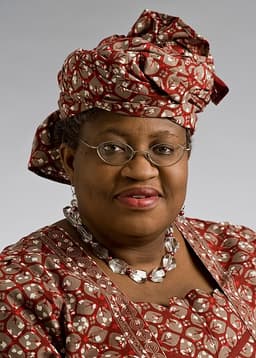
Ngozi Okonjo-Iweala
Politician · Modern
63.3Total
Basic Information
Born
1918
1954
Died
1981
—
Era
Modern
Modern
Nationality
Egypt
Nigeria
Occupation
Politician
Politician
Civilization
Middle Eastern
Other
Score Comparison
Military (10%)
50.0
50.0
Political (20%)
65.0
82.0
Influence (20%)
72.0
65.0
Legacy (20%)
55.0
55.0
Leadership (15%)
68.0
79.8
Strategy (15%)
35.0
40.8
TOTAL
60.2
63.3
Anwar Sadat — Complete Timeline
1970 AD
Became President of EgyptOther◆ Major
Sadat became President of Egypt on October 15, 1970, following the death of Gamal Abdel Nasser. He was initially seen as a weak interim figure but quickly consolidated power, purging Nasserist rivals in what became known as the 'Corrective Revolution' of May 1971.
Egyptian PresidencyNasser SuccessionCorrective Revolution
Impact: national
1973 AD
Launched Yom Kippur WarOther◆ Major
Sadat launched a coordinated surprise attack with Syria against Israel on October 6, 1973, the Jewish holy day of Yom Kippur. Egyptian forces crossed the Suez Canal and breached the Bar-Lev Line. The war initially succeeded but ended with Israeli counterattacks; however, it restored Egyptian pride and led to negotiations.
Yom Kippur WarArab-Israeli ConflictMilitary Campaign
Impact: regional
1977 AD
Visited Jerusalem and Addressed KnessetOther◆ Major
Sadat made a historic visit to Jerusalem on November 19-20, 1977, becoming the first Arab leader to visit Israel. He addressed the Knesset, calling for peace and recognition of Israel's right to exist. The visit broke decades of Arab refusal to negotiate directly with Israel.
Peace ProcessIsrael-Egypt RelationsDiplomacy
Impact: globalconstructive
1978 AD
Signed Camp David AccordsOther◆ Major
Sadat signed the Camp David Accords with Israeli Prime Minister Menachem Begin on September 17, 1978, at the U.S. presidential retreat. The accords established a framework for peace between Egypt and Israel, including Israeli withdrawal from Sinai and Egyptian recognition of Israel. The agreement was mediated by U.S. President Jimmy Carter.
Camp David AccordsPeace TreatyMiddle East
Impact: globalconstructive
1979 AD
Signed Egypt-Israel Peace TreatyOther◆ Major
Sadat signed the Egypt-Israel Peace Treaty on March 26, 1979, in Washington, D.C. The treaty normalized diplomatic relations, established full recognition, and provided for Israeli withdrawal from the Sinai Peninsula. Egypt was subsequently suspended from the Arab League and Sadat faced widespread condemnation in the Arab world.
Peace TreatyArab-Israeli ConflictDiplomacy
Impact: global
1981 AD
Assassinated During Military ParadePolitical Action◆ Major
Sadat was assassinated on October 6, 1981, during a military parade commemorating the Yom Kippur War. Members of the Egyptian Islamic Jihad, led by Khalid Islambouli, opened fire on the reviewing stand, killing Sadat and several others. The assassination was motivated by opposition to the peace treaty with Israel and domestic repression.
AssassinationIslamic JihadEgypt
Impact: nationaldestructive
Ngozi Okonjo-Iweala — Complete Timeline
2003 AD
Appointed Finance Minister of NigeriaPolitical Action◆ Major
Ngozi Okonjo-Iweala was appointed Minister of Finance by President Olusegun Obasanjo. She led negotiations for debt relief from the Paris Club, resulting in Nigeria's debt being reduced by $18 billion.
Nigerian PoliticsDebt ReliefEconomic Reform
Impact: nationalconstructive
2007 AD
Managing Director of the World BankPolitical Action◆ Major
Okonjo-Iweala was appointed Managing Director of the World Bank, overseeing operations in Africa, South Asia, and Europe. She served until 2011, focusing on development finance and governance.
World BankInternational DevelopmentEconomic Governance
Impact: globalconstructive
2021 AD
Appointed WTO Director-GeneralPolitical Action
Ngozi Okonjo-Iweala became the first African and first woman to serve as Director-General of the World Trade Organization. She took office on March 1, 2021, amid global trade tensions and the COVID-19 pandemic.
WTOGlobal TradeFirst AfricanFirst Woman
Impact: globalconstructive
Expert Analysis
Origins
Anwar Sadat was born on December 25, 1918, in Mit Abu al-Kum, Egypt, to a poor family. His father was a Sudanese-Egyptian army clerk, and his mother was a Sudanese peasant. Sadat attended a local Islamic school before entering the Royal Military Academy in Cairo, graduating in 1938. He was influenced by nationalist leaders like Gamal Abdel Nasser and joined the Free Officers Movement, which overthrew the monarchy in 1952.
Ngozi Okonjo-Iweala was born on June 13, 1954, in Ogwashi-Ukwu, Nigeria, to Professor Chukwuka Okonjo, a traditional ruler and academic. She excelled academically, earning a bachelor's in economics from Harvard University in 1976 and a Ph.D. in regional economics from MIT in 1981. Her early career included work at the World Bank, where she rose through the ranks.
Rise to Power
Sadat became President of Egypt on October 15, 1970, after Nasser's death. Initially seen as a transitional figure, he consolidated power by purging Nasser loyalists in the 'Corrective Revolution' of 1971. His major turning point was the Yom Kippur War on October 6, 1973, when he launched a surprise attack on Israel, crossing the Suez Canal and capturing territory. This restored Egyptian pride and gave him leverage for negotiations.
Okonjo-Iweala rose to prominence as Nigeria's Finance Minister under President Olusegun Obasanjo from 2003 to 2006. She led negotiations that secured debt relief of $18 billion from the Paris Club in 2005. She later served as Managing Director of the World Bank (2007-2011), overseeing operations in Africa, South Asia, and Europe. Her appointment as Director-General of the WTO on March 1, 2021, made her the first African and first woman to hold the post.
Leadership & Governance
Sadat's leadership style was bold and decisive, often surprising allies and enemies. He shifted Egypt from Soviet alignment to US partnership, expelling Soviet advisors in 1972. Domestically, he implemented the 'Infitah' policy of economic liberalization, which opened Egypt to foreign investment but increased inequality. His governance was autocratic, suppressing opposition and arresting critics.
Okonjo-Iweala's leadership is technocratic and consensus-building. At the WTO, she focuses on reforming trade rules, addressing vaccine inequity, and digital trade. As Finance Minister, she pushed for transparency, publishing Nigeria's debt figures and reducing corruption. Her political score of 82.0 reflects her ability to navigate complex international and domestic politics.
Triumph & Tragedy
Sadat's greatest triumph was the Yom Kippur War, which broke the 'no war, no peace' stalemate and led to the Camp David Accords (1978) and Egypt-Israel Peace Treaty (1979). He won the Nobel Peace Prize in 1978. However, his peace deal isolated Egypt in the Arab world, leading to its suspension from the Arab League. Domestically, his economic policies and authoritarianism fueled discontent. He was assassinated on October 6, 1981, by Islamist extremists.
Okonjo-Iweala's triumph includes securing $18 billion debt relief for Nigeria and becoming WTO Director-General. She has been praised for her handling of global trade during the COVID-19 pandemic, including a partial waiver on vaccine patents. A failure is her inability to achieve major WTO reforms due to member-state disagreements. Critics point to her support of austerity policies in Nigeria, which hurt social services.
Character & Destiny
Sadat was a risk-taker, often acting unilaterally. His decision to visit Jerusalem in 1977 stunned the world and showed his courage. However, his autocratic tendencies and disregard for domestic dissent contributed to his assassination. Historians assess him as a visionary but flawed leader.
Okonjo-Iweala is pragmatic and diplomatic, with a reputation for integrity. She has faced sexism and skepticism but persisted. Her destiny is still unfolding, but she is seen as a transformative figure for global trade and African representation.
Legacy
Sadat's legacy is mixed: he is celebrated for peace with Israel but criticized for authoritarianism and economic failures. The Egypt-Israel peace treaty has held for over 40 years, a testament to his diplomacy. He scored 55.0 in legacy.
Okonjo-Iweala's legacy is growing. She has broken barriers as the first African and woman to lead the WTO, inspiring future leaders. Her work on debt relief and trade reform has lasting impact. Her legacy score is 55.0, but it may rise.
Conclusion
While Sadat reshaped Middle East geopolitics, his legacy is constrained by his authoritarian rule and assassination. Okonjo-Iweala, with a higher total score of 63.3 vs Sadat's 60.2, demonstrates broader impact through institutional reform and global governance. Her leadership at the WTO addresses systemic issues affecting billions. Therefore, Ngozi Okonjo-Iweala has had greater impact due to her sustained contributions to economic development and trade governance, despite Sadat's dramatic historical role.
Rankings
🥇
Ngozi Okonjo-IwealaLeader
Mil: 50.0Pol: 82.0Inf: 65.0
63.3
🥈
Anwar Sadat
Mil: 50.0Pol: 65.0Inf: 72.0
60.2
+3.1 behind
How This Comparison Works
Algorithm
Each figure is scored on 6 dimensions (0—100 scale) based on structured historical data: Military (10%), Political (20%), Influence (20%), Legacy (20%), Leadership (15%), Strategy (15%). The weighted total produces the final ranking.
Data Sources
Scores are computed from structured sub-indicators in the database. Scale factors adjust for era (Ancient ×0.85, Modern ×1.0) and civilization size (Eastern ×1.05, Other ×0.80) to account for differences in population and military scale.
Maximum 3 Figures
Comparisons are limited to 2—3 figures to ensure readability and statistical meaningfulness.
Error Margins
±5 points per dimension — Sub-scores are derived from historical records with inherent uncertainty. Two figures within 5 points on a dimension should be considered roughly equivalent in that area.
Total Score Accuracy
±3 points overall — The weighted combination of 6 dimensions produces a total score with approximately ±3 points of uncertainty. Differences of less than 3 points are not statistically significant— the figures are effectively tied.
Known Limitations
- Historical records are incomplete and uneven across civilizations
- Figures from oral-tradition societies may be underrepresented
- Occupation labels can misclassify multi-role figures
- Scores measure capability and impact, not moral character
- Quantitative scoring is a comparison tool, not absolute truth
Capability Radar
Military (10%) — Battles & Warfare
Battles
45
22
Win Rate
30
24
Expansion
20
29
Political (20%) — Governance & Reform
Reform
70
75
Diplomacy
85
85
Economy
50
90
Influence (20%) — Cultural & Global Reach
Cultural
55
65
Global
70
80
Legacy (20%) — Historical Impact
Historical
75
70
Longevity
60
60
Leadership (15%) — Power & Stability
Tenure
65
60
Stability
40
70
Strategy (15%) — Tactics & Innovation
Strategy
50
32
Tactics
40
32
Reform
55
39
Similar Comparisons
Comments & Discussion
No comments yet. Be the first to share your thoughts!