Loading...
Analysis will be generated on first visit.
Scores and timeline are available below. The page will refresh automatically when ready.
Arai Hakuseki vs Napoleon Bonaparte
Napoleon Bonaparte leads by 17.3 pts · 2 figures compared
…

Arai Hakuseki
Politician · Modern
65.1Total
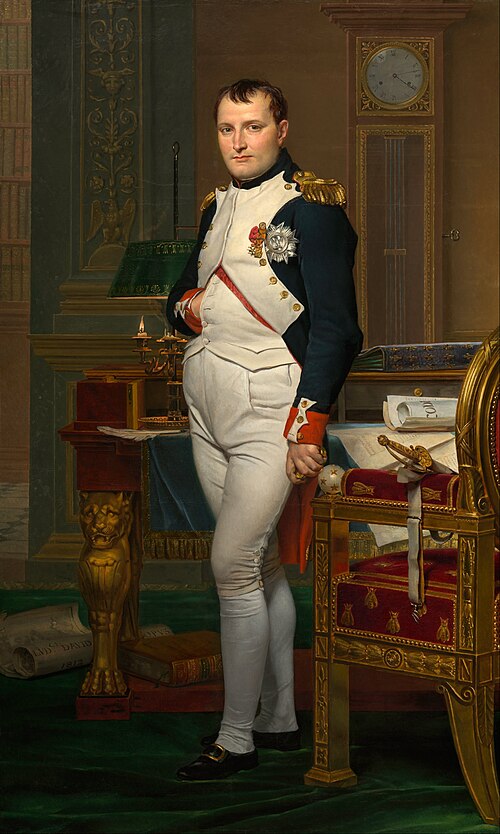
Napoleon Bonaparte
General · Modern
82.4Total
Basic Information
Born
1657
1769
Died
1725
1821
Era
Modern
Modern
Nationality
Japan
France
Occupation
Politician
General
Civilization
Eastern
Western
Score Comparison
Military (10%)
22.8
94.0
Political (20%)
68.6
75.0
Influence (20%)
72.5
82.0
Legacy (20%)
69.2
78.0
Leadership (15%)
78.5
80.0
Strategy (15%)
59.6
93.0
TOTAL
65.1
82.4
Rankings
🥇
Napoleon BonaparteLeader
Mil: 94.0Pol: 75.0Inf: 82.0
82.4
🥈
Arai Hakuseki
Mil: 22.8Pol: 68.6Inf: 72.5
65.1
+17.3 behind
How This Comparison Works
Algorithm
Each figure is scored on 6 dimensions (0—100 scale) based on structured historical data: Military (10%), Political (20%), Influence (20%), Legacy (20%), Leadership (15%), Strategy (15%). The weighted total produces the final ranking.
Data Sources
Scores are computed from structured sub-indicators in the database. Scale factors adjust for era (Ancient ×0.85, Modern ×1.0) and civilization size (Eastern ×1.05, Other ×0.80) to account for differences in population and military scale.
Maximum 3 Figures
Comparisons are limited to 2—3 figures to ensure readability and statistical meaningfulness.
Error Margins
±5 points per dimension — Sub-scores are derived from historical records with inherent uncertainty. Two figures within 5 points on a dimension should be considered roughly equivalent in that area.
Total Score Accuracy
±3 points overall — The weighted combination of 6 dimensions produces a total score with approximately ±3 points of uncertainty. Differences of less than 3 points are not statistically significant— the figures are effectively tied.
Known Limitations
- Historical records are incomplete and uneven across civilizations
- Figures from oral-tradition societies may be underrepresented
- Occupation labels can misclassify multi-role figures
- Scores measure capability and impact, not moral character
- Quantitative scoring is a comparison tool, not absolute truth
Capability Radar
Military (10%) — Battles & Warfare
Battles
15
95
Win Rate
19
90
Expansion
18
95
Political (20%) — Governance & Reform
Reform
65
95
Diplomacy
60
80
Economy
55
85
Influence (20%) — Cultural & Global Reach
Cultural
55
85
Global
30
90
Legacy (20%) — Historical Impact
Historical
50
95
Longevity
45
90
Leadership (15%) — Power & Stability
Tenure
60
85
Stability
60
70
Strategy (15%) — Tactics & Innovation
Strategy
21
95
Tactics
26
98
Reform
28
92
Analysis will be generated on first visit.
Scores and timeline are available below. The page will refresh automatically when ready.
Arai Hakuseki — Complete Timeline
1709 AD
Appointment as Advisor to Shogun Tokugawa IenobuPolitical Action◆ Major
Arai Hakuseki was appointed as a Confucian scholar-advisor to Shogun Tokugawa Ienobu. He became the shogun's chief intellectual and policy advisor, advocating for Confucian principles in governance and legal reform.
AppointmentConfucian advisorTokugawa Ienobu
Impact: nationalconstructive
1710 AD
Drafting of the Buke Shohatto (Laws for Military Houses)Reform◆ Major
Hakuseki revised the Buke Shohatto, the fundamental law regulating daimyo conduct, emphasizing Confucian ethics and reducing the shogunate's arbitrary power. The new code promoted moral governance and stability among the feudal lords.
Legal reformBuke ShohattoConfucianism
Impact: nationalconstructive
1712 AD
Advocacy for Currency ReformReform
Hakuseki proposed a currency reform to address inflation and debasement, advocating for a return to high-quality coinage. His plan was partially implemented but faced opposition from merchants and was later reversed, limiting its effectiveness.
Currency reformEconomic policyInflation
Impact: nationalconstructive
1716 AD
Writing of Historical WorksCultural◆ Major
Hakuseki authored major historical works including 'Tokushi Yoron' (Lessons from History) and 'Koshitsu' (Imperial History), which analyzed Japanese history through a Confucian lens. These works influenced later historical scholarship and political thought.
HistoriographyConfucian scholarshipTokushi Yoron
Impact: nationalconstructive
Loss of Influence under Shogun Tokugawa YoshimunePolitical Action◆ Major
When Shogun Ienobu died and Tokugawa Yoshimune became shogun, Hakuseki's Confucian-influenced policies were rejected. He was dismissed from his advisory role and retired from politics, marking the end of his direct influence on shogunate policy.
DismissalTokugawa YoshimuneRetirement
Impact: nationaltragic
Similar Comparisons
Comments & Discussion
No comments yet. Be the first to share your thoughts!