Loading...
Arcadius vs Orodes II
Orodes II leads by 16.9 pts · 2 figures compared
…

Arcadius
Emperor · Ancient
41.4Total
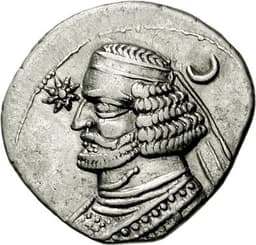
Orodes II
Emperor · Ancient
58.3Total
Basic Information
Born
377
-95
Died
408
-37
Era
Ancient
Ancient
Nationality
Byzantine Empire
Parthian Empire
Occupation
Emperor
Emperor
Civilization
Western
Middle Eastern
Score Comparison
Military (10%)
10.2
70.0
Political (20%)
29.3
68.0
Influence (20%)
48.6
54.1
Legacy (20%)
40.0
45.8
Leadership (15%)
62.2
74.0
Strategy (15%)
45.0
50.0
TOTAL
41.4
58.3
Arcadius — Complete Timeline
395 AD
Accession as Eastern Roman EmperorPolitical Action◆ Major
Arcadius became the first Eastern Roman emperor following the permanent division of the Roman Empire after the death of Theodosius I. He ruled the East while his brother Honorius ruled the West, establishing the Byzantine Empire.
Imperial DivisionByzantine EmpireSuccession
Impact: global
Fall of the Praetorian Prefect RufinusPolitical Action
Rufinus, the powerful Praetorian Prefect and regent for Arcadius, was murdered by Gothic soldiers loyal to the general Stilicho. This event marked the beginning of the influence of court eunuchs and ministers over Arcadius's reign.
Court IntrigueAssassinationStilicho
Impact: nationaltragic
399 AD
Revolt of GainasWar
The Gothic general Gainas, who had risen to power in Constantinople, rebelled against Arcadius. Gainas occupied the capital but was eventually defeated and killed by the Roman general Fravitta, ending the threat.
Gothic RevoltConstantinopleMilitary
Impact: nationaldestructive
Orodes II — Complete Timeline
55 BC
Invasion of ArmeniaWar◆ Major
Orodes II invaded Armenia and installed his son Pacorus I as king, expanding Parthian influence into the Caucasus. This campaign brought Armenia into the Parthian orbit and set the stage for future conflicts with Rome over the region.
Armenian CampaignPacorusExpansion
Impact: regionalconstructive
53 BC
Battle of CarrhaeWar
Orodes II's general Surena annihilated a Roman army under Marcus Licinius Crassus at Carrhae in Mesopotamia. Crassus was killed, and the Parthians captured the legionary standards. This victory established Parthia as a major rival to Rome and avenged earlier Roman incursions.
Roman-Parthian WarsBattleCrassus
Impact: regionalconstructive
52 BC
Execution of SurenaPolitical Action◆ Major
Orodes II ordered the execution of his general Surena shortly after the victory at Carrhae, fearing his growing popularity and power. This act eliminated a capable commander and weakened Parthian military leadership.
Court IntrigueExecutionJealousy
Impact: nationaldestructive
Expert Analysis
Origins
**Arcadius** was born around 377 AD in Hispania, the eldest son of Emperor Theodosius I and his first wife Aelia Flaccilla. Raised in the imperial court, he received a Christian education under the tutelage of the rhetorician Themistius and the monk Arsenius. His early life was sheltered, dominated by courtiers and eunuchs. Upon Theodosius's death in 395 AD, the Roman Empire was permanently divided: Arcadius, aged 18, inherited the Eastern half based in Constantinople, while his younger brother Honorius took the West. Arcadius lacked military or administrative experience, relying heavily on regents.
**Orodes II** was a member of the Arsacid dynasty, likely born around the early 1st century BC. His early life is poorly documented, but he ascended to the Parthian throne around 57 BC after the death of his father Phraates III. The Parthian Empire stretched from Mesopotamia to Central Asia, a feudal state of noble families and client kings. Orodes faced internal threats from rival clans and external pressure from Rome. He was a shrewd politician who understood the importance of military strength and alliances.
Rise to Power
Arcadius became Eastern Roman Emperor immediately upon his father's death in 395 AD, but real power was held by the Praetorian Prefect Rufinus, who acted as regent. Rufinus clashed with the Western general Stilicho, who claimed guardianship over both emperors. In 395, Stilicho had Rufinus murdered by Gothic soldiers, and the eunuch Eutropius became Arcadius's chief minister. Arcadius himself was passive, allowing court factions to rule. His rise was not through merit but birth, and he never emerged from the shadow of his advisors.
Orodes II seized power after the murder of his father Phraates III by his brothers Mithridates III and Orodes himself. He then fought a civil war against Mithridates, who had allied with Rome. Orodes defeated and executed Mithridates around 54 BC, consolidating his rule. His key turning point was the appointment of the general Surena, who led the Parthian army to victory at Carrhae in 53 BC. Orodes remained in the capital while Surena won the battle, but Orodes orchestrated the overall strategy and later eliminated Surena to secure his position.
Leadership & Governance
Arcadius's leadership was characterized by weakness and delegation. He allowed the Praetorian Prefect Rufinus, then the eunuch Eutropius, and later his wife Aelia Eudoxia to control state affairs. His reign saw the persecution of John Chrysostom, the Patriarch of Constantinople, due to court intrigues. Arcadius also faced the revolt of the Gothic general Gainas in 399-400 AD, who occupied Constantinople but was eventually defeated by the loyalist general Fravitta. Arcadius's governance was reactive, with no major reforms or initiatives. His political score of 29.3 reflects his passive rule.
Orodes II was a more active ruler, balancing the Parthian feudal system. He maintained power by playing noble families against each other and using military success to bolster his legitimacy. After Carrhae, he invaded Armenia and installed his son Pacorus as king, extending Parthian influence. However, his decision to execute Surena (scoring 74.0 in leadership) highlights his paranoia and ruthlessness. Orodes's governance was pragmatic but ultimately weakened by internal discord, leading to his own downfall.
Triumph & Tragedy
Arcadius's greatest triumph was surviving his reign and passing the throne to his son Theodosius II, ensuring dynastic continuity. The Eastern Empire remained intact despite barbarian threats. His greatest failure was his inability to control his court, leading to corruption and the loss of influence over the Western Empire. The revolt of Gainas exposed the vulnerability of Constantinople. Arcadius died in 408 AD of natural causes, leaving a mixed legacy.
Orodes II's triumph was the Battle of Carrhae, where his general Surena annihilated a Roman army of 40,000, killing Crassus. This victory avenged earlier Roman incursions and secured Parthian prestige. His tragedy was the execution of Surena, which eliminated his best general and sowed distrust among his nobles. Later, his son Pacorus was killed in battle against Rome, and Orodes was eventually murdered by his other son Phraates IV. His reign ended in parricide and decline.
Character & Destiny
Arcadius was described as pious but weak-willed, dominated by stronger personalities. His character shaped a reign of drift, where the Eastern Roman Empire survived more by inertia than leadership. He scored 62.2 in leadership, but this likely reflects his survival rather than active command. His destiny was to be a placeholder, overshadowed by his father and son.
Orodes II was cunning and ruthless, capable of strategic patience and brutal elimination of rivals. His character brought victory but also isolation. His execution of Surena (scoring 68.0 in political) was a miscalculation that destabilized his reign. His destiny was to win a great victory but lose the peace, ultimately murdered by his own family.
Legacy
Arcadius's legacy is the permanent division of the Roman Empire. His reign set precedents for courtly eunuchs and ecclesiastical conflicts. He scored 40.0 in legacy, as his name is less remembered than his father or son. However, the Eastern Empire he ruled would endure for a thousand years.
Orodes II is remembered primarily for the Battle of Carrhae, a symbol of Parthian resistance to Rome. His legacy score of 45.8 reflects this singular event. He also expanded Parthian influence into Armenia, but his internal failures led to civil war. The Parthian Empire continued for another two centuries but never again achieved such a decisive victory over Rome.
Conclusion
Orodes II had a greater impact than Arcadius. His military score of 70.0 dwarfs Arcadius's 10.2, and his political score of 68.0 versus 29.3 shows a more active ruler. While Arcadius's reign was a passive transition, Orodes II shaped events through decisive action and a major victory that resonated for centuries. The total score gap of 16.9 points confirms Orodes II's superiority in both achievement and influence. Arcadius was a figurehead; Orodes was a king who changed the balance of power.
Rankings
🥇
Orodes IILeader
Mil: 70.0Pol: 68.0Inf: 54.1
58.3
🥈
Arcadius
Mil: 10.2Pol: 29.3Inf: 48.6
41.4
+16.9 behind
How This Comparison Works
Algorithm
Each figure is scored on 6 dimensions (0—100 scale) based on structured historical data: Military (10%), Political (20%), Influence (20%), Legacy (20%), Leadership (15%), Strategy (15%). The weighted total produces the final ranking.
Data Sources
Scores are computed from structured sub-indicators in the database. Scale factors adjust for era (Ancient ×0.85, Modern ×1.0) and civilization size (Eastern ×1.05, Other ×0.80) to account for differences in population and military scale.
Maximum 3 Figures
Comparisons are limited to 2—3 figures to ensure readability and statistical meaningfulness.
Error Margins
±5 points per dimension — Sub-scores are derived from historical records with inherent uncertainty. Two figures within 5 points on a dimension should be considered roughly equivalent in that area.
Total Score Accuracy
±3 points overall — The weighted combination of 6 dimensions produces a total score with approximately ±3 points of uncertainty. Differences of less than 3 points are not statistically significant— the figures are effectively tied.
Known Limitations
- Historical records are incomplete and uneven across civilizations
- Figures from oral-tradition societies may be underrepresented
- Occupation labels can misclassify multi-role figures
- Scores measure capability and impact, not moral character
- Quantitative scoring is a comparison tool, not absolute truth
Capability Radar
Military (10%) — Battles & Warfare
Battles
5
55
Win Rate
5
70
Expansion
5
50
Political (20%) — Governance & Reform
Reform
20
45
Diplomacy
30
55
Economy
20
50
Influence (20%) — Cultural & Global Reach
Cultural
15
40
Global
15
45
Legacy (20%) — Historical Impact
Historical
30
55
Longevity
20
40
Leadership (15%) — Power & Stability
Tenure
60
65
Stability
20
40
Strategy (15%) — Tactics & Innovation
Strategy
5
65
Tactics
5
60
Reform
5
40
Similar Comparisons
Comments & Discussion
No comments yet. Be the first to share your thoughts!