Loading...
Ariel Sharon vs Yitzhak Rabin
Yitzhak Rabin leads by 8.1 pts · 2 figures compared
…
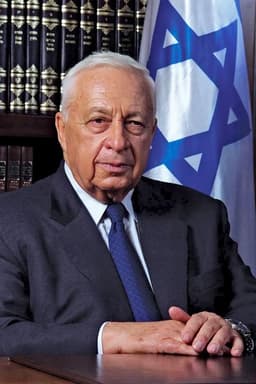
Ariel Sharon
General · Modern
58.3Total
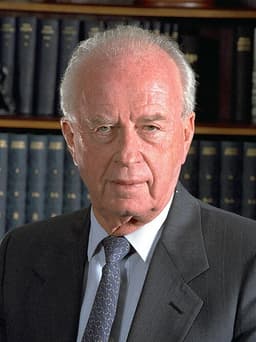
Yitzhak Rabin
General · Modern
66.4Total
Basic Information
Born
1928
1922
Died
—
—
Era
Modern
Modern
Nationality
Israel
Israel
Occupation
General
General
Civilization
Middle Eastern
Middle Eastern
Score Comparison
Military (10%)
67.3
61.7
Political (20%)
45.0
82.0
Influence (20%)
56.7
68.0
Legacy (20%)
54.0
55.0
Leadership (15%)
68.0
78.0
Strategy (15%)
69.1
55.0
TOTAL
58.3
66.4
Ariel Sharon — Complete Timeline
1982 AD
Command of the 1982 Lebanon WarWar◆ Major
As Minister of Defense, Sharon directed the Israeli invasion of Lebanon to expel the PLO. The war led to the Sabra and Shatila massacre, for which an Israeli commission found Sharon indirectly responsible, forcing his resignation as defense minister.
Lebanon WarSabra and ShatilaMilitary Campaign
Impact: regionaldestructive
2001 AD
Election as Prime MinisterPolitical Action◆ Major
Sharon was elected prime minister of Israel in a special election, defeating Ehud Barak. His victory came during the Second Intifada, and he adopted a hardline security policy, including military operations in Palestinian areas.
ElectionSecond IntifadaSecurity Policy
Impact: national
2005 AD
Disengagement from GazaPolitical Action◆ Major
Sharon implemented the unilateral disengagement plan, withdrawing all Israeli settlers and military forces from the Gaza Strip and dismantling four settlements in the West Bank. The move was controversial within Israel but internationally supported.
Gaza WithdrawalSettlementsUnilateral Action
Impact: regionalconstructive
Yitzhak Rabin — Complete Timeline
1967 AD
Chief of Staff during the Six-Day WarWar
As Chief of Staff of the Israel Defense Forces, Rabin commanded the Israeli military during the Six-Day War against Egypt, Jordan, and Syria. Israel captured the Sinai Peninsula, Gaza Strip, West Bank, East Jerusalem, and Golan Heights, reshaping the region.
Six-Day WarTerritorial ExpansionMilitary Victory
Impact: global
1993 AD
Signing of the Oslo AccordsPolitical Action
As prime minister, Rabin signed the Oslo Accords with PLO Chairman Yasser Arafat on the White House lawn. The agreement established the Palestinian Authority and set a framework for Palestinian self-governance in the West Bank and Gaza Strip.
Peace ProcessPalestiniansOslo
Impact: globalconstructive
1995 AD
Assassination at Peace RallyPolitical Action
Rabin was assassinated by Israeli extremist Yigal Amir after a peace rally in Tel Aviv. The assassination shocked Israel and the world, derailing the Oslo peace process and leading to a period of political instability.
AssassinationPeace ProcessPolitical Violence
Impact: globaltragic
Expert Analysis
Origins
Ariel Sharon was born in 1928 in Kfar Malal, a moshav in British Mandatory Palestine. His parents were Russian Jewish immigrants, and he was raised with a strong agricultural and nationalist ethos. Sharon joined the Haganah at age 14 and later commanded the Alexandroni Brigade during the 1948 Arab-Israeli War. His early experiences in combat and settlement defense shaped his aggressive military style.
Yitzhak Rabin was born in 1922 in Jerusalem to a Labor Zionist family. His father was a volunteer in the Jewish Legion, and his mother was a prominent activist. Rabin attended the Kadoorie Agricultural School and joined the Palmach in 1941. He commanded the Harel Brigade during the 1948 war, focusing on securing the road to Jerusalem. His early career emphasized discipline and strategic planning.
Rise to Power
Sharon rose to prominence as a commando leader in the 1950s, founding Unit 101, which conducted retaliatory raids. His aggressive tactics during the 1956 Suez Crisis and the 1967 Six-Day War, where he led a division that captured the Sinai, made him a military hero. Politically, he entered the Knesset in 1973 with the Likud party. He served as Minister of Defense in 1981 and directed the 1982 Lebanon War, which expanded his influence but also sparked controversy.
Rabin's rise was more methodical. He became Chief of Staff in 1964 and oversaw Israel's victory in the Six-Day War of 1967, earning him national acclaim. After retiring from the military, he served as ambassador to the United States (1968-73) and then as Prime Minister from 1974 to 1977. His first term was marked by the Entebbe raid, but he resigned due to a financial scandal. He returned as Prime Minister in 1992, winning on a platform of peace and security.
Leadership & Governance
Sharon's leadership was characterized by unilateral action and a focus on security. As Prime Minister from 2001 to 2006, he faced the Second Intifada and ordered the construction of the West Bank barrier. His most notable policy was the 2005 disengagement from Gaza, where he unilaterally withdrew Israeli settlers and soldiers. This decision divided his Likud party but was executed decisively. Sharon scored 68.0 in leadership, reflecting his ability to impose his will.
Rabin's governance emphasized negotiation and restraint. During his second term (1992-1995), he froze settlement construction and signed the Oslo Accords (1993), which established the Palestinian Authority. He also pursued a peace treaty with Jordan (1994). Rabin scored 78.0 in leadership, higher than Sharon, due to his diplomatic approach. However, his leadership was cut short by assassination.
Triumph & Tragedy
Sharon's greatest triumph was the Gaza disengagement, which reduced international pressure on Israel and removed 8,000 settlers without a civil war. His tragedy was the 1982 Lebanon War and the Sabra and Shatila massacre, which led to his removal as Defense Minister. He also suffered from a stroke in 2006 that left him comatose until his death in 2014.
Rabin's triumph was the Oslo Accords, which won him the Nobel Peace Prize in 1994. His tragedy was his assassination in 1995 by Yigal Amir, a right-wing extremist opposed to the peace process. The assassination derailed the Oslo process and led to increased violence. Rabin's death also elevated his legacy as a martyr for peace.
Character & Destiny
Sharon was known as the "Bulldozer" for his blunt, combative style. He was a master of strategy (score 69.1) but often clashed with allies and opponents. His career was marked by controversy, but he never wavered in his beliefs. His destiny was to be a transformative but divisive figure.
Rabin was seen as a reluctant peacemaker—a security hawk who pragmatically pursued peace. He was cautious and deliberate, with a military score of 61.7 and political score of 82.0. His character combined stoicism with a deep commitment to Israel's future. His fate was sealed by the very peace he championed.
Legacy
Sharon's legacy is mixed. He is remembered for the Gaza withdrawal, which reshaped Israeli politics and created a precedent for unilateralism. However, he is also linked to the Lebanon war and settlement expansion. His influence score is 56.7.
Rabin's legacy is more uniformly positive. He is honored as a statesman who sought peace and paid the ultimate price. The Rabin assassination remains a national trauma, and his memory is invoked in Israeli peace discourse. His influence score is 68.0, reflecting his enduring symbolic power.
Conclusion
Yitzhak Rabin had a greater impact on Israeli history than Ariel Sharon. Despite Sharon's higher military score (67.3 vs 61.7), Rabin's political and leadership scores (82.0 and 78.0) far exceed Sharon's (45.0 and 68.0). Rabin's total score of 66.4 surpasses Sharon's 58.3 by 8.1 points. While Sharon achieved the Gaza disengagement, Rabin's Oslo Accords fundamentally changed the Israeli-Palestinian dynamic and gave him a global legacy. Rabin's assassination also sealed his status as a martyr, ensuring his influence endures. Sharon's legacy is more contested, while Rabin's is a symbol of peace.
Rankings
🥇
Yitzhak RabinLeader
Mil: 61.7Pol: 82.0Inf: 68.0
66.4
🥈
Ariel Sharon
Mil: 67.3Pol: 45.0Inf: 56.7
58.3
+8.1 behind
How This Comparison Works
Algorithm
Each figure is scored on 6 dimensions (0—100 scale) based on structured historical data: Military (10%), Political (20%), Influence (20%), Legacy (20%), Leadership (15%), Strategy (15%). The weighted total produces the final ranking.
Data Sources
Scores are computed from structured sub-indicators in the database. Scale factors adjust for era (Ancient ×0.85, Modern ×1.0) and civilization size (Eastern ×1.05, Other ×0.80) to account for differences in population and military scale.
Maximum 3 Figures
Comparisons are limited to 2—3 figures to ensure readability and statistical meaningfulness.
Error Margins
±5 points per dimension — Sub-scores are derived from historical records with inherent uncertainty. Two figures within 5 points on a dimension should be considered roughly equivalent in that area.
Total Score Accuracy
±3 points overall — The weighted combination of 6 dimensions produces a total score with approximately ±3 points of uncertainty. Differences of less than 3 points are not statistically significant— the figures are effectively tied.
Known Limitations
- Historical records are incomplete and uneven across civilizations
- Figures from oral-tradition societies may be underrepresented
- Occupation labels can misclassify multi-role figures
- Scores measure capability and impact, not moral character
- Quantitative scoring is a comparison tool, not absolute truth
Capability Radar
Military (10%) — Battles & Warfare
Battles
75
65
Win Rate
70
70
Expansion
60
50
Political (20%) — Governance & Reform
Reform
55
65
Diplomacy
50
85
Economy
45
60
Influence (20%) — Cultural & Global Reach
Cultural
55
55
Global
60
70
Legacy (20%) — Historical Impact
Historical
65
75
Longevity
50
60
Leadership (15%) — Power & Stability
Tenure
60
70
Stability
40
40
Strategy (15%) — Tactics & Innovation
Strategy
80
75
Tactics
85
60
Reform
65
55
Similar Comparisons
Comments & Discussion
No comments yet. Be the first to share your thoughts!