Loading...
Analysis will be generated on first visit.
Scores and timeline are available below. The page will refresh automatically when ready.
Armand de Richelieu vs Julius Caesar
Julius Caesar leads by 14.4 pts · 2 figures compared
…

Armand de Richelieu
Politician · Modern
68.9Total
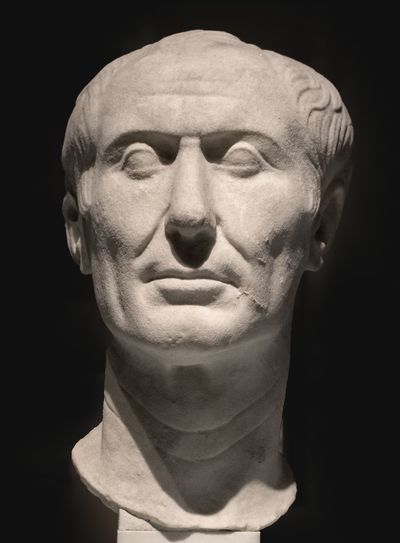
Julius Caesar
General · Ancient
83.3Total
Basic Information
Born
1585
-100
Died
1642
-44
Era
Modern
Ancient
Nationality
France
Roman Republic
Occupation
Politician
General
Civilization
Western
Western
Score Comparison
Military (10%)
46.7
88.0
Political (20%)
62.7
78.0
Influence (20%)
68.0
85.0
Legacy (20%)
83.9
82.0
Leadership (15%)
84.2
82.0
Strategy (15%)
58.0
88.0
TOTAL
68.9
83.3
Rankings
🥇
Julius CaesarLeader
Mil: 88.0Pol: 78.0Inf: 85.0
83.3
🥈
Armand de Richelieu
Mil: 46.7Pol: 62.7Inf: 68.0
68.9
+14.4 behind
How This Comparison Works
Algorithm
Each figure is scored on 6 dimensions (0—100 scale) based on structured historical data: Military (10%), Political (20%), Influence (20%), Legacy (20%), Leadership (15%), Strategy (15%). The weighted total produces the final ranking.
Data Sources
Scores are computed from structured sub-indicators in the database. Scale factors adjust for era (Ancient ×0.85, Modern ×1.0) and civilization size (Eastern ×1.05, Other ×0.80) to account for differences in population and military scale.
Maximum 3 Figures
Comparisons are limited to 2—3 figures to ensure readability and statistical meaningfulness.
Error Margins
±5 points per dimension — Sub-scores are derived from historical records with inherent uncertainty. Two figures within 5 points on a dimension should be considered roughly equivalent in that area.
Total Score Accuracy
±3 points overall — The weighted combination of 6 dimensions produces a total score with approximately ±3 points of uncertainty. Differences of less than 3 points are not statistically significant— the figures are effectively tied.
Known Limitations
- Historical records are incomplete and uneven across civilizations
- Figures from oral-tradition societies may be underrepresented
- Occupation labels can misclassify multi-role figures
- Scores measure capability and impact, not moral character
- Quantitative scoring is a comparison tool, not absolute truth
Capability Radar
Military (10%) — Battles & Warfare
Battles
40
95
Win Rate
45
92
Expansion
60
97
Political (20%) — Governance & Reform
Reform
95
90
Diplomacy
90
85
Economy
75
82
Influence (20%) — Cultural & Global Reach
Cultural
75
88
Global
80
94
Legacy (20%) — Historical Impact
Historical
90
95
Longevity
85
96
Leadership (15%) — Power & Stability
Tenure
85
75
Stability
70
60
Strategy (15%) — Tactics & Innovation
Strategy
70
94
Tactics
50
96
Reform
85
88
Analysis will be generated on first visit.
Scores and timeline are available below. The page will refresh automatically when ready.
Armand de Richelieu — Complete Timeline
1624 AD
Appointment as Chief Minister of FrancePolitical Action
Cardinal Richelieu was appointed as the chief minister to King Louis XIII. He became the de facto ruler of France, centralizing royal power and laying the foundations for absolute monarchy.
AppointmentAbsolute MonarchyCentralization
Impact: nationalconstructive
1627 AD
Siege of La RochelleWar◆ Major
Richelieu personally directed the siege of La Rochelle, a Huguenot stronghold. The city surrendered after a 14-month blockade, ending Huguenot political and military power in France.
SiegeHuguenotsCentralization
Impact: nationaldestructive
1632 AD
Suppression of the Nobility's Political PowerPolitical Action◆ Major
Richelieu executed the Duke of Montmorency, a powerful noble, for rebellion. This act demonstrated the crown's willingness to eliminate aristocratic opposition and solidified royal authority over the nobility.
NobilityCentralizationExecution
Impact: nationaldestructive
1635 AD
Entry into the Thirty Years' WarWar◆ Major
Richelieu declared war on Spain, bringing France directly into the Thirty Years' War. This decision aimed to weaken Habsburg power and establish French dominance in Europe, despite the country being Catholic.
Thirty Years' WarForeign PolicyHabsburg
Impact: global
Creation of the Intendant SystemReform◆ Major
Richelieu established the system of intendants, royal officials sent to provinces to enforce royal orders. This bypassed local nobles and strengthened central control over taxation, justice, and administration.
AdministrationCentralizationReform
Impact: nationalconstructive
Founding of the Academie FrancaiseCultural◆ Major
Richelieu established the Academie Francaise to standardize and regulate the French language. This institution became a symbol of French cultural authority and linguistic purity.
CultureLanguageAcademy
Impact: globalconstructive
Similar Comparisons
Comments & Discussion
No comments yet. Be the first to share your thoughts!