Loading...
Armando Guebuza vs Ellen Johnson Sirleaf
Ellen Johnson Sirleaf leads by 14.3 pts · 2 figures compared
…

Armando Guebuza
Politician · Modern
46.6Total
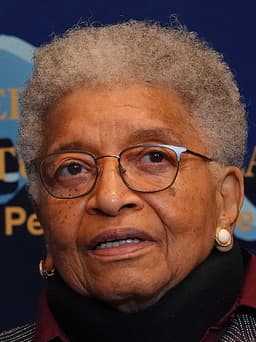
Ellen Johnson Sirleaf
Politician · Modern
60.9Total
Basic Information
Born
1943
1938
Died
—
—
Era
Modern
Modern
Nationality
Mozambique
Liberia
Occupation
Politician
Politician
Civilization
Other
Other
Score Comparison
Military (10%)
30.7
50.0
Political (20%)
45.1
65.0
Influence (20%)
50.2
72.0
Legacy (20%)
40.0
52.0
Leadership (15%)
65.7
72.0
Strategy (15%)
43.7
43.7
TOTAL
46.6
60.9
Armando Guebuza — Complete Timeline
1986 AD
Became President of Mozambique after Samora Machel's deathPolitical Action◆ Major
Guebuza succeeded Samora Machel as president of Mozambique after Machel died in a plane crash. He inherited a country devastated by civil war and economic collapse, and his rule would be defined by post-war reconstruction.
SuccessionFRELIMO
Impact: national
1992 AD
Signed the Rome General Peace Accords ending the Mozambican Civil WarPolitical Action◆ Major
As a senior FRELIMO official, Guebuza was a key negotiator in the peace process that ended the 16-year civil war with RENAMO. The accords led to multiparty elections and a period of stability.
Peace AccordsCivil War
Impact: nationalconstructive
2005 AD
Presided over Mozambique's resource boomReform◆ Major
During Guebuza's presidency, Mozambique experienced a major resource boom driven by the discovery of vast natural gas fields. Foreign investment surged, and the economy grew rapidly, though benefits were unevenly distributed.
Natural GasEconomic Growth
Impact: nationalconstructive
2007 AD
Implemented controversial land and mining policiesReform
Guebuza's government enacted policies that favored large-scale foreign investment in mining and agriculture, often at the expense of local communities. These policies led to land disputes and accusations of corruption.
Land PolicyMining
Impact: nationaldestructive
2015 AD
Stepped down after two terms as presidentPolitical Action◆ Major
Guebuza left office after serving the maximum two terms allowed by the constitution. He was succeeded by Filipe Nyusi, but his influence within FRELIMO remained significant, and he faced later corruption allegations.
Transition of PowerNyusi
Impact: national
Ellen Johnson Sirleaf — Complete Timeline
2005 AD
Election as President of LiberiaPolitical Action
Sirleaf won the 2005 Liberian presidential election, defeating George Weah in a runoff. She became the first elected female head of state in Africa. Her victory was seen as a new beginning for Liberia after years of civil war.
ElectionWomen's LeadershipDemocracy
Impact: globalprogressive
2006 AD
Establishment of the Truth and Reconciliation CommissionPolitical Action◆ Major
Sirleaf's government established the Truth and Reconciliation Commission (TRC) to investigate human rights abuses during Liberia's civil wars. The TRC aimed to promote national healing and accountability, though its recommendations were not fully implemented.
Truth CommissionReconciliationHuman Rights
Impact: nationalconstructive
2011 AD
Receipt of the Nobel Peace PrizeCultural◆ Major
Sirleaf was awarded the Nobel Peace Prize jointly with Leymah Gbowee and Tawakkol Karman for their non-violent struggle for the safety of women and for women's rights to full participation in peace-building work. The prize recognized her efforts to promote peace and reconciliation in Liberia.
Nobel PrizePeaceWomen's Rights
Impact: globalprogressive
2018 AD
Completion of two presidential termsPolitical Action◆ Major
Sirleaf completed her second term as president and peacefully transferred power to George Weah, who won the 2017 election. This marked the first peaceful democratic transition in Liberia in over 70 years, solidifying her legacy as a champion of democracy.
DemocracyTransitionLegacy
Impact: nationalconstructive
Expert Analysis
Origins
Armando Guebuza was born on January 20, 1943, in Murrupula, Portuguese Mozambique. He joined FRELIMO (Mozambique Liberation Front) at a young age, becoming a key figure in the struggle for independence from Portugal. Guebuza rose through the ranks due to his organizational skills and loyalty to Samora Machel. He served as Minister of the Interior after independence.
Ellen Johnson Sirleaf was born on October 29, 1938, in Monrovia, Liberia. She studied accounting at the College of West Africa and later earned a degree from Madison Business College in Wisconsin. She also holds a Master of Public Administration from Harvard Kennedy School. Sirleaf worked as a banker and economist, serving as Assistant Minister of Finance under President William Tolbert.
Rise to Power
Guebuza's rise was tied to FRELIMO's consolidation of power. After Machel's death in a 1986 plane crash, Guebuza succeeded him as president. He navigated the final stages of the Mozambican Civil War, leading FRELIMO to sign the Rome General Peace Accords in 1992 with RENAMO. This ended 16 years of conflict and opened the way for multi-party elections. Guebuza was elected president in 2004 and re-elected in 2009.
Sirleaf rose to prominence through her opposition to the regimes of Samuel Doe and Charles Taylor. She ran for president in 1997 but lost to Taylor. After Taylor's exile in 2003, she served on the Governance Reform Commission. In 2005, she defeated George Weah in a runoff election, becoming Africa's first elected female head of state. Her victory was seen as a new beginning for war-torn Liberia.
Leadership & Governance
Guebuza's leadership was characterized by a focus on economic growth, particularly through the exploitation of natural resources. His government enacted the Land Law and Mining Law in 2004, which prioritized large-scale foreign investment. This led to a resource boom with major discoveries of natural gas. However, critics argue these policies marginalized local communities and exacerbated inequality. Guebuza maintained tight control over FRELIMO, suppressing dissent.
Sirleaf's governance emphasized reconciliation, transparency, and women's rights. She established the Truth and Reconciliation Commission (TRC) to address war crimes. Under her leadership, Liberia saw economic recovery with debt relief and foreign investment. She also passed laws protecting women's property rights. However, her government faced criticism for slow progress on corruption and poverty reduction. Sirleaf's leadership style was more collaborative, but she struggled with a weak institutional framework.
Triumph & Tragedy
Guebuza's greatest success was overseeing the peace process that ended the civil war and presiding over Mozambique's resource boom. Under his watch, Mozambique's GDP grew at an average of 7% per year from 2004 to 2014. However, his legacy is tarnished by the hidden debt scandal, where state-owned enterprises took on billions in undisclosed loans, leading to a financial crisis. Guebuza's political score of 45.1 reflects these mixed outcomes.
Sirleaf's triumph includes winning the Nobel Peace Prize in 2011 and completing two peaceful terms, a milestone in African politics. She stabilized Liberia after years of civil war and attracted international aid. However, her failure to significantly reduce corruption and the TRC's recommendation that she be barred from public office for her role in the civil wars remain major blots. Her leadership score of 72.0 is high, but legacy is moderate at 52.0.
Character & Destiny
Guebuza was pragmatic and authoritarian, prioritizing stability and economic growth over democratic freedoms. His decision-making was top-down, with little tolerance for opposition. This centralization of power allowed for rapid economic policies but also enabled the hidden debt crisis. His strategy score of 43.7 suggests weaknesses in long-term planning.
Sirleaf was tenacious and charismatic, using her international experience to build alliances. She was a consensus-builder but sometimes indecisive. Her resilience in the face of male-dominated politics earned her respect. However, her reluctance to confront corruption within her government weakened her reforms. Her political score of 65.0 reflects her ability to navigate complex environments.
Legacy
Guebuza's legacy is mixed. He is credited with ending the civil war and attracting foreign investment, but the hidden debt scandal overshadowed his achievements. Mozambique remains one of the poorest countries despite its natural wealth. His influence score of 50.2 indicates moderate impact beyond his tenure.
Sirleaf's legacy is more positive. She broke gender barriers and inspired women across Africa. Her peaceful transfer of power to an opposition candidate set a precedent. However, her failure to address systemic corruption limits her long-term impact. Her influence score of 72.0 is high, but legacy is moderate at 52.0.
Conclusion
Ellen Johnson Sirleaf had a greater impact than Armando Guebuza. Her total score of 60.9 surpasses Guebuza's 46.6 by 14.3 points. Sirleaf's pioneering role as Africa's first elected female head of state, her Nobel Peace Prize, and the peaceful transition of power constitute enduring contributions to democracy and gender equality. Guebuza's accomplishments in peace and economic growth are significant but marred by corruption and mismanagement. Sirleaf's influence extended globally, while Guebuza's remained regional. Therefore, Sirleaf's legacy is more transformative.
Rankings
🥇
Ellen Johnson SirleafLeader
Mil: 50.0Pol: 65.0Inf: 72.0
60.9
🥈
Armando Guebuza
Mil: 30.7Pol: 45.1Inf: 50.2
46.6
+14.3 behind
How This Comparison Works
Algorithm
Each figure is scored on 6 dimensions (0—100 scale) based on structured historical data: Military (10%), Political (20%), Influence (20%), Legacy (20%), Leadership (15%), Strategy (15%). The weighted total produces the final ranking.
Data Sources
Scores are computed from structured sub-indicators in the database. Scale factors adjust for era (Ancient ×0.85, Modern ×1.0) and civilization size (Eastern ×1.05, Other ×0.80) to account for differences in population and military scale.
Maximum 3 Figures
Comparisons are limited to 2—3 figures to ensure readability and statistical meaningfulness.
Error Margins
±5 points per dimension — Sub-scores are derived from historical records with inherent uncertainty. Two figures within 5 points on a dimension should be considered roughly equivalent in that area.
Total Score Accuracy
±3 points overall — The weighted combination of 6 dimensions produces a total score with approximately ±3 points of uncertainty. Differences of less than 3 points are not statistically significant— the figures are effectively tied.
Known Limitations
- Historical records are incomplete and uneven across civilizations
- Figures from oral-tradition societies may be underrepresented
- Occupation labels can misclassify multi-role figures
- Scores measure capability and impact, not moral character
- Quantitative scoring is a comparison tool, not absolute truth
Capability Radar
Military (10%) — Battles & Warfare
Battles
23
24
Win Rate
23
25
Expansion
26
30
Political (20%) — Governance & Reform
Reform
35
70
Diplomacy
30
75
Economy
45
60
Influence (20%) — Cultural & Global Reach
Cultural
20
60
Global
20
65
Legacy (20%) — Historical Impact
Historical
25
65
Longevity
15
55
Leadership (15%) — Power & Stability
Tenure
40
65
Stability
25
55
Strategy (15%) — Tactics & Innovation
Strategy
30
30
Tactics
31
35
Reform
39
35
Similar Comparisons
Comments & Discussion
No comments yet. Be the first to share your thoughts!