Loading...
This comparison has not been analyzed yet.
One-time AI generation (~1 minute). Scores and timeline are already available below.
As-Salih Ayyub vs Janus of Cyprus
As-Salih Ayyub leads by 19.4 pts · 2 figures compared
…
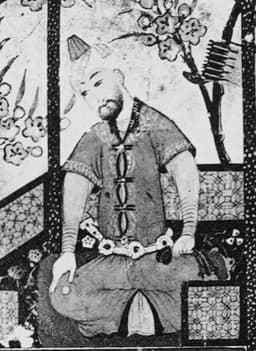
As-Salih Ayyub
Emperor · Medieval
55.9Total

Janus of Cyprus
Emperor · Medieval
36.5Total
Basic Information
Born
1205
1375
Died
1249
1432
Era
Medieval
Medieval
Nationality
Ayyubid Dynasty
Cyprus
Occupation
Emperor
Emperor
Civilization
Middle Eastern
Western
Score Comparison
Military (10%)
40.0
21.2
Political (20%)
68.0
32.1
Influence (20%)
55.7
46.3
Legacy (20%)
49.2
35.8
Leadership (15%)
58.8
33.6
Strategy (15%)
66.3
39.6
TOTAL
55.9
36.5
As-Salih Ayyub — Complete Timeline
1240 AD
Purchase of Mamluk Slaves (1240s)Reform◆ Major
As-Salih Ayyub systematically purchased large numbers of Kipchak Turkic slaves (Mamluks) to form a loyal military corps. He housed them on the island of Rawda (al-Rawda al-Salihiyya). This policy created a powerful military elite that later overthrew the Ayyubids.
Mamluk CorpsMilitary ReformSlave Soldiers
Impact: regionalconstructive
Accession as Sultan of Egypt (1240)Political Action◆ Major
As-Salih Ayyub became Sultan of Egypt after deposing his uncle Al-Adil II. He seized power with the support of the Ayyubid army and established his rule in Cairo. This marked the beginning of his reign as the last Ayyubid sultan of Egypt.
SuccessionAyyubid DynastyEgypt
Impact: regional
1249 AD
Seventh Crusade and Battle of Al-Mansurah (1249-1250)War◆ Major
As-Salih Ayyub led the defense of Egypt against the Seventh Crusade led by King Louis IX of France. The Crusaders captured Damietta in 1249. As-Salih Ayyub died of illness during the campaign, but his Mamluk forces continued the fight.
Seventh CrusadeCrusader-Ayyubid WarsDeath
Impact: regionaldestructive
Death of As-Salih Ayyub (1249)Other◆ Major
As-Salih Ayyub died in Al-Mansurah during the Seventh Crusade. His death was kept secret by his widow Shajar al-Durr and the Mamluk commander Fakhr al-Din Yussuf to maintain morale. This led to a succession crisis and the eventual rise of the Mamluks.
DeathSuccession CrisisMamluk Rise
Impact: regionaltragic
Janus of Cyprus — Complete Timeline
1373 AD
Loss of FamagustaWar◆ Major
Janus, as a child, witnessed the Genoese invasion of Cyprus. The Genoese captured the port city of Famagusta, the island's commercial center, and held it for nearly a century, crippling the Cypriot economy.
CyprusGenoaFamagustaInvasion
Impact: regionaltragic
1425 AD
Raid on AlexandriaWar
Janus launched a naval raid on Alexandria in retaliation for Mamluk attacks. The raid achieved limited success but provoked a massive Mamluk response that would devastate Cyprus.
CyprusMamlukNaval Raid
Impact: regional
1426 AD
Mamluk Invasion of CyprusWar
The Mamluk Sultan Barsbay launched a major invasion of Cyprus. Janus was defeated at the Battle of Khirokitia and captured, leading to the island's subjugation as a Mamluk tributary state.
CyprusMamlukInvasionDefeat
Impact: regionaltragic
Capture and RansomWar◆ Major
Janus was taken prisoner by the Mamluks after the Battle of Khirokitia. He was held in Cairo until a heavy ransom was paid, and Cyprus became a tributary state of the Mamluk Sultanate, losing its independence.
CyprusMamlukCaptureRansom
Impact: regionaltragic
This comparison has not been analyzed yet.
One-time AI generation (~1 minute). Scores and timeline are already available below.
Rankings
🥇
As-Salih AyyubLeader
Mil: 40.0Pol: 68.0Inf: 55.7
55.9
🥈
Janus of Cyprus
Mil: 21.2Pol: 32.1Inf: 46.3
36.5
+19.4 behind
How This Comparison Works
Algorithm
Each figure is scored on 6 dimensions (0—100 scale) based on structured historical data: Military (10%), Political (20%), Influence (20%), Legacy (20%), Leadership (15%), Strategy (15%). The weighted total produces the final ranking.
Data Sources
Scores are computed from structured sub-indicators in the database. Scale factors adjust for era (Ancient ×0.85, Modern ×1.0) and civilization size (Eastern ×1.05, Other ×0.80) to account for differences in population and military scale.
Maximum 3 Figures
Comparisons are limited to 2—3 figures to ensure readability and statistical meaningfulness.
Error Margins
±5 points per dimension — Sub-scores are derived from historical records with inherent uncertainty. Two figures within 5 points on a dimension should be considered roughly equivalent in that area.
Total Score Accuracy
±3 points overall — The weighted combination of 6 dimensions produces a total score with approximately ±3 points of uncertainty. Differences of less than 3 points are not statistically significant— the figures are effectively tied.
Known Limitations
- Historical records are incomplete and uneven across civilizations
- Figures from oral-tradition societies may be underrepresented
- Occupation labels can misclassify multi-role figures
- Scores measure capability and impact, not moral character
- Quantitative scoring is a comparison tool, not absolute truth
Capability Radar
Military (10%) — Battles & Warfare
Battles
45
15
Win Rate
50
10
Expansion
40
5
Political (20%) — Governance & Reform
Reform
60
10
Diplomacy
55
10
Economy
50
10
Influence (20%) — Cultural & Global Reach
Cultural
30
10
Global
35
5
Legacy (20%) — Historical Impact
Historical
55
10
Longevity
40
5
Leadership (15%) — Power & Stability
Tenure
40
20
Stability
35
10
Strategy (15%) — Tactics & Innovation
Strategy
50
10
Tactics
55
10
Reform
70
5
Similar Comparisons
Comments & Discussion
No comments yet. Be the first to share your thoughts!