Loading...
This comparison has not been analyzed yet.
One-time AI generation (~1 minute). Scores and timeline are already available below.
Asai Nagamasa vs Henri Namphy
Asai Nagamasa leads by 15.6 pts · 2 figures compared
…
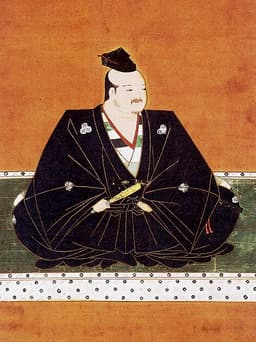
Asai Nagamasa
General · Modern
52.1Total

Henri Namphy
General · Modern
36.5Total
Basic Information
Born
1545
1932
Died
1573
—
Era
Modern
Modern
Nationality
Japan
Haiti
Occupation
General
General
Civilization
Eastern
Other
Score Comparison
Military (10%)
55.0
10.2
Political (20%)
46.6
27.9
Influence (20%)
51.8
47.1
Legacy (20%)
43.3
35.8
Leadership (15%)
65.7
43.8
Strategy (15%)
60.0
39.6
TOTAL
52.1
36.5
Asai Nagamasa — Complete Timeline
1564 AD
Alliance with Oda NobunagaPolitical Action◆ Major
Nagamasa formed an alliance with Oda Nobunaga by marrying his sister, Oichi. This alliance strengthened both clans and allowed Nagamasa to expand his territory in Omi Province.
AllianceOdaMarriage
Impact: regionalconstructive
1570 AD
Battle of AnegawaWar◆ Major
Nagamasa's forces, allied with the Asakura clan, were defeated by Oda Nobunaga and Tokugawa Ieyasu at the Battle of Anegawa. This defeat weakened his position.
BattleDefeatOda
Impact: regionaldestructive
Betrayal of Oda NobunagaPolitical Action◆ Major
Nagamasa broke his alliance with Oda Nobunaga and joined the anti-Nobunaga coalition led by the Azai and Asakura clans. This act led to war with Nobunaga.
BetrayalOdaCoalition
Impact: regionaldestructive
1573 AD
Siege of Odani CastleWar◆ Major
Nagamasa was besieged at Odani Castle by Oda Nobunaga's forces. He committed seppuku after the castle fell, ending the Asai clan's resistance.
SiegeSeppukuAsai
Impact: regionaltragic
Henri Namphy — Complete Timeline
1986 AD
Led the National Council of Government (CNG) after Baby Doc's exilePolitical Action◆ Major
Henri Namphy became head of the National Council of Government (CNG) on February 7, 1986, after President Jean-Claude Duvalier fled Haiti. The CNG was a military junta that promised democratic reforms.
Military JuntaTransition
Impact: national
1987 AD
Oversaw the 1987 constitution and electionPolitical Action◆ Major
Namphy's CNG oversaw the drafting of a new constitution, approved by referendum in March 1987. However, the November 1987 presidential election was violently disrupted by the military, leading to its cancellation.
ConstitutionElection Violence
Impact: nationaldestructive
1988 AD
Deposed President Leslie Manigat in a coupPolitical Action◆ Major
Namphy led a military coup on June 20, 1988, overthrowing President Leslie Manigat, whom he had previously allowed to take office. Namphy then reinstated himself as head of state, dissolving the elected government.
CoupMilitary Rule
Impact: nationaldestructive
Overthrown by General Prosper AvrilPolitical Action◆ Major
Namphy was himself deposed in a coup led by General Prosper Avril on September 17, 1988. His brief return to power ended after only three months, as internal military divisions led to his ouster.
CoupMilitary
Impact: nationaltragic
This comparison has not been analyzed yet.
One-time AI generation (~1 minute). Scores and timeline are already available below.
Rankings
🥇
Asai NagamasaLeader
Mil: 55.0Pol: 46.6Inf: 51.8
52.1
🥈
Henri Namphy
Mil: 10.2Pol: 27.9Inf: 47.1
36.5
+15.6 behind
How This Comparison Works
Algorithm
Each figure is scored on 6 dimensions (0—100 scale) based on structured historical data: Military (10%), Political (20%), Influence (20%), Legacy (20%), Leadership (15%), Strategy (15%). The weighted total produces the final ranking.
Data Sources
Scores are computed from structured sub-indicators in the database. Scale factors adjust for era (Ancient ×0.85, Modern ×1.0) and civilization size (Eastern ×1.05, Other ×0.80) to account for differences in population and military scale.
Maximum 3 Figures
Comparisons are limited to 2—3 figures to ensure readability and statistical meaningfulness.
Error Margins
±5 points per dimension — Sub-scores are derived from historical records with inherent uncertainty. Two figures within 5 points on a dimension should be considered roughly equivalent in that area.
Total Score Accuracy
±3 points overall — The weighted combination of 6 dimensions produces a total score with approximately ±3 points of uncertainty. Differences of less than 3 points are not statistically significant— the figures are effectively tied.
Known Limitations
- Historical records are incomplete and uneven across civilizations
- Figures from oral-tradition societies may be underrepresented
- Occupation labels can misclassify multi-role figures
- Scores measure capability and impact, not moral character
- Quantitative scoring is a comparison tool, not absolute truth
Capability Radar
Military (10%) — Battles & Warfare
Battles
35
5
Win Rate
30
5
Expansion
30
5
Political (20%) — Governance & Reform
Reform
25
10
Diplomacy
45
15
Economy
30
10
Influence (20%) — Cultural & Global Reach
Cultural
25
5
Global
15
5
Legacy (20%) — Historical Impact
Historical
30
10
Longevity
20
5
Leadership (15%) — Power & Stability
Tenure
40
30
Stability
25
10
Strategy (15%) — Tactics & Innovation
Strategy
35
10
Tactics
40
10
Reform
20
5
Similar Comparisons
Comments & Discussion
No comments yet. Be the first to share your thoughts!