Loading...
Asakura Yoshikage vs Juan Vicente Gomez
Juan Vicente Gomez leads by 4.5 pts · 2 figures compared
…

Asakura Yoshikage
General · Modern
48.2Total
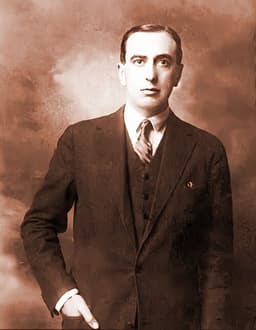
Juan Vicente Gomez
General · Modern
52.7Total
Basic Information
Born
1533
1857
Died
1573
1935
Era
Modern
Modern
Nationality
Japan
Venezuela
Occupation
General
General
Civilization
Eastern
Western
Score Comparison
Military (10%)
10.0
38.3
Political (20%)
48.0
48.0
Influence (20%)
51.8
54.9
Legacy (20%)
43.3
47.5
Leadership (15%)
68.0
77.2
Strategy (15%)
60.0
45.0
TOTAL
48.2
52.7
Asakura Yoshikage — Complete Timeline
1570 AD
Battle of AnegawaWar◆ Major
Asakura Yoshikage allied with the Azai clan to fight Oda Nobunaga and Tokugawa Ieyasu at Anegawa. The allied forces were defeated, weakening Asakura's position and leading to the decline of his power in Echizen.
Sengoku PeriodBattleOda Nobunaga
Impact: regionaldestructive
1573 AD
Siege of Ichijodani CastleWar
Oda Nobunaga's forces besieged and captured Asakura Yoshikage's capital, Ichijodani Castle in Echizen Province. The castle was burned, and the Asakura clan was destroyed, ending Yoshikage's rule.
Sengoku PeriodSiegeClan Destruction
Impact: regionaltragic
Death of Asakura YoshikageOther◆ Major
After the fall of Ichijodani Castle, Asakura Yoshikage fled but was captured and forced to commit seppuku by Oda Nobunaga's forces. His death marked the end of the Asakura clan's rule in Echizen.
Sengoku PeriodDeathSeppuku
Impact: regionaltragic
Juan Vicente Gomez — Complete Timeline
1908 AD
Coup of 1908Political Action
Gomez seized power in a coup while President Cipriano Castro was abroad for medical treatment. Gomez assumed the presidency and began a 27-year dictatorship, consolidating control over Venezuela's military and political institutions.
CoupDictatorshipVenezuela
Impact: nationaldestructive
1914 AD
Oil nationalization and concession systemReform◆ Major
Gomez granted extensive oil concessions to foreign companies, particularly Royal Dutch Shell and Standard Oil, under favorable terms. This established Venezuela as a major oil exporter but created a rentier economy dependent on foreign capital.
OilEconomyForeign Investment
Impact: national
1919 AD
Suppression of the 1919 student protestsPolitical Action
Gomez violently suppressed student-led protests against his regime in Caracas. Hundreds were arrested, and the government closed universities, using secret police and military force to eliminate dissent.
RepressionProtestsEducation
Impact: nationaldestructive
1935 AD
Death of Juan Vicente GomezOther
Gomez died in office on December 17, 1935, ending his 27-year dictatorship. His death triggered a power vacuum and led to a transition toward democratic governance under Eleazar L
DeathEnd of DictatorshipTransition
Impact: national
Expert Analysis
Origins
Asakura Yoshikage (1533–1573) was born into the Asakura clan, a powerful samurai family ruling Echizen Province (modern Fukui Prefecture). His father, Asakura Takakage, had strengthened the clan's position. Yoshikage received a traditional samurai education, emphasizing martial arts and governance. He became daimyo in 1548 at age 15, inheriting a stable domain with significant military and economic resources.
Juan Vicente Gomez (1857–1935) was born in Hacienda La Mulera, Táchira, Venezuela, into a modest landowning family. He had limited formal education but developed skills in cattle ranching and business. Gomez entered politics through his association with Cipriano Castro, a fellow Táchira caudillo, serving as vice president before seizing power.
Rise to Power
Asakura Yoshikage's rise was hereditary; he became daimyo of Echizen without significant struggle. His early years focused on consolidating power and managing relations with neighboring clans. However, his position was challenged by the expanding Oda clan under Oda Nobunaga, who sought to unify Japan. Yoshikage's alliance with the Azai clan in 1570 led to the Battle of Anegawa (July 30, 1570), where their combined forces were defeated by Nobunaga and Tokugawa Ieyasu. This defeat weakened Asakura's military standing.
Juan Vicente Gomez's rise came through a coup in 1908. While President Castro was abroad for medical treatment, Gomez seized power on December 19, 1908, becoming acting president. He consolidated control by eliminating rivals and establishing a repressive regime. Gomez remained in power for 27 years, ruling as a dictator through controlled elections and military force.
Leadership & Governance
Asakura Yoshikage governed Echizen as a traditional feudal lord, relying on samurai vassals and maintaining local autonomy. His leadership style was defensive and reactive, failing to adapt to the changing military tactics of the Sengoku period. He scored 68.0 in leadership and 60.0 in strategy, but his military score was only 10.0, reflecting his inability to counter Nobunaga's modernized forces. Yoshikage's governance focused on preserving the status quo rather than innovation.
Juan Vicente Gomez ruled Venezuela with an iron fist, centralizing power and suppressing dissent. His political score was 48.0, matching Yoshikage's, but his leadership score was 77.2, indicating stronger control. Gomez granted extensive oil concessions to foreign companies like Royal Dutch Shell and Standard Oil, establishing Venezuela as a major oil exporter. However, he used the revenue to enrich himself and his allies, while the population remained poor. He suppressed protests violently, such as the 1919 student protests in Caracas, where hundreds were arrested and universities closed.
Triumph & Tragedy
Asakura Yoshikage's greatest success was maintaining Asakura rule for 25 years despite external pressures. His alliance with the Azai clan was a strategic move, but it ultimately led to his downfall. The tragedy was the Siege of Ichijodani Castle in 1573, where Nobunaga's forces captured and burned his capital. Yoshikage fled but was captured and forced to commit seppuku, ending the Asakura clan's rule.
Juan Vicente Gomez's triumph was his longevity in power and the modernization of Venezuela's oil industry. He died in office on December 17, 1935, of natural causes. His tragedy was the brutal repression of his people and the corruption that plagued his regime. The oil wealth did not benefit the majority, and his dictatorship set back democratic development.
Character & Destiny
Asakura Yoshikage was cautious and conservative, preferring diplomacy over decisive action. His character led to indecisiveness; he failed to strike at Nobunaga when opportunities arose. This passivity sealed his fate. Historical assessments view him as a capable administrator but a poor military leader, unable to adapt to the era's warfare.
Juan Vicente Gomez was shrewd, ruthless, and pragmatic. He maintained power through a network of spies and military loyalty. His character was shaped by his ranching background, emphasizing control and order. He died in power, but his legacy is tainted by authoritarianism. Historians note his skill in manipulation but criticize his lack of democratic vision.
Legacy
Asakura Yoshikage's legacy is minimal; he is remembered primarily as a defeated daimyo. The Asakura clan's cultural contributions, such as the Ichijodani Castle ruins, survive but are overshadowed by Nobunaga's unification. His score of 43.3 in legacy reflects limited long-term impact.
Juan Vicente Gomez's legacy is more significant. He transformed Venezuela into an oil state, but his authoritarian rule set a precedent for future dictators. His scores: military 38.3, influence 54.9, legacy 47.5. The oil concessions he granted shaped Venezuela's economy for decades, but the lack of democratic institutions led to instability.
Conclusion
Juan Vicente Gomez had greater impact than Asakura Yoshikage. Gomez's total score of 52.7 surpasses Yoshikage's 48.2, and his leadership (77.2 to 68.0) and influence (54.9 to 51.8) are higher. While Yoshikage was a minor figure in Japanese history, Gomez's 27-year rule fundamentally altered Venezuela's development. His decisions on oil concessions created long-term economic structures, whereas Yoshikage's defeat marked the end of his clan. Therefore, Gomez's impact was greater.
Rankings
🥇
Juan Vicente GomezLeader
Mil: 38.3Pol: 48.0Inf: 54.9
52.7
🥈
Asakura Yoshikage
Mil: 10.0Pol: 48.0Inf: 51.8
48.2
+4.5 behind
How This Comparison Works
Algorithm
Each figure is scored on 6 dimensions (0—100 scale) based on structured historical data: Military (10%), Political (20%), Influence (20%), Legacy (20%), Leadership (15%), Strategy (15%). The weighted total produces the final ranking.
Data Sources
Scores are computed from structured sub-indicators in the database. Scale factors adjust for era (Ancient ×0.85, Modern ×1.0) and civilization size (Eastern ×1.05, Other ×0.80) to account for differences in population and military scale.
Maximum 3 Figures
Comparisons are limited to 2—3 figures to ensure readability and statistical meaningfulness.
Error Margins
±5 points per dimension — Sub-scores are derived from historical records with inherent uncertainty. Two figures within 5 points on a dimension should be considered roughly equivalent in that area.
Total Score Accuracy
±3 points overall — The weighted combination of 6 dimensions produces a total score with approximately ±3 points of uncertainty. Differences of less than 3 points are not statistically significant— the figures are effectively tied.
Known Limitations
- Historical records are incomplete and uneven across civilizations
- Figures from oral-tradition societies may be underrepresented
- Occupation labels can misclassify multi-role figures
- Scores measure capability and impact, not moral character
- Quantitative scoring is a comparison tool, not absolute truth
Capability Radar
Military (10%) — Battles & Warfare
Battles
40
25
Win Rate
35
30
Expansion
35
35
Political (20%) — Governance & Reform
Reform
30
30
Diplomacy
40
40
Economy
35
35
Influence (20%) — Cultural & Global Reach
Cultural
25
30
Global
15
30
Legacy (20%) — Historical Impact
Historical
30
45
Longevity
20
40
Leadership (15%) — Power & Stability
Tenure
45
85
Stability
30
50
Strategy (15%) — Tactics & Innovation
Strategy
40
25
Tactics
45
20
Reform
30
40
Similar Comparisons
Comments & Discussion
No comments yet. Be the first to share your thoughts!