Loading...
Ashikaga Tadayoshi vs Saito Dosan
Saito Dosan leads by 2.9 pts · 2 figures compared
…

Ashikaga Tadayoshi
General · Medieval
53.4Total
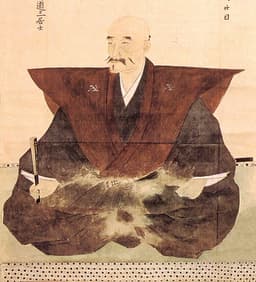
Saito Dosan
General · Medieval
56.3Total
Basic Information
Born
1306
1494
Died
1352
1556
Era
Medieval
Medieval
Nationality
Japan
Japan
Occupation
General
General
Civilization
Eastern
Eastern
Score Comparison
Military (10%)
72.5
50.0
Political (20%)
54.7
68.0
Influence (20%)
50.2
53.3
Legacy (20%)
42.5
47.5
Leadership (15%)
62.0
71.0
Strategy (15%)
55.0
52.5
TOTAL
53.4
56.3
Ashikaga Tadayoshi — Complete Timeline
1333 AD
Appointed to the Kamakura Shogunate GovernmentPolitical Action◆ Major
Ashikaga Tadayoshi was appointed by his brother Takauji to a senior position in the newly established Ashikaga shogunate. He was tasked with overseeing civil administration and judicial matters, while Takauji focused on military affairs.
Ashikaga ShogunateGovernmentCivil Administration
Impact: national
1336 AD
Governed Kyoto During the Kemmu RestorationPolitical Action◆ Major
Tadayoshi governed Kyoto and managed the shogunate's civil affairs while Takauji campaigned against Emperor Go-Daigo's forces. He implemented policies to stabilize the capital and win support from the court nobility.
Kemmu RestorationKyotoGovernance
Impact: nationalconstructive
1349 AD
Conflict with Takauji's Military Commander Ko no MoronaoPolitical Action◆ Major
Tadayoshi's rivalry with Ko no Moronao, Takauji's favored general, escalated into open conflict. Tadayoshi accused Moronao of corruption and plotting against him, leading to a split within the Ashikaga leadership.
RivalryAshikaga ClanKo no Moronao
Impact: nationaldestructive
1350 AD
Rebelled Against Ashikaga TakaujiWar
Tadayoshi raised an army and rebelled against his brother Takauji, allying with the Southern Court. The Kanno Disturbance (Kanno no Ran) erupted, a civil war within the Ashikaga shogunate that devastated Kyoto and weakened central authority.
Kanno DisturbanceCivil WarAshikaga Clan
Impact: nationaldestructive
1351 AD
Defeated and Forced to SurrenderWar◆ Major
Tadayoshi's forces were defeated by Takauji's army at the Battle of Uchino. He surrendered and was initially pardoned, but later died under suspicious circumstances, possibly poisoned on Takauji's orders.
BattleDefeatDeath
Impact: nationaltragic
Saito Dosan — Complete Timeline
1542 AD
Seizure of Mino ProvincePolitical Action◆ Major
Dosan overthrew the Toki clan, the legitimate rulers of Mino Province, and declared himself daimyo. This coup, achieved through a combination of military force and political maneuvering, marked his rise from a commoner to a powerful lord.
CoupMinoSengoku Period
Impact: regional
1548 AD
Alliance with Oda NobuhidePolitical Action◆ Major
Dosan formed an alliance with Oda Nobuhide, sealed by the marriage of his daughter Nohime to Nobuhide's son Nobunaga. This alliance secured Dosan's eastern flank and strengthened both clans against the Imagawa.
AllianceMarriageSengoku Period
Impact: regionalconstructive
1556 AD
Battle of Nagara-gawaWar◆ Major
Dosan was killed in battle against his son Saito Yoshitatsu at Nagara-gawa. Yoshitatsu, who had rebelled against his father, defeated Dosan's forces, ending Dosan's rule over Mino and his life.
BattleRebellionSengoku Period
Impact: regionaltragic
Expert Analysis
Origins
Ashikaga Tadayoshi (1306–1352) was the younger brother of Ashikaga Takauji, founder of the Ashikaga shogunate. Born into the powerful Ashikaga clan, a branch of the Minamoto, Tadayoshi received a traditional samurai education. His early life was overshadowed by his brother's military ambitions, but he developed expertise in civil governance and legal administration. In contrast, Saito Dosan (1494–1556) was born into obscurity, possibly as the son of an oil merchant or a low-ranking samurai. His origins are murky, but he rose through cunning and ruthlessness, earning the nickname "Viper of Mino." He worked as a merchant before entering the service of the Toki clan, eventually usurping their position.
Rise to Power
Tadayoshi's rise was tied to his brother's success. After the Kemmu Restoration (1333–1336), Takauji appointed Tadayoshi to oversee civil affairs in Kyoto while Takauji campaigned against Emperor Go-Daigo. Tadayoshi managed the shogunate's bureaucracy and implemented policies to stabilize the regime. His influence peaked during the early years of the Ashikaga shogunate. Dosan's rise was a masterclass in strategic maneuvering. He entered the service of Toki Yorinari, the shugo of Mino, and gradually undermined his authority. In 1542, Dosan launched a coup, exiling Yorinari and seizing control of Mino Province. He secured his position through alliances, notably marrying his daughter Nohime to Oda Nobunaga in 1549, linking him to the rising Oda clan. His political score of 68.0 reflects this cunning ascent, while Tadayoshi's political score of 54.7 indicates a more dependent path.
Leadership & Governance
Tadayoshi governed through administrative competence. He established legal codes and managed the shogunate's finances, earning a leadership score of 62.0. However, his governance was constrained by his brother's military dominance. His approach was bureaucratic and cautious, focusing on stability. Dosan, with a leadership score of 71.0, ruled Mino with a firm hand. He implemented land surveys and tax reforms to strengthen his domain. Unlike Tadayoshi, he was a self-made ruler who centralized power by eliminating rivals. His governance was pragmatic and ruthless, exemplified by his betrayal of the Toki. Tadayoshi's style was more collaborative but ultimately led to conflict with Takauji's general Ko no Moronao, revealing his inability to manage military tensions.
Triumph & Tragedy
Tadayoshi's greatest success was his administration of the shogunate's civil affairs, which provided stability during the Kemmu Restoration. He scored 72.5 in military, indicating competence, but his tragedy came from the Kanno Disturbance (1350–1352). After falling out with Takauji and Moronao, Tadayoshi rebelled, allying with the Southern Court. He was defeated at the Battle of Uchino, surrendered, and died suspiciously in 1352, likely poisoned. Dosan's triumph was his seizure of Mino and his alliance with Oda Nobunaga, which secured his legacy. His tragedy was his death at the Battle of Nagara-gawa in 1556, killed by his own son Saito Yoshitatsu, who rebelled against him. Dosan's military score of 50.0 reflects his limited battlefield prowess, while Tadayoshi's military score of 72.5 shows greater tactical ability.
Character & Destiny
Tadayoshi was characterized by loyalty to his brother but also ambition that led to rebellion. His indecisiveness and reliance on civil means over military force contributed to his downfall. Historians see him as a capable administrator who overreached. Dosan was known for his cunning, ruthlessness, and strategic thinking. His nickname "Viper" encapsulates his treachery, but his ability to rise from nothing to daimyo shows extraordinary ambition. His fate—killed by his son—echoes his own betrayal of the Toki. Tadayoshi's character was more conventional, while Dosan's was uniquely Machiavellian.
Legacy
Tadayoshi's legacy is overshadowed by his brother's. He is remembered as a footnote in the Ashikaga shogunate's history, with a legacy score of 42.5. His administrative contributions were ephemeral, as the shogunate later declined. Dosan's legacy is more substantial, with a score of 47.5. He is remembered as a classic example of gekokujo (the low overthrowing the high) and for his role in Nobunaga's rise. His daughter Nohime became Nobunaga's wife, linking him to Japan's unification. However, his legacy is tarnished by his violent methods.
Conclusion
Saito Dosan had greater impact than Ashikaga Tadayoshi. Despite Tadayoshi's higher military score (72.5 vs 50.0) and total score (53.4 vs 56.3), Dosan's political acumen and legacy as a self-made daimyo who changed the power structure of Mino and influenced Nobunaga's ascent give him the edge. Tadayoshi's role was largely supportive and ended in failure. Dosan's story exemplifies the turbulent Sengoku period and the rise of new leaders. Thus, Dosan's influence, though brutal, was more transformative.
Rankings
🥇
Saito DosanLeader
Mil: 50.0Pol: 68.0Inf: 53.3
56.3
🥈
Ashikaga Tadayoshi
Mil: 72.5Pol: 54.7Inf: 50.2
53.4
+2.9 behind
How This Comparison Works
Algorithm
Each figure is scored on 6 dimensions (0—100 scale) based on structured historical data: Military (10%), Political (20%), Influence (20%), Legacy (20%), Leadership (15%), Strategy (15%). The weighted total produces the final ranking.
Data Sources
Scores are computed from structured sub-indicators in the database. Scale factors adjust for era (Ancient ×0.85, Modern ×1.0) and civilization size (Eastern ×1.05, Other ×0.80) to account for differences in population and military scale.
Maximum 3 Figures
Comparisons are limited to 2—3 figures to ensure readability and statistical meaningfulness.
Error Margins
±5 points per dimension — Sub-scores are derived from historical records with inherent uncertainty. Two figures within 5 points on a dimension should be considered roughly equivalent in that area.
Total Score Accuracy
±3 points overall — The weighted combination of 6 dimensions produces a total score with approximately ±3 points of uncertainty. Differences of less than 3 points are not statistically significant— the figures are effectively tied.
Known Limitations
- Historical records are incomplete and uneven across civilizations
- Figures from oral-tradition societies may be underrepresented
- Occupation labels can misclassify multi-role figures
- Scores measure capability and impact, not moral character
- Quantitative scoring is a comparison tool, not absolute truth
Capability Radar
Military (10%) — Battles & Warfare
Battles
55
45
Win Rate
50
50
Expansion
45
55
Political (20%) — Governance & Reform
Reform
55
45
Diplomacy
50
55
Economy
50
50
Influence (20%) — Cultural & Global Reach
Cultural
40
30
Global
30
20
Legacy (20%) — Historical Impact
Historical
45
40
Longevity
40
35
Leadership (15%) — Power & Stability
Tenure
60
50
Stability
45
40
Strategy (15%) — Tactics & Innovation
Strategy
55
55
Tactics
60
60
Reform
40
40
Similar Comparisons
Comments & Discussion
No comments yet. Be the first to share your thoughts!