Loading...
This comparison has not been analyzed yet.
One-time AI generation (~1 minute). Scores and timeline are already available below.
Askia Ishaq II vs Hamad bin Isa Al Khalifa
Hamad bin Isa Al Khalifa leads by 13.1 pts · 2 figures compared
…

Askia Ishaq II
Emperor · Modern
39.3Total
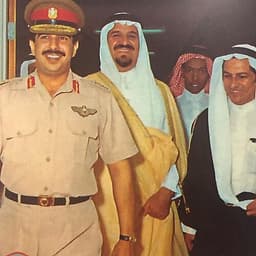
Hamad bin Isa Al Khalifa
Emperor · Modern
52.4Total
Basic Information
Born
1560
1950
Died
1591
—
Era
Modern
Modern
Nationality
Songhai Empire
Bahrain
Occupation
Emperor
Emperor
Civilization
Other
Middle Eastern
Score Comparison
Military (10%)
25.9
50.0
Political (20%)
33.6
68.0
Influence (20%)
47.9
52.5
Legacy (20%)
37.5
37.5
Leadership (15%)
48.4
68.0
Strategy (15%)
30.3
45.0
TOTAL
39.3
52.4
Askia Ishaq II — Complete Timeline
1588 AD
Accession as Askia of SonghaiPolitical Action◆ Major
Askia Ishaq II became ruler of the Songhai Empire after a period of internal strife following the death of Askia Daoud. He was the last of the Askia dynasty to rule an independent Songhai Empire.
SuccessionLast Ruler
Impact: national
1591 AD
Battle of TondibiWar
Askia Ishaq II's army was decisively defeated by a Moroccan invasion force equipped with firearms at the Battle of Tondibi near Gao. The Songhai forces, lacking gunpowder weapons, were routed, leading to the collapse of the Songhai Empire.
BattleMoroccan InvasionEnd of Empire
Impact: regionaltragic
Flight and Death of Askia Ishaq IIOther◆ Major
Following the defeat at Tondibi, Askia Ishaq II fled the capital Gao. He was later captured and executed by the Moroccans, marking the end of the Songhai Empire as an independent state and the beginning of Moroccan rule over the region.
DeathConquest
Impact: regionaltragic
Hamad bin Isa Al Khalifa — Complete Timeline
1999 AD
Accession as King of BahrainPolitical Action◆ Major
Hamad bin Isa Al Khalifa became the Emir of Bahrain on March 6, 1999, following the death of his father, Isa bin Salman Al Khalifa. He later changed his title to King in 2002, transforming the country from an emirate to a constitutional monarchy.
SuccessionMonarchyBahrain
Impact: national
2001 AD
Promulgation of the National Action CharterReform◆ Major
King Hamad introduced the National Action Charter, a set of political reforms that included the establishment of a bicameral parliament, an independent judiciary, and women's suffrage. The charter was approved by a popular referendum in February 2001.
Political ReformConstitutionDemocratization
Impact: nationalconstructive
2011 AD
Bahrain Uprising (2011)Political Action◆ Major
In February 2011, mass protests erupted in Bahrain demanding political reforms and greater rights for the Shia majority. King Hamad declared a state of emergency and invited Saudi-led Gulf forces to suppress the uprising, resulting in dozens of deaths and hundreds of arrests.
Arab SpringProtestCrackdown
Impact: nationaldestructive
Establishment of the Bahrain Independent Commission of InquiryPolitical Action
Following international criticism of the crackdown on protesters, King Hamad established an independent commission led by M. Cherif Bassiouni to investigate human rights abuses. The commission's report documented systematic use of excessive force and torture.
Human RightsInvestigationReform
Impact: national
This comparison has not been analyzed yet.
One-time AI generation (~1 minute). Scores and timeline are already available below.
Rankings
🥇
Hamad bin Isa Al KhalifaLeader
Mil: 50.0Pol: 68.0Inf: 52.5
52.4
🥈
Askia Ishaq II
Mil: 25.9Pol: 33.6Inf: 47.9
39.3
+13.1 behind
How This Comparison Works
Algorithm
Each figure is scored on 6 dimensions (0—100 scale) based on structured historical data: Military (10%), Political (20%), Influence (20%), Legacy (20%), Leadership (15%), Strategy (15%). The weighted total produces the final ranking.
Data Sources
Scores are computed from structured sub-indicators in the database. Scale factors adjust for era (Ancient ×0.85, Modern ×1.0) and civilization size (Eastern ×1.05, Other ×0.80) to account for differences in population and military scale.
Maximum 3 Figures
Comparisons are limited to 2—3 figures to ensure readability and statistical meaningfulness.
Error Margins
±5 points per dimension — Sub-scores are derived from historical records with inherent uncertainty. Two figures within 5 points on a dimension should be considered roughly equivalent in that area.
Total Score Accuracy
±3 points overall — The weighted combination of 6 dimensions produces a total score with approximately ±3 points of uncertainty. Differences of less than 3 points are not statistically significant— the figures are effectively tied.
Known Limitations
- Historical records are incomplete and uneven across civilizations
- Figures from oral-tradition societies may be underrepresented
- Occupation labels can misclassify multi-role figures
- Scores measure capability and impact, not moral character
- Quantitative scoring is a comparison tool, not absolute truth
Capability Radar
Military (10%) — Battles & Warfare
Battles
20
0
Win Rate
10
0
Expansion
10
0
Political (20%) — Governance & Reform
Reform
20
40
Diplomacy
15
55
Economy
20
50
Influence (20%) — Cultural & Global Reach
Cultural
15
30
Global
10
25
Legacy (20%) — Historical Impact
Historical
25
20
Longevity
10
15
Leadership (15%) — Power & Stability
Tenure
30
60
Stability
10
45
Strategy (15%) — Tactics & Innovation
Strategy
15
0
Tactics
15
0
Reform
10
5
Similar Comparisons
Comments & Discussion
No comments yet. Be the first to share your thoughts!