Loading...
Attalus I vs Ziusudra
Attalus I leads by 7.5 pts · 2 figures compared
…

Attalus I
Emperor · Ancient
57.4Total
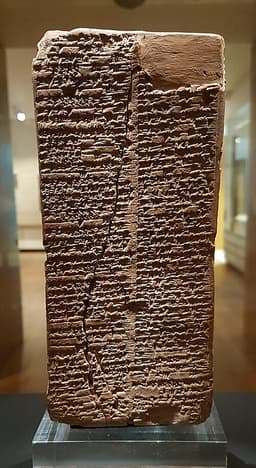
Ziusudra
Emperor · Ancient
49.9Total
Basic Information
Born
-269
-2600
Died
-197
-2550
Era
Ancient
Ancient
Nationality
Pergamon
Sumer
Occupation
Emperor
Emperor
Civilization
Western
Middle Eastern
Score Comparison
Military (10%)
55.0
26.2
Political (20%)
68.0
68.0
Influence (20%)
53.3
51.8
Legacy (20%)
45.0
48.3
Leadership (15%)
74.0
44.5
Strategy (15%)
60.0
53.7
TOTAL
57.4
49.9
Attalus I — Complete Timeline
269 BC
Battle of the Caecus RiverWar
Attalus I defeated the Galatians near the Caecus River. This victory ended the Galatian threat to Pergamon and allowed Attalus to assume the title of king, establishing the Attalid dynasty as a major power in Asia Minor.
Galatian WarPergamonAttalid Dynasty
Impact: regionalconstructive
211 BC
First Macedonian War Alliance with RomePolitical Action◆ Major
Attalus I allied with the Roman Republic against Philip V of Macedon during the First Macedonian War. This alliance brought Pergamon into the Roman sphere of influence and secured Roman support against the Seleucid Empire.
Macedonian WarsRoman AllianceDiplomacy
Impact: regionalconstructive
201 BC
Battle of ChiosWar◆ Major
Attalus I commanded the Pergamene fleet alongside the Rhodians against Philip V of Macedon at the Battle of Chios. The allied fleet won a costly victory, but Attalus nearly died when his ship was rammed and sank.
Cretan WarNaval BattlePhilip V
Impact: regional
Ziusudra — Complete Timeline
2600 BC
Reign as King of ShuruppakPolitical Action◆ Major
Ziusudra ruled as the king of Shuruppak, a Sumerian city-state. He is known from the Sumerian King List as the last king before the great flood.
Sumerian KingShuruppak
Survival of the Great FloodOther
According to Sumerian myth, Ziusudra was warned by the god Enki to build a large boat to survive a catastrophic flood. He and his family were the only humans to survive, becoming the Sumerian Noah figure.
Flood MythSurvivalMythology
Impact: global
Granting of Immortality by GodsOther◆ Major
After the flood, Ziusudra was granted immortality by the gods and taken to live in the mythical land of Dilmun. This event is recorded in the Sumerian flood myth.
ImmortalityMythologyDilmun
Impact: global
Expert Analysis
Origins
Attalus I (born 269 BCE) was the son of Attalus of Pergamon and Antiochis, a Seleucid princess. He inherited the throne of Pergamon around 241 BCE, a small Hellenistic kingdom in western Anatolia. His family had established Pergamon as a cultural and military power through shrewd diplomacy and patronage of the arts. Ziusudra (circa 2900 BCE) was a Sumerian king of Shuruppak, a city-state in ancient Mesopotamia. According to the Sumerian King List, he ruled for a period before the great flood. His name appears in the Eridu Genesis and other cuneiform texts as a wise and pious ruler favored by the god Enki.
Rise to Power
Attalus I rose to prominence by defeating the Galatians, Celtic tribes that had terrorized Anatolia for decades. At the Battle of the Caecus River (ca. 237 BCE), he inflicted a decisive defeat on the Galatians, ending their threat to Pergamon. This victory allowed him to assume the title of king (basileus) and claim the legacy of the Seleucid Empire. He then expanded Pergamene influence through alliances, most notably with Rome against Philip V of Macedon during the First Macedonian War (214–205 BCE). Ziusudra's rise is rooted in Sumerian mythology. He was the king of Shuruppak, a city that, according to the Sumerian King List, was the seat of kingship before the flood. His reign is recorded as the last before a catastrophic deluge. His pivotal event was receiving a warning from the god Enki to build a large boat to survive the flood, making him the Sumerian Noah.
Leadership & Governance
Attalus I ruled as a Hellenistic monarch, consolidating Pergamon's power through military strength and cultural patronage. He built the Pergamon Library and supported sculptors, making his capital a rival to Alexandria. His leadership score of 74.0 reflects his ability to navigate the complex politics of the Hellenistic world, balancing alliances with Rome and rivals like the Seleucids. Ziusudra's governance is less documented, but as a Sumerian king, he would have overseen irrigation, temple construction, and trade. His political score of 68.0 matches Attalus's, but his military score of 26.2 is far lower, as his legacy is not martial but mythic. Ziusudra's leadership is defined by his obedience to divine command, which saved humanity.
Triumph & Tragedy
Attalus I's greatest triumph was the victory over the Galatians, securing Pergamon's independence and his crown. His alliance with Rome brought prestige but also entangled Pergamon in Roman conflicts. At the Battle of Chios (201 BCE), he commanded the Pergamene fleet alongside the Rhodians against Philip V, winning a costly victory. However, his later years saw the rise of Rome's dominance, reducing Pergamon's autonomy. Ziusudra's triumph was surviving the flood and being granted immortality, taken to Dilmun. His tragedy is that his story was largely overshadowed by later flood myths (e.g., Noah, Utnapishtim), and his historical reign is obscure. His influence score of 51.8 reflects his role as a prototype for flood heroes.
Character & Destiny
Attalus I was a pragmatic and ambitious ruler, using military force and diplomacy to expand Pergamon's influence. His decision to ally with Rome, though risky, proved strategically sound in the short term. His character is reflected in his total score of 57.4, with strengths in leadership (74.0) and strategy (60.0). Ziusudra's character is defined by piety and wisdom; he heeded Enki's warning and preserved life. His destiny was to become immortal, a reward for his righteousness. His total score of 49.9 is lower, but his legacy as a flood survivor is enduring in world mythology.
Legacy
Attalus I's legacy is tangible: he established Pergamon as a major Hellenistic power, patron of arts and sciences. His alliances paved the way for Rome's expansion into Asia Minor. The Pergamon Altar, built under his successors, remains a symbol of his dynasty. His legacy score of 45.0 reflects that his kingdom was eventually annexed by Rome. Ziusudra's legacy is mythic: he is the earliest known flood hero, influencing later stories in Mesopotamia (Gilgamesh) and the Bible. His legacy score of 48.3 surpasses Attalus's, as his myth has resonated for millennia. However, his historical impact is limited due to lack of concrete achievements.
Conclusion
Attalus I had greater impact in terms of tangible historical change. His military and political actions shaped the Hellenistic world and facilitated Roman dominance. Ziusudra's influence is cultural and religious, but less direct. Attalus's total score of 57.4 versus 49.9 reflects his superior leadership and strategy. While Ziusudra's myth is important, Attalus's concrete accomplishments—defeating the Galatians, founding a dynasty, and allying with Rome—give him a stronger claim to historical significance.
Rankings
🥇
Attalus ILeader
Mil: 55.0Pol: 68.0Inf: 53.3
57.4
🥈
Ziusudra
Mil: 26.2Pol: 68.0Inf: 51.8
49.9
+7.5 behind
How This Comparison Works
Algorithm
Each figure is scored on 6 dimensions (0—100 scale) based on structured historical data: Military (10%), Political (20%), Influence (20%), Legacy (20%), Leadership (15%), Strategy (15%). The weighted total produces the final ranking.
Data Sources
Scores are computed from structured sub-indicators in the database. Scale factors adjust for era (Ancient ×0.85, Modern ×1.0) and civilization size (Eastern ×1.05, Other ×0.80) to account for differences in population and military scale.
Maximum 3 Figures
Comparisons are limited to 2—3 figures to ensure readability and statistical meaningfulness.
Error Margins
±5 points per dimension — Sub-scores are derived from historical records with inherent uncertainty. Two figures within 5 points on a dimension should be considered roughly equivalent in that area.
Total Score Accuracy
±3 points overall — The weighted combination of 6 dimensions produces a total score with approximately ±3 points of uncertainty. Differences of less than 3 points are not statistically significant— the figures are effectively tied.
Known Limitations
- Historical records are incomplete and uneven across civilizations
- Figures from oral-tradition societies may be underrepresented
- Occupation labels can misclassify multi-role figures
- Scores measure capability and impact, not moral character
- Quantitative scoring is a comparison tool, not absolute truth
Capability Radar
Military (10%) — Battles & Warfare
Battles
45
35
Win Rate
50
39
Expansion
40
44
Political (20%) — Governance & Reform
Reform
35
0
Diplomacy
60
0
Economy
55
0
Influence (20%) — Cultural & Global Reach
Cultural
45
40
Global
35
30
Legacy (20%) — Historical Impact
Historical
50
50
Longevity
40
60
Leadership (15%) — Power & Stability
Tenure
60
10
Stability
50
10
Strategy (15%) — Tactics & Innovation
Strategy
50
48
Tactics
55
49
Reform
30
56
Similar Comparisons
Comments & Discussion
No comments yet. Be the first to share your thoughts!