Loading...
Axel Oxenstierna vs Carles Puigdemont
Axel Oxenstierna leads by 20.4 pts · 2 figures compared
…
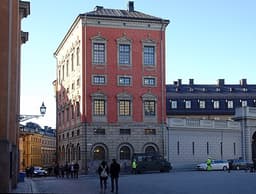
Axel Oxenstierna
Politician · Modern
66.2Total
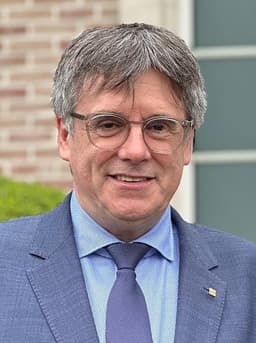
Carles Puigdemont
Politician · Modern
45.8Total
Basic Information
Born
1583
1962
Died
1654
—
Era
Modern
Modern
Nationality
Sweden
Spain
Occupation
Politician
Politician
Civilization
Western
Western
Score Comparison
Military (10%)
55.0
50.0
Political (20%)
75.0
40.8
Influence (20%)
72.0
52.5
Legacy (20%)
55.0
40.8
Leadership (15%)
78.0
48.4
Strategy (15%)
60.0
41.3
TOTAL
66.2
45.8
Axel Oxenstierna — Complete Timeline
1612 AD
Appointed Lord High Chancellor of SwedenPolitical Action◆ Major
Axel Oxenstierna was appointed Lord High Chancellor by King Gustavus Adolphus. This position made him the chief administrator of the Swedish government, a role he held for over four decades, shaping Swedish policy during its rise as a great power.
GovernmentAdministrationSwedish Empire
Impact: nationalconstructive
1632 AD
Governed Sweden during Christina's minorityPolitical Action◆ Major
After King Gustavus Adolphus died at the Battle of L
RegencyThirty Years' WarGovernment
Impact: nationalconstructive
1634 AD
Implemented the Form of Government of 1634Reform◆ Major
Oxenstierna introduced a new constitution that established a centralized administrative system with five government colleges. This reform streamlined governance, reduced the power of the nobility, and created a more efficient state apparatus that lasted for over a century.
ConstitutionAdministrationReform
Impact: nationalconstructive
1648 AD
Negotiated the Treaty of WestphaliaPolitical Action
Oxenstierna led Swedish negotiations at the Peace of Westphalia, which ended the Thirty Years' War. Sweden gained territories including Western Pomerania, Bremen, and Verden, securing its status as a major European power and gaining control of key Baltic and North Sea ports.
TreatyThirty Years' WarSwedish Empire
Impact: globalconstructive
Carles Puigdemont — Complete Timeline
2016 AD
Elected President of the Government of CataloniaPolitical Action◆ Major
Puigdemont was elected as the 130th President of the Government of Catalonia, succeeding Artur Mas. He led a pro-independence coalition government and pledged to continue the process toward a referendum on Catalan independence.
Catalan PoliticsElectionIndependence
Impact: regionalconstructive
2017 AD
Held the 2017 Catalan Independence ReferendumPolitical Action
Puigdemont's government held a unilateral independence referendum on October 1, 2017, despite a Spanish constitutional court ban and police crackdown. The referendum resulted in a 'Yes' vote but was not recognized internationally and led to a political crisis.
Catalan PoliticsReferendumCrisis
Impact: regionaldestructive
Declared Catalan Independence and Suspended ItPolitical Action
On October 10, 2017, Puigdemont declared independence from Spain but immediately suspended its implementation to allow for negotiations. This ambiguous move was rejected by the Spanish government and deepened the political standoff.
Catalan PoliticsIndependenceNegotiation
Impact: regionaldestructive
Fled to Belgium After Spanish Government InterventionPolitical Action◆ Major
After the Spanish government invoked Article 155 to impose direct rule on Catalonia and dismissed his government, Puigdemont fled to Belgium to avoid prosecution for rebellion and sedition. He remained in self-imposed exile, leading the independence movement from abroad.
Catalan PoliticsExileLegal Conflict
Impact: regionaltragic
2018 AD
Arrested in Germany on European Arrest WarrantPolitical Action◆ Major
Puigdemont was arrested in Germany while traveling from Finland, based on a European Arrest Warrant issued by Spain for rebellion. A German court refused extradition on the rebellion charge but allowed it for misuse of public funds. He was later released on bail.
Catalan PoliticsLegal ConflictExtradition
Impact: regionaltragic
2019 AD
Elected to European ParliamentPolitical Action◆ Major
Puigdemont was elected as a Member of the European Parliament (MEP) for the Junts party. His election provided him with parliamentary immunity, though it was later challenged by Spanish authorities, leading to legal battles in the European Court of Justice.
Catalan PoliticsEuropean PoliticsImmunity
Impact: regionalconstructive
Expert Analysis
Origins
Axel Oxenstierna was born in 1583 into the Swedish high nobility, the son of Gustaf Gabrielsson Oxenstierna and Barbro Axelsdotter Bielke. He studied at the universities of Rostock, Wittenberg, and Jena, receiving a broad humanist education. His family had a long tradition of royal service, and his father's death when Axel was young propelled him to seek advancement through his own abilities. He entered the service of King Gustavus Adolphus and quickly rose through the ranks due to his administrative skills.
Carles Puigdemont i Casamajó was born in 1962 in Amer, a small town in the province of Girona, Catalonia. His father was a baker, and his mother a housewife. He studied philology at the University of Girona and later became a journalist, working for the Catalan News Agency and later as editor of the newspaper "El Punt Avui." His early political involvement was in the Catalan nationalist party Convergència Democràtica de Catalunya (CDC), where he served as mayor of Girona from 2011 to 2016.
Rise to Power
Oxenstierna's rise began with his appointment as a member of the Royal Council in 1609. He became Lord High Chancellor in 1612, at age 29, after proving his capability in diplomatic missions and administrative reforms. He was a key architect of Sweden's intervention in the Thirty Years' War in 1630, securing funding and organizing the army. After King Gustavus Adolphus died at the Battle of Lützen in 1632, Oxenstierna became regent for the six-year-old Queen Christina, effectively ruling Sweden from 1632 to 1644. He skillfully managed the war and negotiated the Peace of Westphalia in 1648, which secured Swedish territories in northern Germany.
Puigdemont's rise was more rapid. He was elected to the Parliament of Catalonia in 2006 and became mayor of Girona in 2011. In 2016, he succeeded Artur Mas as president of the Generalitat de Catalunya, leading a pro-independence coalition. His presidency was defined by the push for a binding independence referendum, despite Spanish opposition. On October 1, 2017, his government held a unilateral referendum, which was marred by police violence. On October 10, he made a controversial declaration of independence that he immediately suspended, creating confusion. The Spanish government invoked Article 155, dissolving his government, and Puigdemont fled to Belgium.
Leadership & Governance
Oxenstierna's leadership was characterized by methodical, bureaucratic efficiency. He implemented the Form of Government of 1634, which created a centralized administrative system with five colleges (chancery, treasury, war, admiralty, and justice). This system modernized Swedish governance and allowed the state to efficiently manage resources during war. His governance style was collegial, relying on councils and written procedures. In contrast, Puigdemont's leadership was more charismatic and confrontational. He pursued a high-risk strategy of unilateral action, culminating in the 2017 referendum and declaration. His governance was hampered by legal constraints and internal divisions within the independence movement. While Oxenstierna scored 78.3 in leadership, Puigdemont scored 48.4, reflecting the difference in their ability to navigate complex political landscapes.
Triumph & Tragedy
Oxenstierna's greatest triumph was the Peace of Westphalia in 1648, which ended the Thirty Years' War and established Sweden as a major European power. His administrative reforms created a durable state apparatus that outlasted his tenure. His tragedy was that his regency ended with Queen Christina's abdication in 1654, leading to his own loss of influence. He also failed to fully stabilize Sweden's finances after the war.
Puigdemont's triumph was the successful organization of the October 1 referendum despite a police crackdown, which galvanized international attention. His election to the European Parliament in 2019 gave him a platform. His tragedy was the failure to achieve independence; the unilateral declaration led to a collapse of support and his exile. The Spanish legal system issued arrest warrants, and his political career has been defined by legal battles.
Character & Destiny
Oxenstierna was pragmatic, patient, and detail-oriented. He believed in incremental reform and building institutions. His character was shaped by his noble background and legal training. He was not a charismatic leader but a skilled administrator. His destiny was to be the architect of Sweden's golden age, but his legacy was overshadowed by more dramatic figures like Gustavus Adolphus.
Puigdemont was idealistic and risk-prone. His background as a journalist gave him a flair for communication, but his decision-making was often impulsive. The fate of his movement was tied to the broader Catalan independence struggle, which has been cyclical. His exile symbolizes both the determination and the limitations of the movement.
Legacy
Oxenstierna's legacy is institutional. The Swedish governmental structure he designed lasted for centuries. His diplomatic achievements at Westphalia shaped European borders. He scored 55.0 in legacy, reflecting his lasting impact on state-building. Puigdemont's legacy is more symbolic. He is a figurehead for Catalan nationalism, but his concrete achievements (the referendum, the declaration) have not led to independence. His legacy score of 40.8 reflects the ambiguity of his impact. His actions have influenced Spanish politics, but his movement has not achieved its primary goal.
Conclusion
Axel Oxenstierna had greater impact than Carles Puigdemont. His political score of 75.0 versus Puigdemont's 40.8 reflects his ability to govern effectively and shape institutions. While Puigdemont's actions were significant in the context of Catalan nationalism, they did not result in lasting change comparable to Oxenstierna's reforms. Oxenstierna's work endured for centuries; Puigdemont's remains an unfinished chapter. Therefore, Oxenstierna is the more consequential historical figure.
Rankings
🥇
Axel OxenstiernaLeader
Mil: 55.0Pol: 75.0Inf: 72.0
66.2
🥈
Carles Puigdemont
Mil: 50.0Pol: 40.8Inf: 52.5
45.8
+20.4 behind
How This Comparison Works
Algorithm
Each figure is scored on 6 dimensions (0—100 scale) based on structured historical data: Military (10%), Political (20%), Influence (20%), Legacy (20%), Leadership (15%), Strategy (15%). The weighted total produces the final ranking.
Data Sources
Scores are computed from structured sub-indicators in the database. Scale factors adjust for era (Ancient ×0.85, Modern ×1.0) and civilization size (Eastern ×1.05, Other ×0.80) to account for differences in population and military scale.
Maximum 3 Figures
Comparisons are limited to 2—3 figures to ensure readability and statistical meaningfulness.
Error Margins
±5 points per dimension — Sub-scores are derived from historical records with inherent uncertainty. Two figures within 5 points on a dimension should be considered roughly equivalent in that area.
Total Score Accuracy
±3 points overall — The weighted combination of 6 dimensions produces a total score with approximately ±3 points of uncertainty. Differences of less than 3 points are not statistically significant— the figures are effectively tied.
Known Limitations
- Historical records are incomplete and uneven across civilizations
- Figures from oral-tradition societies may be underrepresented
- Occupation labels can misclassify multi-role figures
- Scores measure capability and impact, not moral character
- Quantitative scoring is a comparison tool, not absolute truth
Capability Radar
Military (10%) — Battles & Warfare
Battles
30
28
Win Rate
40
30
Expansion
65
33
Political (20%) — Governance & Reform
Reform
90
40
Diplomacy
85
35
Economy
80
20
Influence (20%) — Cultural & Global Reach
Cultural
60
30
Global
65
25
Legacy (20%) — Historical Impact
Historical
75
25
Longevity
70
20
Leadership (15%) — Power & Stability
Tenure
85
30
Stability
75
10
Strategy (15%) — Tactics & Innovation
Strategy
60
36
Tactics
45
39
Reform
70
45
Similar Comparisons
Comments & Discussion
No comments yet. Be the first to share your thoughts!