Loading...
Analysis will be generated on first visit.
Scores and timeline are available below. The page will refresh automatically when ready.
Ay vs Julius Caesar
Julius Caesar leads by 36.4 pts · 2 figures compared
…

Ay
Emperor · Ancient
46.9Total
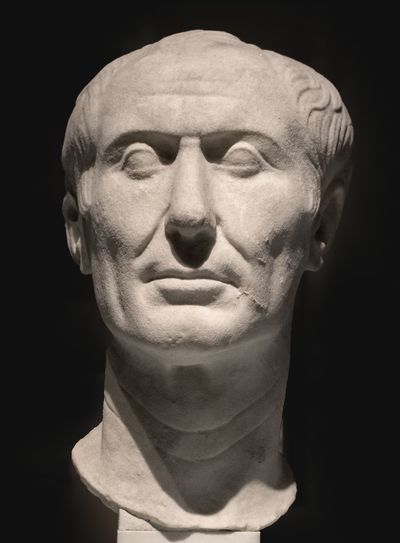
Julius Caesar
General · Ancient
83.3Total
Basic Information
Born
-1323
-100
Died
-1319
-44
Era
Ancient
Ancient
Nationality
New Kingdom Egypt
Roman Republic
Occupation
Emperor
General
Civilization
Middle Eastern
Western
Score Comparison
Military (10%)
39.0
88.0
Political (20%)
40.3
78.0
Influence (20%)
59.7
85.0
Legacy (20%)
46.3
82.0
Leadership (15%)
33.4
82.0
Strategy (15%)
57.9
88.0
TOTAL
46.9
83.3
Rankings
🥇
Julius CaesarLeader
Mil: 88.0Pol: 78.0Inf: 85.0
83.3
🥈
Ay
Mil: 39.0Pol: 40.3Inf: 59.7
46.9
+36.4 behind
How This Comparison Works
Algorithm
Each figure is scored on 6 dimensions (0—100 scale) based on structured historical data: Military (10%), Political (20%), Influence (20%), Legacy (20%), Leadership (15%), Strategy (15%). The weighted total produces the final ranking.
Data Sources
Scores are computed from structured sub-indicators in the database. Scale factors adjust for era (Ancient ×0.85, Modern ×1.0) and civilization size (Eastern ×1.05, Other ×0.80) to account for differences in population and military scale.
Maximum 3 Figures
Comparisons are limited to 2—3 figures to ensure readability and statistical meaningfulness.
Error Margins
±5 points per dimension — Sub-scores are derived from historical records with inherent uncertainty. Two figures within 5 points on a dimension should be considered roughly equivalent in that area.
Total Score Accuracy
±3 points overall — The weighted combination of 6 dimensions produces a total score with approximately ±3 points of uncertainty. Differences of less than 3 points are not statistically significant— the figures are effectively tied.
Known Limitations
- Historical records are incomplete and uneven across civilizations
- Figures from oral-tradition societies may be underrepresented
- Occupation labels can misclassify multi-role figures
- Scores measure capability and impact, not moral character
- Quantitative scoring is a comparison tool, not absolute truth
Capability Radar
Military (10%) — Battles & Warfare
Battles
5
95
Win Rate
5
92
Expansion
5
97
Political (20%) — Governance & Reform
Reform
30
90
Diplomacy
30
85
Economy
20
82
Influence (20%) — Cultural & Global Reach
Cultural
15
88
Global
10
94
Legacy (20%) — Historical Impact
Historical
20
95
Longevity
10
96
Leadership (15%) — Power & Stability
Tenure
20
75
Stability
25
60
Strategy (15%) — Tactics & Innovation
Strategy
5
94
Tactics
5
96
Reform
5
88
Analysis will be generated on first visit.
Scores and timeline are available below. The page will refresh automatically when ready.
Ay — Complete Timeline
1323 BC
Accession as Pharaoh after Tutankhamun's DeathPolitical Action◆ Major
Ay ascended the throne after the death of Tutankhamun, whom he had served as vizier. As an elderly man with no direct royal lineage, his accession was unusual and likely involved political maneuvering. He married Tutankhamun's widow, Ankhesenamun, to legitimize his claim, though this marriage was brief.
SuccessionVizier18th Dynasty
Impact: national
1322 BC
Continuation of Restoration of Traditional ReligionReform◆ Major
Ay continued the restoration of traditional Egyptian religion begun under Tutankhamun, reversing the Amarna period's Atenist reforms. He restored temples, reinstated the priesthood of Amun, and issued decrees reaffirming the old gods. This policy helped stabilize the country after the religious upheaval of Akhenaten's reign.
ReligionRestorationAmarna
Impact: nationalconstructive
Construction of Tomb WV23 in the Valley of the KingsCultural◆ Major
Ay built his tomb (WV23) in the Western Valley of the Kings, a departure from the main valley. The tomb was decorated with scenes showing Ay as pharaoh, including his coronation and interactions with gods. It was later usurped by Horemheb, who erased Ay's name and images, reflecting the damnatio memoriae against him.
TombValley of the KingsDamnatio Memoriae
Impact: national
1319 BC
Usurpation of Power by HoremhebPolitical Action◆ Major
After Ay's death, his successor Horemheb systematically erased Ay's name and images from monuments, a practice known as damnatio memoriae. Horemheb claimed credit for Ay's achievements and portrayed himself as the direct successor of Tutankhamun, effectively writing Ay out of official history.
Damnatio MemoriaeSuccessionHoremheb
Impact: nationaldestructive
Similar Comparisons
Comments & Discussion
No comments yet. Be the first to share your thoughts!