Loading...
Azai Nagamasa vs Plutarco Elias Calles
Plutarco Elias Calles leads by 9.4 pts · 2 figures compared
…

Azai Nagamasa
General · Modern
49.1Total
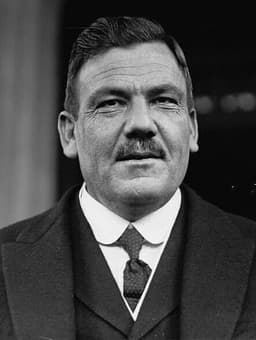
Plutarco Elias Calles
General · Modern
58.5Total
Basic Information
Born
1545
1877
Died
1573
1945
Era
Modern
Modern
Nationality
Japan
Mexico
Occupation
General
General
Civilization
Eastern
Western
Score Comparison
Military (10%)
30.0
40.0
Political (20%)
46.6
70.3
Influence (20%)
52.5
68.0
Legacy (20%)
43.3
40.0
Leadership (15%)
61.1
78.0
Strategy (15%)
60.0
52.5
TOTAL
49.1
58.5
Azai Nagamasa — Complete Timeline
1570 AD
Battle of AnegawaWar◆ Major
Nagamasa, allied with the Asakura clan, fought Oda Nobunaga and Tokugawa Ieyasu at the Battle of Anegawa. The battle was a defeat for Nagamasa, forcing him to retreat to his castle and weakening his position.
BattleSengoku PeriodAlliance
Impact: regional
Betrayal of Oda NobunagaPolitical Action◆ Major
Nagamasa broke his alliance with Oda Nobunaga, who was his brother-in-law, and joined the anti-Nobunaga coalition led by the Asakura clan. This betrayal led to Nobunaga's campaign against him and ultimately his destruction.
BetrayalAllianceSengoku Period
Impact: regional
1573 AD
Siege of Odani CastleWar◆ Major
Oda Nobunaga besieged Nagamasa's fortress of Odani Castle. After a prolonged siege, Nagamasa's situation became hopeless, and he committed seppuku, ending the Azai clan's resistance to Nobunaga.
SiegeSengoku PeriodOda Nobunaga
Impact: regionaltragic
Plutarco Elias Calles — Complete Timeline
1915 AD
Governorship of SonoraPolitical Action
Calles served as Governor of Sonora from 1915 to 1919, implementing radical reforms including land redistribution, anti-clerical laws, and labor rights. His governorship established him as a key figure in the Sonoran dynasty and a proponent of revolutionary change.
GovernorshipSonoraReforms
Impact: regionalconstructive
1924 AD
Presidency of MexicoPolitical Action◆ Major
Calles was elected President of Mexico in 1924, serving until 1928. His administration continued revolutionary reforms, including land reform, labor rights, and secularization, but also faced opposition from the Catholic Church and conservative groups.
PresidencyMexican RevolutionReforms
Impact: nationalconstructive
1926 AD
Cristero WarWar◆ Major
Calles enforced anti-clerical laws, including the Calles Law, which restricted the Catholic Church's role in society. This sparked the Cristero War (1926-1929), a violent rebellion by Catholic peasants against the state, resulting in tens of thousands of deaths.
Cristero WarAnti-clericalismReligious Conflict
Impact: nationaldestructive
1928 AD
MaximatoPolitical Action◆ Major
After his presidency, Calles remained the de facto ruler of Mexico during the Maximato (1928-1934), controlling puppet presidents. He continued to influence policy, but his power waned as President L
MaximatoPolitical ControlCárdenas
Impact: national
1929 AD
Founding of the National Revolutionary Party (PNR)Political Action
Calles founded the National Revolutionary Party (PNR) in 1929, which later became the Institutional Revolutionary Party (PRI). This party dominated Mexican politics for over 70 years, institutionalizing the revolution's legacy and centralizing power.
Political PartyPRIInstitutionalization
Impact: nationalconstructive
Expert Analysis
Origins
Azai Nagamasa was born in 1545 into the Azai clan, a samurai family ruling the northern part of Omi Province (modern Shiga Prefecture). His father, Azai Hisamasa, was a daimyo, but the clan faced internal strife. Nagamasa became head in 1560 after forcing his father into retirement. He received a traditional samurai education in martial arts and governance. Plutarco Elias Calles was born on September 25, 1877, in Guaymas, Sonora, Mexico, to a poor family. His father died early, and he worked various jobs before becoming a teacher. He became involved in revolutionary politics, joining the Mexican Revolution in 1910. Calles rose through military and political ranks, eventually serving as governor of Sonora from 1915 to 1919.
Rise to Power
Nagamasa rose by strengthening his clan's position through alliances. In 1564, he married Oichi, the sister of Oda Nobunaga, forming a powerful alliance. He also allied with the Asakura clan. However, in 1570, Nagamasa broke with Nobunaga, joining the anti-Nobunaga coalition. This led to the Battle of Anegawa (1570), where Nobunaga and Tokugawa Ieyasu defeated Nagamasa and the Asakura. Nagamasa's power waned, culminating in the Siege of Odani Castle (1573), where he committed seppuku. Calles rose by participating in the Mexican Revolution, supporting Venustiano Carranza. He became governor of Sonora, implementing radical reforms. In 1920, he helped overthrow Carranza and later served as President from 1924 to 1928. After his presidency, he remained the de facto ruler during the Maximato (1928-1934), controlling puppet presidents.
Leadership & Governance
Nagamasa governed as a traditional daimyo, relying on feudal ties and military strength. His leadership was reactive; he failed to consolidate power or adapt to changing dynamics. He scored 61.1 in leadership and 60.0 in strategy. Calles, scoring 78.0 in leadership, was a modernizer. He founded the National Revolutionary Party (PNR) in 1929, which institutionalized revolutionary reforms. He implemented land reform, labor rights, and anti-clerical laws, sparking the Cristero War (1926-1929). His governance was authoritarian but effective in centralizing power.
Triumph & Tragedy
Nagamasa's triumph was maintaining Azai independence for a time, but his greatest tragedy was his betrayal of Nobunaga, leading to his clan's destruction. He scored 30.0 in military, reflecting his defeat at Anegawa. Calles' triumph was founding the PRI, which dominated Mexican politics for 71 years. His tragedy was the Cristero War, which caused over 90,000 deaths. He scored 40.0 in military and 70.3 in political.
Character & Destiny
Nagamasa was loyal to his allies but made poor strategic decisions. His honor-bound nature led him to commit seppuku rather than surrender. Calles was pragmatic and ruthless, willing to use force to enforce his vision. Both saw their fates tied to their choices: Nagamasa's defiance led to extinction; Calles' authoritarianism created a lasting party machine but also conflict.
Legacy
Nagamasa is remembered as a tragic figure in Japanese history, a symbol of loyalty and failed rebellion. His legacy is minor, scoring 43.3. Calles' legacy is immense: the PRI shaped Mexico for decades, though his anti-clericalism is controversial. He scored 40.0 in legacy, but his influence (68.0) and political (70.3) scores are higher. The PRI's dominance ended in 2000, but its impact endures.
Conclusion
Plutarco Elias Calles had greater impact. His total score of 58.5 surpasses Nagamasa's 49.1. Calles founded a political dynasty that governed Mexico for generations, while Nagamasa's rebellion was a footnote in Japan's unification. Calles' reforms and party system transformed a nation; Nagamasa's defiance only led to his own ruin. Thus, Calles is the more significant historical figure.
Rankings
🥇
Plutarco Elias CallesLeader
Mil: 40.0Pol: 70.3Inf: 68.0
58.5
🥈
Azai Nagamasa
Mil: 30.0Pol: 46.6Inf: 52.5
49.1
+9.4 behind
How This Comparison Works
Algorithm
Each figure is scored on 6 dimensions (0—100 scale) based on structured historical data: Military (10%), Political (20%), Influence (20%), Legacy (20%), Leadership (15%), Strategy (15%). The weighted total produces the final ranking.
Data Sources
Scores are computed from structured sub-indicators in the database. Scale factors adjust for era (Ancient ×0.85, Modern ×1.0) and civilization size (Eastern ×1.05, Other ×0.80) to account for differences in population and military scale.
Maximum 3 Figures
Comparisons are limited to 2—3 figures to ensure readability and statistical meaningfulness.
Error Margins
±5 points per dimension — Sub-scores are derived from historical records with inherent uncertainty. Two figures within 5 points on a dimension should be considered roughly equivalent in that area.
Total Score Accuracy
±3 points overall — The weighted combination of 6 dimensions produces a total score with approximately ±3 points of uncertainty. Differences of less than 3 points are not statistically significant— the figures are effectively tied.
Known Limitations
- Historical records are incomplete and uneven across civilizations
- Figures from oral-tradition societies may be underrepresented
- Occupation labels can misclassify multi-role figures
- Scores measure capability and impact, not moral character
- Quantitative scoring is a comparison tool, not absolute truth
Capability Radar
Military (10%) — Battles & Warfare
Battles
45
45
Win Rate
40
50
Expansion
35
30
Political (20%) — Governance & Reform
Reform
25
85
Diplomacy
45
65
Economy
30
60
Influence (20%) — Cultural & Global Reach
Cultural
30
70
Global
15
60
Legacy (20%) — Historical Impact
Historical
35
75
Longevity
25
70
Leadership (15%) — Power & Stability
Tenure
40
70
Stability
25
55
Strategy (15%) — Tactics & Innovation
Strategy
45
55
Tactics
50
40
Reform
20
60
Similar Comparisons
Comments & Discussion
No comments yet. Be the first to share your thoughts!