Loading...
This comparison has not been analyzed yet.
One-time AI generation (~1 minute). Scores and timeline are already available below.
Azes II vs Thyestes of Mycenae
Thyestes of Mycenae leads by 0.5 pts · 2 figures compared
…

Azes II
Emperor · Ancient
44.0Total
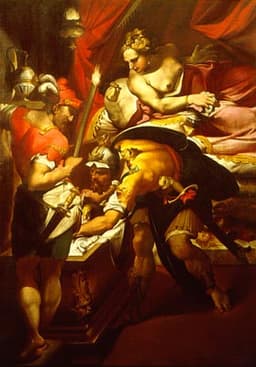
Thyestes of Mycenae
Emperor · Ancient
44.5Total
Basic Information
Born
-30
-1220
Died
-5
-1210
Era
Ancient
Ancient
Nationality
Indo-Scythian Kingdom
Mycenae
Occupation
Emperor
Emperor
Civilization
Indian
Western
Score Comparison
Military (10%)
50.0
28.7
Political (20%)
36.5
68.0
Influence (20%)
46.3
44.0
Legacy (20%)
39.2
38.3
Leadership (15%)
51.9
48.4
Strategy (15%)
43.3
36.4
TOTAL
44.0
44.5
Azes II — Complete Timeline
20 BC
Consolidation of Indo-Scythian RulePolitical Action
Azes II succeeded Azes I and maintained control over the Indo-Scythian kingdom in the Indus Valley and Punjab. He continued the use of the Azes era and issued coins with his own portrait.
SuccessionIndo-ScythianRule
Impact: regional
5 BC
Defeat by the Indo-ParthiansWar◆ Major
Azes II's kingdom was conquered by the Indo-Parthian ruler Gondophares. This ended the major Indo-Scythian rule in the region, with Azes II being the last significant Indo-Scythian king.
ConquestDefeatIndo-Parthian
Impact: regionaltragic
Thyestes of Mycenae — Complete Timeline
1240 BC
Fathered Aegisthus with His Own DaughterPolitical Action
Following an oracle's advice, Thyestes fathered Aegisthus with his daughter Pelopia. Aegisthus later became the instrument of revenge against Atreus and his descendants.
IncestProphecyRevenge
Impact: regionaldestructive
1230 BC
Consumed His Own Children at Atreus' FeastPolitical Action
Thyestes unknowingly ate the flesh of his own sons, served to him by Atreus. Upon discovering the truth, he cursed the House of Atreus, prophesying future calamities.
CannibalismCurseTragedy
Impact: regionaltragic
1220 BC
Restored to the Throne of MycenaePolitical Action◆ Major
Thyestes was placed on the throne of Mycenae by his son Aegisthus after the murder of Atreus. His brief reign was marked by the curse that had fallen upon his family.
SuccessionRestoration
Impact: regional
This comparison has not been analyzed yet.
One-time AI generation (~1 minute). Scores and timeline are already available below.
Rankings
🥇
Thyestes of MycenaeLeader
Mil: 28.7Pol: 68.0Inf: 44.0
44.5
🥈
Azes II
Mil: 50.0Pol: 36.5Inf: 46.3
44.0
+0.5 behind
How This Comparison Works
Algorithm
Each figure is scored on 6 dimensions (0—100 scale) based on structured historical data: Military (10%), Political (20%), Influence (20%), Legacy (20%), Leadership (15%), Strategy (15%). The weighted total produces the final ranking.
Data Sources
Scores are computed from structured sub-indicators in the database. Scale factors adjust for era (Ancient ×0.85, Modern ×1.0) and civilization size (Eastern ×1.05, Other ×0.80) to account for differences in population and military scale.
Maximum 3 Figures
Comparisons are limited to 2—3 figures to ensure readability and statistical meaningfulness.
Error Margins
±5 points per dimension — Sub-scores are derived from historical records with inherent uncertainty. Two figures within 5 points on a dimension should be considered roughly equivalent in that area.
Total Score Accuracy
±3 points overall — The weighted combination of 6 dimensions produces a total score with approximately ±3 points of uncertainty. Differences of less than 3 points are not statistically significant— the figures are effectively tied.
Known Limitations
- Historical records are incomplete and uneven across civilizations
- Figures from oral-tradition societies may be underrepresented
- Occupation labels can misclassify multi-role figures
- Scores measure capability and impact, not moral character
- Quantitative scoring is a comparison tool, not absolute truth
Capability Radar
Military (10%) — Battles & Warfare
Battles
40
3
Win Rate
45
11
Expansion
45
10
Political (20%) — Governance & Reform
Reform
30
0
Diplomacy
35
0
Economy
30
0
Influence (20%) — Cultural & Global Reach
Cultural
30
10
Global
15
10
Legacy (20%) — Historical Impact
Historical
35
20
Longevity
20
30
Leadership (15%) — Power & Stability
Tenure
40
10
Stability
25
0
Strategy (15%) — Tactics & Innovation
Strategy
40
13
Tactics
35
15
Reform
30
18
Similar Comparisons
Comments & Discussion
No comments yet. Be the first to share your thoughts!