Loading...
Analysis will be generated on first visit.
Scores and timeline are available below. The page will refresh automatically when ready.
Baibars vs Napoleon Bonaparte
Napoleon Bonaparte leads by 9.2 pts · 2 figures compared
…

Baibars
General · Medieval
73.2Total
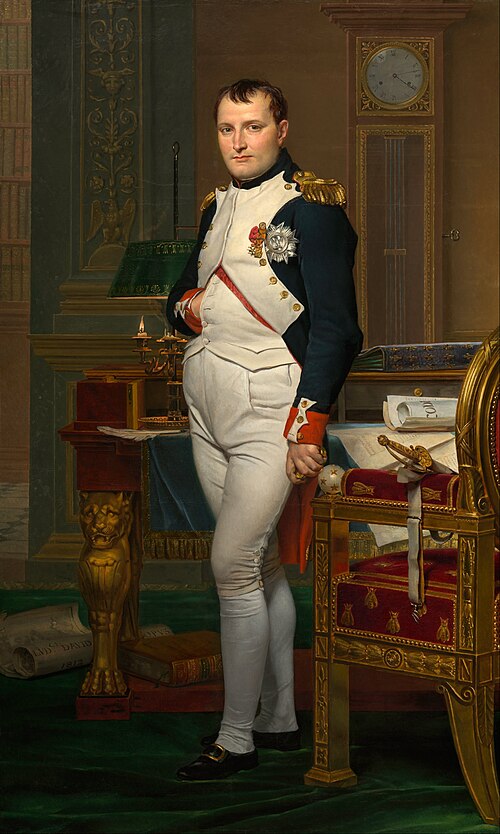
Napoleon Bonaparte
General · Modern
82.4Total
Basic Information
Born
1223
1769
Died
1277
1821
Era
Medieval
Modern
Nationality
Mamluk Sultanate
France
Occupation
General
General
Civilization
Middle Eastern
Western
Score Comparison
Military (10%)
77.0
94.0
Political (20%)
72.0
75.0
Influence (20%)
73.6
82.0
Legacy (20%)
63.1
78.0
Leadership (15%)
81.3
80.0
Strategy (15%)
77.2
93.0
TOTAL
73.2
82.4
Rankings
🥇
Napoleon BonaparteLeader
Mil: 94.0Pol: 75.0Inf: 82.0
82.4
🥈
Baibars
Mil: 77.0Pol: 72.0Inf: 73.6
73.2
+9.2 behind
How This Comparison Works
Algorithm
Each figure is scored on 6 dimensions (0—100 scale) based on structured historical data: Military (10%), Political (20%), Influence (20%), Legacy (20%), Leadership (15%), Strategy (15%). The weighted total produces the final ranking.
Data Sources
Scores are computed from structured sub-indicators in the database. Scale factors adjust for era (Ancient ×0.85, Modern ×1.0) and civilization size (Eastern ×1.05, Other ×0.80) to account for differences in population and military scale.
Maximum 3 Figures
Comparisons are limited to 2—3 figures to ensure readability and statistical meaningfulness.
Error Margins
±5 points per dimension — Sub-scores are derived from historical records with inherent uncertainty. Two figures within 5 points on a dimension should be considered roughly equivalent in that area.
Total Score Accuracy
±3 points overall — The weighted combination of 6 dimensions produces a total score with approximately ±3 points of uncertainty. Differences of less than 3 points are not statistically significant— the figures are effectively tied.
Known Limitations
- Historical records are incomplete and uneven across civilizations
- Figures from oral-tradition societies may be underrepresented
- Occupation labels can misclassify multi-role figures
- Scores measure capability and impact, not moral character
- Quantitative scoring is a comparison tool, not absolute truth
Capability Radar
Military (10%) — Battles & Warfare
Battles
85
95
Win Rate
90
90
Expansion
85
95
Political (20%) — Governance & Reform
Reform
82
95
Diplomacy
78
80
Economy
70
85
Influence (20%) — Cultural & Global Reach
Cultural
65
85
Global
55
90
Legacy (20%) — Historical Impact
Historical
70
95
Longevity
60
90
Leadership (15%) — Power & Stability
Tenure
75
85
Stability
72
70
Strategy (15%) — Tactics & Innovation
Strategy
88
95
Tactics
92
98
Reform
80
92
Analysis will be generated on first visit.
Scores and timeline are available below. The page will refresh automatically when ready.
Baibars — Complete Timeline
1260 AD
Battle of Ain JalutWar
Baibars led the Mamluk army to a decisive victory over the Mongol Ilkhanate at Ain Jalut in Palestine. This battle halted Mongol expansion into the Middle East and marked the first major defeat of the Mongols, preserving Mamluk and Islamic rule in the region.
BattleMongolsMamluk
Impact: global
Reforms of the Mamluk StateReform◆ Major
Baibars reorganized the Mamluk military, established a postal system (barid), and centralized the administration. He also appointed puppet caliphs from the Abbasid line to legitimize his rule, strengthening the Mamluk Sultanate's institutions.
ReformAdministrationMamluk
Impact: regionalconstructive
Assassination of Sultan QutuzPolitical Action◆ Major
Baibars assassinated Sultan Qutuz shortly after the victory at Ain Jalut, seizing the sultanate for himself. This act of treachery allowed Baibars to become the fourth Mamluk sultan and consolidate his power.
AssassinationCoupPower Struggle
Impact: regionaldestructive
1268 AD
Capture of AntiochWar◆ Major
Baibars besieged and captured the Crusader city of Antioch, one of the largest and most fortified Crusader states. The city was sacked, and its population was killed or enslaved, effectively ending the Principality of Antioch.
SiegeCrusadesAntioch
Impact: regionaldestructive
1270 AD
Campaigns Against the MongolsWar◆ Major
Baibars launched multiple campaigns against the Mongol Ilkhanate, including raids into Anatolia and Syria. He defeated Mongol forces at the Battle of Elbistan in 1277, but his death later that year prevented further expansion.
Mongol WarsMilitary CampaignAnatolia
Impact: regional
Similar Comparisons
Comments & Discussion
No comments yet. Be the first to share your thoughts!