Loading...
Baibars vs Tang He
Baibars leads by 7.3 pts · 2 figures compared
…

Baibars
General · Medieval
63.4Total
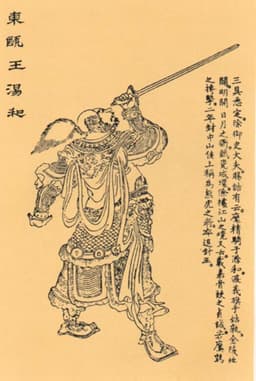
Tang He
General · Medieval
56.1Total
Basic Information
Born
1223
1326
Died
1277
1395
Era
Medieval
Medieval
Nationality
Mamluk Sultanate
China
Occupation
General
General
Civilization
Middle Eastern
Eastern
Score Comparison
Military (10%)
90.0
82.0
Political (20%)
55.0
39.4
Influence (20%)
58.0
50.2
Legacy (20%)
50.0
43.3
Leadership (15%)
73.3
80.0
Strategy (15%)
81.2
66.3
TOTAL
63.4
56.1
Baibars — Complete Timeline
1260 AD
Battle of Ain JalutWar
Baibars led the Mamluk army to a decisive victory over the Mongol Ilkhanate at Ain Jalut in Palestine. This battle halted Mongol expansion into the Middle East and marked the first major defeat of the Mongols, preserving Mamluk and Islamic rule in the region.
BattleMongolsMamluk
Impact: global
Reforms of the Mamluk StateReform◆ Major
Baibars reorganized the Mamluk military, established a postal system (barid), and centralized the administration. He also appointed puppet caliphs from the Abbasid line to legitimize his rule, strengthening the Mamluk Sultanate's institutions.
ReformAdministrationMamluk
Impact: regionalconstructive
Assassination of Sultan QutuzPolitical Action◆ Major
Baibars assassinated Sultan Qutuz shortly after the victory at Ain Jalut, seizing the sultanate for himself. This act of treachery allowed Baibars to become the fourth Mamluk sultan and consolidate his power.
AssassinationCoupPower Struggle
Impact: regionaldestructive
1268 AD
Capture of AntiochWar◆ Major
Baibars besieged and captured the Crusader city of Antioch, one of the largest and most fortified Crusader states. The city was sacked, and its population was killed or enslaved, effectively ending the Principality of Antioch.
SiegeCrusadesAntioch
Impact: regionaldestructive
1270 AD
Campaigns Against the MongolsWar◆ Major
Baibars launched multiple campaigns against the Mongol Ilkhanate, including raids into Anatolia and Syria. He defeated Mongol forces at the Battle of Elbistan in 1277, but his death later that year prevented further expansion.
Mongol WarsMilitary CampaignAnatolia
Impact: regional
Tang He — Complete Timeline
1353 AD
Joining Zhu Yuanzhang's rebellionWar
Tang He, a childhood friend of Zhu Yuanzhang, joined Zhu's rebel forces early in the Red Turban Rebellion. He quickly rose through the ranks due to his military skills and loyalty.
Red Turban RebellionEarly MingFriendship
Impact: regional
1363 AD
Command at the Battle of Lake PoyangWar◆ Major
Tang He commanded a naval squadron during the Battle of Lake Poyang, contributing to the Ming victory over Chen Youliang. His use of fire ships helped destroy the enemy fleet.
BattleNaval warfareFire ships
Impact: national
1371 AD
Conquest of SichuanWar◆ Major
Tang He led a Ming army into Sichuan, conquering the independent kingdom of Ming Yuzhen. This campaign brought the southwestern region under Ming control and completed the unification of China proper.
ConquestSichuanMing unification
Impact: national
1395 AD
Retirement and deathOther
Tang He retired from military service in his later years and died peacefully. Unlike many other Ming generals, he was not executed or purged by the Hongwu Emperor, likely due to their long friendship.
RetirementDeathMing dynasty
Expert Analysis
Origins
Baibars (c. 1223–1277) was born into the Kipchak Turkic steppe, likely in the Crimea. Captured as a child and sold into slavery, he ended up in the service of the Ayyubid sultan of Egypt. His early life as a military slave (mamluk) shaped his martial prowess and ruthless ambition. He rose through the ranks of the Bahri mamluks, becoming a key commander under Sultan Qutuz.
Tang He (1331–1389) was born in Fengyang, Anhui, China, to a poor peasant family. He was a childhood friend of Zhu Yuanzhang (the future Hongwu Emperor). When Zhu joined the Red Turban Rebellion against the Mongol Yuan dynasty, Tang He followed him early on, leveraging their personal bond to secure command positions despite his lack of formal education.
Rise to Power
Baibars' first major feat was at the Battle of Ain Jalut (1260), where he led the Mamluk vanguard that shattered the Mongol Ilkhanate army. This victory halted Mongol expansion into the Middle East. Shortly after, he assassinated Sultan Qutuz (1260) to seize the throne, a pivotal turning point that demonstrated his ambition and ruthlessness. As sultan (1260–1277), he consolidated power by eliminating rivals and centralizing authority.
Tang He rose through the ranks of Zhu Yuanzhang's rebel army during the Red Turban Rebellion (1350s–1360s). He commanded naval forces at the Battle of Lake Poyang (1363), where his fire ships helped destroy the fleet of Chen Youliang, a key rival. This victory secured Ming control over the Yangtze River and was a turning point in the civil war. Tang He's loyalty to Zhu, combined with his competence, made him one of the founding generals of the Ming dynasty.
Leadership & Governance
Baibars was a hands-on military leader who personally led campaigns. He reformed the Mamluk state by professionalizing the army, establishing a postal system (barid), and installing a puppet caliph in Cairo to legitimize his rule. His governance was centralized and militaristic, with the sultanate functioning as a military oligarchy. In contrast, Tang He was primarily a military commander under Zhu Yuanzhang. He had little independent political power and focused on executing orders. His leadership style was collaborative and loyal, shunning personal ambition. While Baibars built a state from a slave-soldier base, Tang He served a rising dynastic power.
Triumph & Tragedy
Baibars' greatest triumph was defeating the Mongols at Ain Jalut (scored 90.0 in military). He also captured the Crusader stronghold of Antioch (1268), sacking it and ending its existence. However, his assassination of Qutuz stained his reputation, and his state-building was short-lived; his successors faced internal strife. Tang He's triumph was his role in the conquest of Sichuan (1371) and naval victory at Lake Poyang. His tragedy was that despite his contributions, he is largely forgotten outside China, and his political score (39.4) reflects his subordination to the emperor. Unlike many Ming generals, he died peacefully, avoiding purges.
Character & Destiny
Baibars was ambitious, ruthless, and strategically brilliant. His decision to kill Qutuz showed a willingness to betray for power. His personality drove him to centralize authority, but also created enemies. Tang He was loyal, competent, and cautious. His friendship with Zhu Yuanzhang ensured his survival, but limited his independent legacy. Baibars' character led him to seize the sultanate and expand it; Tang He's character made him a reliable lieutenant, not a ruler.
Legacy
Baibars' legacy is profound: he stopped Mongol expansion, destroyed Crusader states, and established the Mamluk sultanate as a major power. His military reforms influenced later Islamic states. He is remembered as a national hero in Egypt and the Arab world. Tang He's legacy is more localized: he helped found the Ming dynasty, which ruled China for nearly 300 years. However, his individual contribution is overshadowed by Zhu Yuanzhang and other Ming generals. Baibars scores 50.0 in legacy, Tang He 43.3.
Conclusion
Baibars had a greater impact on world history. His military score (90.0) and strategy (81.2) exceed Tang He's (82.0 and 66.3). Baibars' victories changed the course of the Middle East, while Tang He's were part of a larger Chinese unification. Baibars' legacy as a Mongol-defeating sultan endures globally, whereas Tang He remains a secondary figure in Chinese history. The 7.3-point total score gap (63.4 vs 56.1) reflects this disparity. Baibars was a transformative leader; Tang He was an effective general.
Rankings
🥇
BaibarsLeader
Mil: 90.0Pol: 55.0Inf: 58.0
63.4
🥈
Tang He
Mil: 82.0Pol: 39.4Inf: 50.2
56.1
+7.3 behind
How This Comparison Works
Algorithm
Each figure is scored on 6 dimensions (0—100 scale) based on structured historical data: Military (10%), Political (20%), Influence (20%), Legacy (20%), Leadership (15%), Strategy (15%). The weighted total produces the final ranking.
Data Sources
Scores are computed from structured sub-indicators in the database. Scale factors adjust for era (Ancient ×0.85, Modern ×1.0) and civilization size (Eastern ×1.05, Other ×0.80) to account for differences in population and military scale.
Maximum 3 Figures
Comparisons are limited to 2—3 figures to ensure readability and statistical meaningfulness.
Error Margins
±5 points per dimension — Sub-scores are derived from historical records with inherent uncertainty. Two figures within 5 points on a dimension should be considered roughly equivalent in that area.
Total Score Accuracy
±3 points overall — The weighted combination of 6 dimensions produces a total score with approximately ±3 points of uncertainty. Differences of less than 3 points are not statistically significant— the figures are effectively tied.
Known Limitations
- Historical records are incomplete and uneven across civilizations
- Figures from oral-tradition societies may be underrepresented
- Occupation labels can misclassify multi-role figures
- Scores measure capability and impact, not moral character
- Quantitative scoring is a comparison tool, not absolute truth
Capability Radar
Military (10%) — Battles & Warfare
Battles
85
75
Win Rate
90
80
Expansion
85
75
Political (20%) — Governance & Reform
Reform
82
30
Diplomacy
78
50
Economy
70
40
Influence (20%) — Cultural & Global Reach
Cultural
65
40
Global
55
30
Legacy (20%) — Historical Impact
Historical
70
50
Longevity
60
40
Leadership (15%) — Power & Stability
Tenure
75
60
Stability
72
55
Strategy (15%) — Tactics & Innovation
Strategy
88
75
Tactics
92
70
Reform
80
40
Similar Comparisons
Comments & Discussion
No comments yet. Be the first to share your thoughts!