Loading...
Bal Gangadhar Tilak vs Li Zicheng
Bal Gangadhar Tilak leads by 9.4 pts · 2 figures compared
…
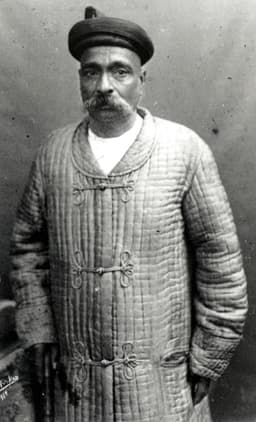
Bal Gangadhar Tilak
Revolutionary · Modern
52.9Total
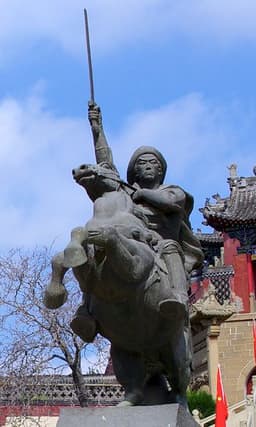
Li Zicheng
Revolutionary · Modern
43.5Total
Basic Information
Born
1856
1606
Died
1920
1645
Era
Modern
Modern
Nationality
India
China
Occupation
Revolutionary
Revolutionary
Civilization
Indian
Eastern
Score Comparison
Military (10%)
50.0
50.0
Political (20%)
48.0
27.9
Influence (20%)
58.3
52.5
Legacy (20%)
56.0
44.2
Leadership (15%)
50.7
39.0
Strategy (15%)
45.0
43.3
TOTAL
52.9
43.5
Bal Gangadhar Tilak — Complete Timeline
1881 AD
Launch of the Maratha and Kesari NewspapersCultural◆ Major
Tilak founded the Marathi-language newspaper 'Kesari' and the English-language 'Maratha' to spread nationalist ideas. These newspapers became influential platforms for criticizing British rule and mobilizing public opinion.
MediaNationalism
Impact: nationalconstructive
1897 AD
Imprisonment for SeditionPolitical Action◆ Major
Tilak was arrested and sentenced to 18 months imprisonment for sedition after publishing articles critical of British rule. His imprisonment increased his popularity and made him a martyr for the nationalist cause.
ImprisonmentSedition
Impact: national
1905 AD
Introduction of Swadeshi MovementPolitical Action◆ Major
Bal Gangadhar Tilak promoted the Swadeshi movement, advocating for the boycott of British goods and the use of Indian-made products. This movement gained widespread support and became a key part of the Indian independence struggle.
NationalismEconomic Boycott
Impact: nationalconstructive
1908 AD
Lucky Ali TrialPolitical Action◆ Major
Tilak was tried and sentenced to six years in Mandalay prison for sedition after defending the use of violence against British officials. His trial and imprisonment further galvanized the Indian independence movement.
TrialImprisonment
Impact: national
1916 AD
Formation of the Home Rule LeaguePolitical Action◆ Major
Tilak founded the Indian Home Rule League in 1916, demanding self-government for India within the British Empire. The movement gained mass support and pressured the British government to consider political reforms.
Political MovementSelf-Government
Impact: nationalconstructive
Li Zicheng — Complete Timeline
1644 AD
Captured Beijing and Ended the Ming DynastyWar
Li Zicheng led his rebel army to capture Beijing. The Chongzhen Emperor committed suicide, ending the Ming dynasty. Li Zicheng proclaimed the Shun dynasty and briefly ruled from the Forbidden City before being defeated by Qing forces.
Ming-Qing TransitionRebellionBeijing
Impact: globaldestructive
Defeated at the Battle of Shanhai PassWar◆ Major
Li Zicheng's army was defeated by the combined forces of Wu Sangui and the Manchus at the Battle of Shanhai Pass. The defeat forced him to abandon Beijing and retreat westward, effectively ending his control over northern China.
Ming-Qing TransitionBattleDefeat
Impact: globaltragic
Proclaimed the Shun DynastyPolitical Action◆ Major
After capturing Beijing, Li Zicheng formally proclaimed the establishment of the Shun dynasty in Xi'an. He adopted the title of emperor and began implementing his own administrative policies, though his rule was short-lived.
Shun DynastyProclamationRebellion
Impact: nationalconstructive
1645 AD
Killed in Jiugong MountainWar◆ Major
Li Zicheng was killed by a local militia while fleeing through Jiugong Mountain in Hubei province. His death marked the end of the Shun dynasty and the collapse of his rebellion, though some accounts claim he survived and became a monk.
Shun DynastyDeathRebellion
Impact: nationaltragic
Expert Analysis
Bal Gangadhar Tilak vs Li Zicheng
# The Firebrand and the Emperor: Two Revolutionaries Who Shook Empires
In the summer of 1908, a fifty-two-year-old lawyer stood in a Bombay courtroom, his white turban immaculate, his voice steady as he defended the right of Indians to use violence against their British rulers. Half a world away and three centuries earlier, a former postal clerk from Shaanxi province watched his peasant army pour through the gates of Beijing, the Forbidden City lying before them like a prize beyond imagining. Bal Gangadhar Tilak and Li Zicheng never met, never knew of each other’s existence. Yet both men reached for the same thing: the destruction of an old order and the birth of a new one. One died in exile, his dream deferred. The other sat on a dragon throne for barely six weeks before the world collapsed around him.
Origins
Tilak was born in 1856 into a Chitpavan Brahmin family in Ratnagiri, Maharashtra—a caste of priests and scholars who had long supplied the Maratha Empire with its administrators and warriors. His father was a schoolteacher, his mother died when he was sixteen. The British Raj was already forty years old, a seemingly permanent fixture. Young Bal Gangadhar absorbed Sanskrit, mathematics, and law, graduating from Deccan College in 1877. He was not a revolutionary by birth; he was a man of letters who came to believe that words could be weapons.
Li Zicheng came from a different world entirely. Born in 1606 to a poor farming family in Mizhi County, Shaanxi, he lost his mother as a child and grew up tending horses for a local landlord. The Ming dynasty was rotting from within—corrupt officials, famine sweeping the north, the Great Wall leaking Manchu raiders. Li learned to read a little, worked as a courier for the postal service, and then, when the government abolished his job to save money, he joined a band of outlaws. He was not a scholar; he was a survivor in a world where survival required violence.
Rise to Power
Tilak’s path was gradual, legal, and brilliantly strategic. In 1881, he launched two newspapers—*Kesari* in Marathi and *The Mahratta* in English—from a small press in Poona. He used them not merely to report news but to create a new political consciousness. He revived the Ganesh festival and the Shivaji festival, turning Hindu religious gatherings into platforms for nationalist organizing. When plague struck Bombay in 1897, he published articles accusing the British of brutal, insensitive quarantine measures. The government arrested him for sedition and sentenced him to eighteen months—his first taste of prison, which only burnished his reputation.
Li Zicheng’s rise was faster, bloodier, and more desperate. By the early 1630s, northern China was a cauldron of starving peasants turned bandits. Li joined the rebel army of Gao Yingxiang, a former soldier who styled himself the “Dashing King.” When Gao was captured and executed in 1636, Li inherited the remnants of his force. He was not a brilliant tactician—his military score of 55.5 is modest—but he understood two things: hungry men will follow anyone who offers them food, and a dynasty that cannot feed its people deserves to fall. By 1643, he had conquered most of Henan and Shaanxi, proclaiming himself the “King of the Shun Dynasty” in Xi’an.
Leadership & Governance
Here the two men diverged most sharply. Tilak was a political animal of the highest order. His political score of 76.0 reflects a man who understood that revolution required organization, not just anger. In 1905, when the British partitioned Bengal, he seized the moment to launch the Swadeshi movement—a campaign to boycott British goods and revive Indian handicrafts. It was economic warfare dressed in homespun cloth. In 1916, he founded the Indian Home Rule League, modeling it partly on the Irish Home Rule movement. He negotiated with moderate leaders like Gokhale, reached out to Muslims, and even traveled to London to lobby British politicians. He was building a nation, one newspaper article and one public meeting at a time.
Li Zicheng was a conqueror, not a governor. His political score of 40.3 tells the story. When he captured Beijing in April 1644, the Chongzhen Emperor hanged himself on a hill behind the Forbidden City. Li’s first acts were promising—he ordered his soldiers not to loot, distributed grain to the starving population, and executed a few corrupt Ming officials. But he had no administrative machinery, no tax system, no plan for governing beyond the immediate seizure of power. Worse, he could not control his own army. Within weeks, his soldiers began torturing Ming officials to reveal hidden treasure. The discipline that had carried him to Beijing evaporated in the heat of victory.
Triumph & Tragedy
Tilak’s greatest triumph came in 1916, when he united the moderate and extremist wings of the Indian National Congress at Lucknow. For a brief moment, the nationalist movement spoke with one voice. His greatest tragedy was that he never saw independence. He died in 1920, at the age of sixty-four, still agitating, still writing, still in and out of British prisons. His last major campaign—the Non-Cooperation movement—was taken up by a younger man named Mohandas Gandhi, who would finish what Tilak started.
Li Zicheng’s triumph was spectacular and brief. On June 3, 1644, he entered Beijing in triumph. The Ming dynasty, which had ruled China for 276 years, was finished. But his tragedy came six weeks later, at the Battle of Shanhai Pass. The Ming general Wu Sangui, guarding the Great Wall against the Manchus, made a fateful choice: rather than surrender to Li, he opened the gates to the Manchu army. Li’s peasant soldiers, exhausted and undisciplined, were routed by the combined forces. He fled Beijing, his new dynasty crumbling behind him. In 1645, while fleeing through Jiugong Mountain in Hubei, he was killed by a local militia. He was thirty-nine years old.
Character & Destiny
Tilak was a man of iron will and strategic patience. He believed in education, in organization, in the slow work of building a movement that could outlast any single leader. When he was sentenced to six years in Mandalay prison in 1908, he used the time to write a commentary on the Bhagavad Gita, turning his cell into a classroom. He understood that revolutions are marathons, not sprints.
Li Zicheng was a man of fire and impulse. He rose because he was brave, charismatic, and ruthless. He fell because he was also reckless, naive about the nature of power, and incapable of the administrative patience that turns conquest into governance. His famous slogan—“Slaughter the rich, relieve the poor”—was a battle cry, not a policy platform. When he finally sat on the throne, he had no idea what to do with it.
Legacy
Tilak is remembered as the “Father of Indian Unrest,” a title the British gave him as an insult and which he wore as a badge of honor. His legacy is a free India, a nation that speaks the language of Swadeshi and Swaraj that he first popularized. Every Indian schoolchild knows his name. His face once adorned postage stamps.
Li Zicheng is a more ambiguous figure. In Chinese history, he is both a folk hero—the peasant who dared to overthrow an emperor—and a cautionary tale. The Communist Party, which also rose from peasant roots, has treated him with careful respect, but the official narrative emphasizes his mistakes: his failure to secure the borders, his inability to govern, his fatal arrogance. He is remembered not as a founder but as a destroyer, a man who broke one world but could not build another.
Conclusion
Two revolutionaries, two empires, two fates. Tilak and Li Zicheng both saw injustice and reached for the same weapon—the anger of the dispossessed. One used words, the other used swords. One built a movement that outlived him, the other built a throne that collapsed under him. Their stories remind us that revolution is not merely about the courage to destroy. It is about the wisdom to build—and the patience to wait for a world that may not arrive in your lifetime.
Rankings
🥇
Bal Gangadhar TilakLeader
Mil: 50.0Pol: 48.0Inf: 58.3
52.9
🥈
Li Zicheng
Mil: 50.0Pol: 27.9Inf: 52.5
43.5
+9.4 behind
How This Comparison Works
Algorithm
Each figure is scored on 6 dimensions (0—100 scale) based on structured historical data: Military (10%), Political (20%), Influence (20%), Legacy (20%), Leadership (15%), Strategy (15%). The weighted total produces the final ranking.
Data Sources
Scores are computed from structured sub-indicators in the database. Scale factors adjust for era (Ancient ×0.85, Modern ×1.0) and civilization size (Eastern ×1.05, Other ×0.80) to account for differences in population and military scale.
Maximum 3 Figures
Comparisons are limited to 2—3 figures to ensure readability and statistical meaningfulness.
Error Margins
±5 points per dimension — Sub-scores are derived from historical records with inherent uncertainty. Two figures within 5 points on a dimension should be considered roughly equivalent in that area.
Total Score Accuracy
±3 points overall — The weighted combination of 6 dimensions produces a total score with approximately ±3 points of uncertainty. Differences of less than 3 points are not statistically significant— the figures are effectively tied.
Known Limitations
- Historical records are incomplete and uneven across civilizations
- Figures from oral-tradition societies may be underrepresented
- Occupation labels can misclassify multi-role figures
- Scores measure capability and impact, not moral character
- Quantitative scoring is a comparison tool, not absolute truth
Capability Radar
Military (10%) — Battles & Warfare
Battles
23
55
Win Rate
30
60
Expansion
30
65
Political (20%) — Governance & Reform
Reform
70
15
Diplomacy
60
20
Economy
20
10
Influence (20%) — Cultural & Global Reach
Cultural
65
40
Global
55
35
Legacy (20%) — Historical Impact
Historical
70
55
Longevity
60
30
Leadership (15%) — Power & Stability
Tenure
30
20
Stability
40
5
Strategy (15%) — Tactics & Innovation
Strategy
37
55
Tactics
39
50
Reform
43
30
Similar Comparisons
Comments & Discussion
穿越考据党6/16/2026
说李自成是农民起义,这标签也太偷懒了。仔细看史料,他杀了原来的头目高迎祥自立,搞均田免税,北京百姓当初确实夹道欢迎。结果呢?进京后纵兵劫掠,刘宗敏抢了吴三桂的小妾陈圆圆,直接引爆山海关之战。一个领袖连军纪都管不住,还谈什么改朝换代?说到底,李自成的失败是自我毁灭的典型。
Chronicler80016/16/2026
Military historians love calling Li Zicheng a "peasant rebel," but that's lazy shorthand. This guy was a logistics genius who transformed a rabble into a 200,000-man army through land reform and food distribution. His fatal flaw wasn't military—it was political naivety. He sat on the Dragon Throne for six weeks without securing the passes, letting Wu Sangui sell out to the Manchus. Tilak at least understood that propaganda and legal defense matter as much as swords.