Loading...
This comparison has not been analyzed yet.
One-time AI generation (~1 minute). Scores and timeline are already available below.
Baltaci Mehmed Pasha vs Vicente Guerrero
Vicente Guerrero leads by 0.5 pts · 2 figures compared
…
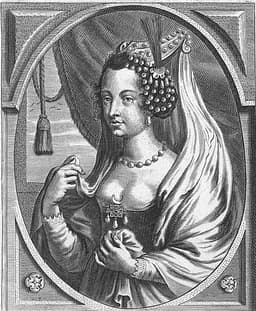
Baltaci Mehmed Pasha
General · Modern
52.6Total

Vicente Guerrero
General · Modern
53.1Total
Basic Information
Born
1662
1782
Died
1712
1831
Era
Modern
Modern
Nationality
Ottoman Empire
Mexico
Occupation
General
General
Civilization
Middle Eastern
Western
Score Comparison
Military (10%)
40.0
30.0
Political (20%)
48.0
53.8
Influence (20%)
54.9
55.0
Legacy (20%)
45.8
52.0
Leadership (15%)
68.0
62.0
Strategy (15%)
60.0
60.0
TOTAL
52.6
53.1
Baltaci Mehmed Pasha — Complete Timeline
1710 AD
Appointment as Grand VizierPolitical Action◆ Major
Baltacı Mehmed Pasha was appointed Grand Vizier of the Ottoman Empire in 1710. He was tasked with managing the empire's response to the Great Northern War and the presence of Swedish King Charles XII, who had taken refuge in Ottoman territory after his defeat at Poltava.
AppointmentOttoman PoliticsGreat Northern War
Impact: national
1711 AD
Pruth River CampaignWar
Baltacı Mehmed Pasha led the Ottoman army in the Pruth River Campaign against Russia. He surrounded Peter the Great's forces near the Pruth River, forcing the Tsar to negotiate. The resulting Treaty of the Pruth returned Azov to the Ottomans and secured Ottoman borders.
CampaignOttoman-Russian WarPeter the Great
Impact: regionalconstructive
Treaty of the PruthPolitical Action◆ Major
Baltacı Mehmed Pasha signed the Treaty of the Pruth with Russia in July 1711. The treaty ceded Azov back to the Ottomans, required Russia to demolish fortifications on the border, and allowed Charles XII safe passage to Sweden. It was a diplomatic victory for the Ottomans.
TreatyDiplomacyOttoman-Russian Relations
Impact: regionalconstructive
Dismissal from Grand VizieratePolitical Action◆ Major
Baltacı Mehmed Pasha was dismissed as Grand Vizier in 1711 shortly after the Pruth Campaign. Sultan Ahmed III and court factions accused him of not fully exploiting the victory over Peter the Great. He was exiled to Lesbos and later executed in 1712.
DismissalExileExecution
Impact: nationaltragic
Vicente Guerrero — Complete Timeline
1810 AD
Battle of El VeladeroWar
Guerrero joined the Mexican War of Independence under Jos
Mexican War of IndependenceBattleMorelos
Impact: regional
1821 AD
Issued the Plan of IgualaPolitical Action◆ Major
Guerrero allied with Agust
Mexican IndependencePlan of IgualaIturbide
Impact: nationalconstructive
1829 AD
Abolished Slavery in MexicoReform
As President of Mexico, Guerrero issued a decree abolishing slavery throughout the republic. This was a landmark reform that ended the legal institution of slavery in Mexico, though it faced opposition from slaveholders.
SlaveryAbolitionReform
Impact: nationalprogressive
Overthrown by Conservative CoupPolitical Action◆ Major
Vice President Anastasio Bustamante led a conservative coup against Guerrero, forcing him from office. Guerrero was captured, tried, and executed in 1831, ending his presidency and reformist agenda.
CoupBustamanteExecution
Impact: nationaldestructive
This comparison has not been analyzed yet.
One-time AI generation (~1 minute). Scores and timeline are already available below.
Rankings
🥇
Vicente GuerreroLeader
Mil: 30.0Pol: 53.8Inf: 55.0
53.1
🥈
Baltaci Mehmed Pasha
Mil: 40.0Pol: 48.0Inf: 54.9
52.6
+0.5 behind
How This Comparison Works
Algorithm
Each figure is scored on 6 dimensions (0—100 scale) based on structured historical data: Military (10%), Political (20%), Influence (20%), Legacy (20%), Leadership (15%), Strategy (15%). The weighted total produces the final ranking.
Data Sources
Scores are computed from structured sub-indicators in the database. Scale factors adjust for era (Ancient ×0.85, Modern ×1.0) and civilization size (Eastern ×1.05, Other ×0.80) to account for differences in population and military scale.
Maximum 3 Figures
Comparisons are limited to 2—3 figures to ensure readability and statistical meaningfulness.
Error Margins
±5 points per dimension — Sub-scores are derived from historical records with inherent uncertainty. Two figures within 5 points on a dimension should be considered roughly equivalent in that area.
Total Score Accuracy
±3 points overall — The weighted combination of 6 dimensions produces a total score with approximately ±3 points of uncertainty. Differences of less than 3 points are not statistically significant— the figures are effectively tied.
Known Limitations
- Historical records are incomplete and uneven across civilizations
- Figures from oral-tradition societies may be underrepresented
- Occupation labels can misclassify multi-role figures
- Scores measure capability and impact, not moral character
- Quantitative scoring is a comparison tool, not absolute truth
Capability Radar
Military (10%) — Battles & Warfare
Battles
50
45
Win Rate
45
40
Expansion
30
35
Political (20%) — Governance & Reform
Reform
25
70
Diplomacy
50
45
Economy
30
30
Influence (20%) — Cultural & Global Reach
Cultural
20
55
Global
20
50
Legacy (20%) — Historical Impact
Historical
40
65
Longevity
25
60
Leadership (15%) — Power & Stability
Tenure
40
40
Stability
35
25
Strategy (15%) — Tactics & Innovation
Strategy
50
55
Tactics
55
50
Reform
20
30
Similar Comparisons
Comments & Discussion
No comments yet. Be the first to share your thoughts!