Loading...
Ban Chao vs Pompey the Great
Ban Chao leads by 2.8 pts · 2 figures compared
…

Ban Chao
General · Ancient
60.7Total
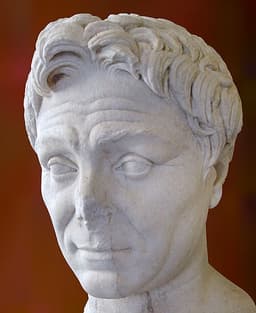
Pompey the Great
General · Ancient
57.9Total
Basic Information
Born
32
-106
Died
102
-48
Era
Ancient
Ancient
Nationality
China
Roman Republic
Occupation
General
General
Civilization
Eastern
Western
Score Comparison
Military (10%)
77.5
88.0
Political (20%)
68.0
68.0
Influence (20%)
61.0
55.0
Legacy (20%)
52.0
40.0
Leadership (15%)
48.8
48.8
Strategy (15%)
72.0
78.4
TOTAL
60.7
57.9
Ban Chao — Complete Timeline
73 AD
Conquered the Tarim BasinWar◆ Major
Ban Chao led a small force of Han troops and local allies to defeat the Xiongnu and their client states in the Tarim Basin. He reestablished Chinese control over the city-states of the Silk Road, securing trade routes and tribute from kingdoms like Kashgar and Khotan.
Western RegionsSilk RoadConquest
Impact: regional
90 AD
Defeated the Kushan EmpireWar◆ Major
The Kushan Empire (Yuezhi) invaded the Western Regions with a large army. Ban Chao, with limited forces, used a scorched-earth strategy and cut off the Kushan supply lines, forcing them to retreat and sue for peace. This victory secured Han dominance in Central Asia.
KushanCentral AsiaDefense
Impact: regional
91 AD
Appointed Protector General of the Western RegionsPolitical Action◆ Major
Emperor He of Han appointed Ban Chao as Protector General of the Western Regions, a position that gave him authority over all Han territories and allies in Central Asia. He held this post for over a decade, maintaining peace and Chinese influence from the Pamirs to the Gobi Desert.
AdministrationWestern RegionsProtectorate
Impact: regionalconstructive
97 AD
Sent Gan Ying to the Roman EmpireOther
Ban Chao dispatched his envoy Gan Ying to explore the Roman Empire (Da Qin). Gan Ying reached the Persian Gulf but was told by Parthian merchants that the sea voyage was too dangerous, turning back. This was the closest a Chinese envoy came to Rome in antiquity.
DiplomacyExplorationRoman Empire
Impact: global
Pompey the Great — Complete Timeline
67 BC
Clearing the Mediterranean of PiratesWar◆ Major
Pompey was granted extraordinary command under the Lex Gabinia to eliminate piracy in the Mediterranean. He divided the sea into sectors and within three months destroyed pirate fleets and captured their strongholds, restoring Roman trade routes and grain supply.
PiracyRoman NavyGrain Supply
Impact: regionalconstructive
66 BC
Conquest of the East (Third Mithridatic War)War◆ Major
Pompey took command against Mithridates VI of Pontus, defeating him and forcing his suicide. He then annexed Syria, captured Jerusalem, and established Roman provinces in the East. He organized the region into client kingdoms and provinces, extending Roman hegemony to the Euphrates.
Eastern ConquestRoman EmpireClient Kingdoms
Impact: global
60 BC
Formation of the First TriumviratePolitical Action◆ Major
Pompey, Caesar, and Crassus formed a political alliance to advance their individual ambitions. Pompey sought ratification of his Eastern settlements and land for his veterans. The pact dominated Roman politics for a decade until Crassus's death in 53 BC.
AllianceRoman PoliticsPower Sharing
Impact: global
48 BC
Battle of PharsalusWar
Pompey commanded the senatorial army against Caesar at Pharsalus in Greece. Despite numerical superiority, his forces were defeated by Caesar's veterans. Pompey fled to Egypt, expecting refuge, but was assassinated on the orders of the Egyptian court upon arrival.
Roman Civil WarDefeatDeath
Impact: globaltragic
Assassination in EgyptPolitical Action◆ Major
After his defeat at Pharsalus, Pompey landed in Egypt seeking refuge. On September 28, 48 BC, he was stabbed to death by former Roman soldiers serving the Egyptian king Ptolemy XIII, who hoped to curry favor with Caesar. His head was presented to Caesar.
AssassinationEgyptCivil War
Impact: regionaltragic
Expert Analysis
Origins
Ban Chao (32-102 AD) was born into a scholarly family in Pingling, China. His father Ban Biao was a historian, and his brother Ban Gu compiled the *Book of Han*. Initially a copyist, Ban Chao reportedly threw down his brush, declaring he would emulate Zhang Qian's exploits in the Western Regions. His early career involved minor official posts, but his ambition and martial skills set him apart.
Pompey the Great (106-48 BCE) hailed from a wealthy Italian family in Picenum. His father, Gnaeus Pompeius Strabo, was a consul and general who fought in the Social War. Pompey inherited his father's clients and military experience. He began his career by raising a private army from his father's veterans to support Sulla in the civil war.
Rise to Power
Ban Chao rose to prominence in 73 AD when General Dou Gu appointed him as a military officer in the campaign against the Xiongnu. Leading a small force, Ban Chao distinguished himself by attacking the Xiongnu camp at Lake Barkol. In 74 AD, he was sent as an envoy to the kingdoms of the Western Regions. At Shanshan, he famously killed the Xiongnu envoys with only 36 men, forcing the king to submit. This daring act established his reputation and led to his appointment as Protector General of the Western Regions in 91 AD.
Pompey's rise began when he joined Sulla in 83 BCE, commanding three legions. He won victories in Sicily and Africa against Marian forces, earning the title 'Magnus' (the Great) from Sulla. In 77 BCE, he was sent to Hispania to fight Sertorius, a Marian rebel. Though the war dragged on, Pompey eventually suppressed the rebellion. His greatest leap came in 67 BCE when the Lex Gabinia gave him unprecedented command over the Mediterranean to eliminate piracy. He succeeded in three months, dividing the sea into sectors and sweeping the pirates into side channels. This triumph propelled him to command against Mithridates VI, whom he defeated in 63 BCE, annexing Syria and capturing Jerusalem.
Leadership & Governance
Ban Chao ruled the Western Regions with a combination of military force and diplomacy. He maintained Chinese control by cultivating local allies, using native troops, and employing a strategy of 'using barbarians to control barbarians'. For example, he enlisted the support of the Kushan king to pressure the Xiongnu. His governance was pragmatic: he established garrisons, promoted trade along the Silk Road, and ensured the security of Han envoys. However, his methods could be ruthless—he did not hesitate to execute rebellious kings or destroy cities that resisted.
Pompey's leadership style was more administrative and political. As a general, he was an excellent organizer and strategist, but he often delegated battlefield command. His governance of the East was efficient: he organized new provinces, settled veterans, and established client kingdoms. He also reformed the tax system and minted coins. However, his political acumen was flawed. He failed to secure his power base in Rome, relying on the Senate's favor, which eventually evaporated. His character—pride and a sense of entitlement—alienated allies like Caesar.
Triumph & Tragedy
Ban Chao's greatest triumph was the pacification of the Western Regions. He conquered over 50 kingdoms, reestablished Chinese dominance along the Silk Road, and sent his envoy Gan Ying as far as the Persian Gulf. His victory over the Kushan Empire in 90 AD was a masterstroke: with only a few thousand men, he used a scorched-earth strategy and cut off the Kushan army's supply lines, forcing their retreat. His tragedy was that his achievements were not fully appreciated at court. After his death in 102 AD, the Western Regions were gradually lost due to Han decline.
Pompey's triumph was his Eastern conquest. He cleared the Mediterranean of pirates in record time, defeated Mithridates, and expanded Roman territory significantly. He also celebrated a magnificent triple triumph in 61 BCE. His tragedy was his defeat at Pharsalus in 48 BCE. Despite commanding a larger army (45,000 vs Caesar's 22,000), Pompey was outmaneuvered and fled. His subsequent assassination in Egypt, stabbed by former soldiers as he landed, was a pathetic end for a man once called 'the Great'.
Character & Destiny
Ban Chao was determined, resourceful, and disciplined. He famously declared, 'A man should be ambitious and achieve merit in distant lands.' His decision to stay in the Western Regions for 31 years reflects his commitment. However, his stubbornness sometimes led to conflicts with colleagues; he once killed a Chinese official who opposed his policies. His character shaped his destiny: his relentless drive secured the Western Regions, but also isolated him from the imperial court.
Pompey was a brilliant organizer but a poor politician. He craved honor and recognition, but his arrogance made him underestimate Caesar. His decision to ally with Caesar and Crassus in the First Triumvirate (60 BCE) was a tactical move, but he failed to manage the alliance's dissolution. His fatal error was agreeing to confront Caesar in 49 BCE, leading to civil war. His destiny was sealed by his inability to adapt: he stuck to traditional tactics while Caesar innovated.
Legacy
Ban Chao's legacy is the reestablishment of Chinese control over the Silk Road for decades. His administrative model for the Western Regions influenced later Han policy. He also expanded Chinese geographical knowledge; his envoy Gan Ying's report on the Roman Empire (Da Qin) was the first direct Chinese account. However, his long-term impact was limited as the Han dynasty collapsed soon after. His military score of 77.5 reflects his effective but small-scale campaigns.
Pompey's legacy is mixed. He expanded Rome's eastern provinces and set precedents for extraordinary commands. His defeat at Pharsalus marked the end of the Roman Republic and the rise of Caesar's dictatorship. He is remembered as a tragic figure—a great general undone by political miscalculation. His military score of 88.0 is high due to his large-scale conquests, but his legacy score of 40.0 reflects his overshadowing by Caesar.
Conclusion
Pompey the Great was the more dominant military figure in his time, with a military score of 88.0 compared to Ban Chao's 77.5. His conquests reshaped the Mediterranean world and directly led to the end of the Roman Republic. However, Ban Chao's impact on Chinese history was more enduring: he secured the Silk Road for a generation and established a model for Chinese expansion westward. While Pompey's legacy was eclipsed by Caesar, Ban Chao's achievements remain a symbol of Han martial prowess. In terms of long-term influence, Ban Chao's total score of 60.7 vs Pompey's 57.9 reflects a slightly greater overall impact, but Pompey's military achievements were more consequential for world history. The winner depends on the metric: for military brilliance, Pompey; for sustained strategic influence, Ban Chao.
Rankings
🥇
Ban ChaoLeader
Mil: 77.5Pol: 68.0Inf: 61.0
60.7
🥈
Pompey the Great
Mil: 88.0Pol: 68.0Inf: 55.0
57.9
+2.8 behind
How This Comparison Works
Algorithm
Each figure is scored on 6 dimensions (0—100 scale) based on structured historical data: Military (10%), Political (20%), Influence (20%), Legacy (20%), Leadership (15%), Strategy (15%). The weighted total produces the final ranking.
Data Sources
Scores are computed from structured sub-indicators in the database. Scale factors adjust for era (Ancient ×0.85, Modern ×1.0) and civilization size (Eastern ×1.05, Other ×0.80) to account for differences in population and military scale.
Maximum 3 Figures
Comparisons are limited to 2—3 figures to ensure readability and statistical meaningfulness.
Error Margins
±5 points per dimension — Sub-scores are derived from historical records with inherent uncertainty. Two figures within 5 points on a dimension should be considered roughly equivalent in that area.
Total Score Accuracy
±3 points overall — The weighted combination of 6 dimensions produces a total score with approximately ±3 points of uncertainty. Differences of less than 3 points are not statistically significant— the figures are effectively tied.
Known Limitations
- Historical records are incomplete and uneven across civilizations
- Figures from oral-tradition societies may be underrepresented
- Occupation labels can misclassify multi-role figures
- Scores measure capability and impact, not moral character
- Quantitative scoring is a comparison tool, not absolute truth
Capability Radar
Military (10%) — Battles & Warfare
Battles
75
85
Win Rate
85
90
Expansion
80
92
Political (20%) — Governance & Reform
Reform
55
65
Diplomacy
85
80
Economy
70
70
Influence (20%) — Cultural & Global Reach
Cultural
65
75
Global
60
75
Legacy (20%) — Historical Impact
Historical
75
85
Longevity
70
80
Leadership (15%) — Power & Stability
Tenure
70
85
Stability
75
60
Strategy (15%) — Tactics & Innovation
Strategy
85
88
Tactics
80
80
Reform
60
70
Similar Comparisons
Comments & Discussion
No comments yet. Be the first to share your thoughts!