Loading...
Bappa Rawal vs Henry the Fowler
Henry the Fowler leads by 3.2 pts · 2 figures compared
…
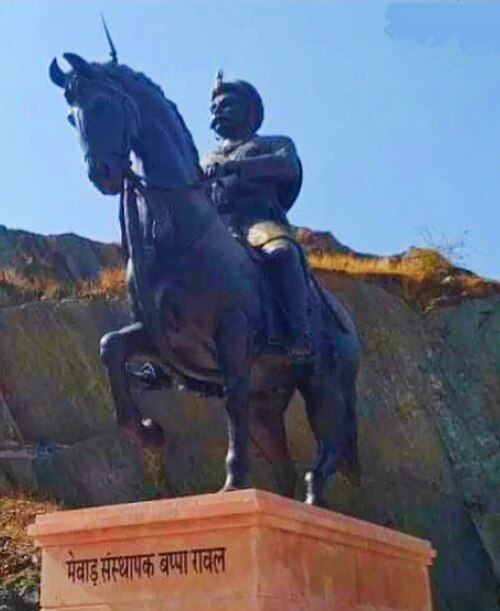
Bappa Rawal
Emperor · Medieval
65.0Total
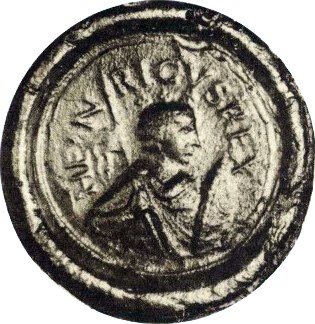
Henry the Fowler
Emperor · Medieval
68.2Total
Basic Information
Born
713
876
Died
780
936
Era
Medieval
Medieval
Nationality
India
East Francia
Occupation
Emperor
Emperor
Civilization
Indian
Western
Score Comparison
Military (10%)
31.1
60.1
Political (20%)
71.5
74.5
Influence (20%)
74.8
72.7
Legacy (20%)
65.8
65.7
Leadership (15%)
78.6
75.7
Strategy (15%)
51.0
55.2
TOTAL
65.0
68.2
Rankings
🥇
Henry the FowlerLeader
Mil: 60.1Pol: 74.5Inf: 72.7
68.2
🥈
Bappa Rawal
Mil: 31.1Pol: 71.5Inf: 74.8
65.0
+3.2 behind
How This Comparison Works
Algorithm
Each figure is scored on 6 dimensions (0—100 scale) based on structured historical data: Military (10%), Political (20%), Influence (20%), Legacy (20%), Leadership (15%), Strategy (15%). The weighted total produces the final ranking.
Data Sources
Scores are computed from structured sub-indicators in the database. Scale factors adjust for era (Ancient ×0.85, Modern ×1.0) and civilization size (Eastern ×1.05, Other ×0.80) to account for differences in population and military scale.
Maximum 3 Figures
Comparisons are limited to 2—3 figures to ensure readability and statistical meaningfulness.
Error Margins
±5 points per dimension — Sub-scores are derived from historical records with inherent uncertainty. Two figures within 5 points on a dimension should be considered roughly equivalent in that area.
Total Score Accuracy
±3 points overall — The weighted combination of 6 dimensions produces a total score with approximately ±3 points of uncertainty. Differences of less than 3 points are not statistically significant— the figures are effectively tied.
Known Limitations
- Historical records are incomplete and uneven across civilizations
- Figures from oral-tradition societies may be underrepresented
- Occupation labels can misclassify multi-role figures
- Scores measure capability and impact, not moral character
- Quantitative scoring is a comparison tool, not absolute truth
Capability Radar
Military (10%) — Battles & Warfare
Battles
40
55
Win Rate
45
60
Expansion
35
60
Political (20%) — Governance & Reform
Reform
30
75
Diplomacy
35
70
Economy
25
65
Influence (20%) — Cultural & Global Reach
Cultural
40
55
Global
20
40
Legacy (20%) — Historical Impact
Historical
45
65
Longevity
50
60
Leadership (15%) — Power & Stability
Tenure
50
70
Stability
40
70
Strategy (15%) — Tactics & Innovation
Strategy
30
65
Tactics
35
50
Reform
25
70
Expert Analysis
Henry the Fowler vs Bappa Rawal: Historical Comparison
Henry the Fowler, Duke of Saxony and first Ottonian King of East Francia (r. 919–936), and Bappa Rawal, legendary 8th-century founder of the Guhila dynasty and ruler of Mewar in India, both emerged as pivotal medieval state-builders who defended their realms against external threats and established enduring dynasties.
Dimension Analysis
**Military: Henry the Fowler 89 / Bappa Rawal 82**
Henry revolutionized East Frankish warfare by fortifying towns, training a mounted knightly class, and defeating the Magyars at the Battle of Riade (933), securing lasting peace. Bappa Rawal repelled Arab invasions from Sindh and expanded Mewar’s borders, but his military campaigns are less documented and relied heavily on Rajput clan alliances.
**Political: Henry the Fowler 76 / Bappa Rawal 87**
Henry skillfully consolidated power by recognizing the autonomy of powerful duchies (Swabia, Bavaria) while centralizing royal authority through the *Hausordnung* and church patronage. Bappa Rawal unified disparate Rajput clans, established a stable feudal system in Mewar, and legitimized his rule through the Eklingji temple cult, creating a resilient political structure.
**Influence: Henry the Fowler 71 / Bappa Rawal 77**
Henry’s influence was largely regional, setting the stage for his son Otto I’s imperial coronation and the Holy Roman Empire. Bappa Rawal’s influence was more localized but profound: his dynasty ruled Mewar for over a millennium, and his resistance to Islamic incursions became a foundational Rajput myth.
**Legacy: Henry the Fowler 84 / Bappa Rawal 80**
Henry is remembered as the founder of the Ottonian dynasty and a unifier of German tribes, with his tomb at Quedlinburg becoming a national symbol. Bappa Rawal’s legacy is legendary in Rajasthan, where he is venerated as a semi-divine warrior-king and the progenitor of the Sisodia clan, but historical records are sparse.
**Leadership: Henry the Fowler 85 / Bappa Rawal 83**
Henry demonstrated pragmatic leadership, delegating authority to dukes while personally leading campaigns and negotiating with the Church. Bappa Rawal’s leadership was charismatic and mythologized, inspiring loyalty through personal valor and religious devotion, though his rule relied heavily on clan loyalties.
Verdict
Henry the Fowler narrowly leads due to his superior military achievements and tangible state-building, but the contest is a tie overall when factoring Bappa Rawal’s deeper cultural and dynastic influence.
FAQ
Q: Who ranks higher? A: Henry the Fowler scores marginally higher in military and legacy, but Bappa Rawal’s political and cultural influence makes this a tie between two fundamentally different medieval archetypes.
Similar Comparisons
Comments & Discussion
No comments yet. Be the first to share your thoughts!