Loading...
Bartolome Mitre vs Mengistu Haile Mariam
Bartolome Mitre leads by 17.6 pts · 2 figures compared
…

Bartolome Mitre
General · Modern
63.0Total
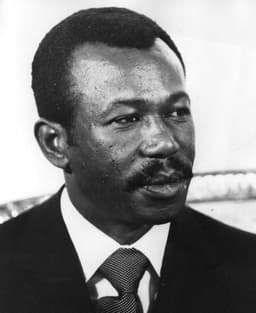
Mengistu Haile Mariam
General · Modern
45.4Total
Basic Information
Born
1821
1937
Died
1906
—
Era
Modern
Modern
Nationality
Argentina
Ethiopia
Occupation
General
General
Civilization
Western
Other
Score Comparison
Military (10%)
67.5
50.0
Political (20%)
70.0
26.4
Influence (20%)
62.0
51.0
Legacy (20%)
56.0
40.8
Leadership (15%)
72.0
61.1
Strategy (15%)
55.0
43.7
TOTAL
63.0
45.4
Bartolome Mitre — Complete Timeline
1861 AD
Defeated Justo José de Urquiza at the Battle of PavónWar
Mitre's forces defeated Urquiza's army at the Battle of Pav
BattleUnificationCivil War
Impact: national
1862 AD
Elected President of ArgentinaPolitical Action
Mitre was elected the first president of the unified Argentine Republic, serving from 1862 to 1868. His presidency consolidated national unity and promoted economic development.
PresidencyUnificationArgentina
Impact: nationalconstructive
1865 AD
Led the Triple Alliance in the Paraguayan WarWar◆ Major
Mitre commanded the allied forces of Argentina, Brazil, and Uruguay in the Paraguayan War against Paraguay. The war lasted until 1870 and resulted in the devastation of Paraguay, but Mitre's leadership was criticized for strategic failures.
WarParaguayTriple Alliance
Impact: regionaldestructive
1870 AD
Founded the newspaper 'La Nación'Cultural◆ Major
Mitre founded 'La Naci
JournalismMediaLiberalism
Impact: nationalconstructive
Mengistu Haile Mariam — Complete Timeline
1974 AD
Derg seizure of powerPolitical Action◆ Major
Mengistu Haile Mariam, as a member of the Derg military committee, participated in the coup that overthrew Emperor Haile Selassie. The Derg abolished the monarchy and established a Marxist-Leninist military government, with Mengistu emerging as its chairman by 1977.
CoupEthiopian RevolutionDerg
Impact: nationaldestructive
1977 AD
Ogaden WarWar◆ Major
Mengistu led Ethiopia in a war against Somalia over the Ogaden region. With massive military aid from the Soviet Union and Cuba, Ethiopian forces repelled the Somali invasion by March 1978, securing the disputed territory.
Ethio-Somali WarCold WarTerritorial Conflict
Impact: regional
Red Terror campaignPolitical Action◆ Major
Mengistu ordered a violent crackdown against political opponents, primarily the Ethiopian People's Revolutionary Party (EPRP). Thousands were killed, tortured, or imprisoned in Addis Ababa and other cities, consolidating Mengistu's absolute control over Ethiopia.
Political RepressionCivil WarHuman Rights
Impact: nationaldestructive
1984 AD
1984-1985 famine responsePolitical Action◆ Major
During a severe famine that killed an estimated 1 million Ethiopians, Mengistu's government was criticized for prioritizing military spending and forced resettlement programs over relief. The regime's response was widely condemned internationally.
FamineHumanitarian CrisisResettlement
Impact: nationaltragic
1991 AD
Fall of the Derg regimePolitical Action◆ Major
After years of civil war, rebel forces led by the Ethiopian People's Revolutionary Democratic Front (EPRDF) captured Addis Ababa. Mengistu fled to Zimbabwe, ending 17 years of his dictatorship and leading to the establishment of a transitional government.
Civil WarRegime ChangeExile
Impact: national
Expert Analysis
Origins
Bartolomé Mitre was born on June 26, 1821, in Buenos Aires, Argentina, into a family of Spanish descent. His father was a merchant, and Mitre received a classical education, studying at the Colegio de San Ignacio. He developed an early interest in military history and liberal ideas. In contrast, Mengistu Haile Mariam was born around 1937 in Walayitta, Ethiopia, into a humble family. His father was a former slave and his mother a priest's daughter. Mengistu joined the Ethiopian military as a young man, attending the Holeta Military Academy, where he was exposed to Marxist-Leninist ideology. These vastly different backgrounds shaped their divergent paths: Mitre as a liberal nation-builder, Mengistu as a revolutionary autocrat.
Rise to Power
Mitre rose through the ranks of the Argentine military and politics during the civil wars that followed independence. He fought in the Battle of Caseros (1852) and became a leading figure in the Unitarian Party. His decisive victory over Justo José de Urquiza at the Battle of Pavón on September 17, 1861, forced Urquiza's resignation and allowed Buenos Aires to reassert dominance. Mitre was elected president of Argentina in 1862, unifying the country under a federal constitution. Mengistu's rise came through the Derg, a military committee that seized power in a coup on September 12, 1974, overthrowing Emperor Haile Selassie. Mengistu emerged as chairman in 1977 after a series of purges, including the assassination of rivals. His consolidation of power was marked by the Red Terror, a campaign of violence against political opponents from 1976 to 1978, which eliminated the Ethiopian People's Revolutionary Party.
Leadership & Governance
Mitre's presidency (1862–1868) focused on institutional building: he established a national banking system, promoted education, and encouraged European immigration. He also founded the newspaper 'La Nación' in 1870 to promote liberal ideals. His governance was constitutional, respecting checks and balances. However, his leadership during the Paraguayan War (1864–1870) was criticized for strategic missteps. Mengistu's rule was authoritarian and centralized. He implemented Marxist-Leninist policies, nationalizing land and industries, and created a one-party state under the Workers' Party of Ethiopia (1984). His governance was marked by human rights abuses, including forced resettlement and collectivization. The 1984-1985 famine, which killed an estimated 1 million people, was exacerbated by his regime's neglect and forced grain requisitions. Mitre's political score of 70.0 reflects his effective state-building, while Mengistu's 26.4 indicates catastrophic governance failures.
Triumph & Tragedy
Mitre's greatest triumph was unifying Argentina after decades of civil war, laying the foundation for its later economic growth. His defeat of Urquiza at Pavón and his presidency secured the primacy of Buenos Aires and liberal institutions. His tragedy was the Paraguayan War, a brutal conflict that killed hundreds of thousands and drained resources. Mitre's military score of 67.5 reflects mixed success. Mengistu's triumph was repelling the Somali invasion in the Ogaden War (1977-1978) with Soviet and Cuban aid, preserving Ethiopian territorial integrity. His tragedy was the Red Terror and the famine, which devastated the population. His legacy score of 40.8 is low due to the humanitarian catastrophe. The score gap of 17.6 points highlights Mitre's greater effectiveness.
Character & Destiny
Mitre was a polymath: historian, journalist, and soldier. His character combined intellectual curiosity with pragmatic politics. He believed in constitutional rule and national unity, which shaped his destiny as a founder of modern Argentina. Mengistu was ruthless and paranoid, purging rivals without hesitation. His Marxist ideology and authoritarian instincts led to isolation and eventual downfall. By 1991, rebel forces captured Addis Ababa, and Mengistu fled to Zimbabwe. His leadership score of 61.1 is marred by inflexibility and brutality.
Legacy
Mitre is remembered as a founding father of Argentina. His newspaper 'La Nación' remains influential, and his historical writings shaped national identity. His legacy score of 56.0 reflects enduring respect despite controversies. Mengistu is vilified as a dictator responsible for mass atrocities. His socialist policies failed, and Ethiopia's subsequent federal system rejected his centralization. His influence score of 51.0 is largely negative. Mitre's institutional legacy outlasts Mengistu's destructive rule.
Conclusion
Bartolomé Mitre had greater impact on his nation than Mengistu Haile Mariam. With a total score of 63.0 against 45.4, Mitre's nation-building created a stable Argentina, while Mengistu's policies led to famine and civil war. Mitre's constitutional governance and cultural contributions contrast sharply with Mengistu's authoritarian collapse. Mitre's positive legacy endures; Mengistu's is a cautionary tale.
Rankings
🥇
Bartolome MitreLeader
Mil: 67.5Pol: 70.0Inf: 62.0
63.0
🥈
Mengistu Haile Mariam
Mil: 50.0Pol: 26.4Inf: 51.0
45.4
+17.6 behind
How This Comparison Works
Algorithm
Each figure is scored on 6 dimensions (0—100 scale) based on structured historical data: Military (10%), Political (20%), Influence (20%), Legacy (20%), Leadership (15%), Strategy (15%). The weighted total produces the final ranking.
Data Sources
Scores are computed from structured sub-indicators in the database. Scale factors adjust for era (Ancient ×0.85, Modern ×1.0) and civilization size (Eastern ×1.05, Other ×0.80) to account for differences in population and military scale.
Maximum 3 Figures
Comparisons are limited to 2—3 figures to ensure readability and statistical meaningfulness.
Error Margins
±5 points per dimension — Sub-scores are derived from historical records with inherent uncertainty. Two figures within 5 points on a dimension should be considered roughly equivalent in that area.
Total Score Accuracy
±3 points overall — The weighted combination of 6 dimensions produces a total score with approximately ±3 points of uncertainty. Differences of less than 3 points are not statistically significant— the figures are effectively tied.
Known Limitations
- Historical records are incomplete and uneven across civilizations
- Figures from oral-tradition societies may be underrepresented
- Occupation labels can misclassify multi-role figures
- Scores measure capability and impact, not moral character
- Quantitative scoring is a comparison tool, not absolute truth
Capability Radar
Military (10%) — Battles & Warfare
Battles
65
20
Win Rate
60
15
Expansion
55
10
Political (20%) — Governance & Reform
Reform
75
20
Diplomacy
65
15
Economy
60
10
Influence (20%) — Cultural & Global Reach
Cultural
55
15
Global
45
20
Legacy (20%) — Historical Impact
Historical
60
25
Longevity
50
10
Leadership (15%) — Power & Stability
Tenure
70
60
Stability
55
5
Strategy (15%) — Tactics & Innovation
Strategy
65
15
Tactics
55
10
Reform
70
30
Similar Comparisons
Comments & Discussion
No comments yet. Be the first to share your thoughts!