Loading...
Bayan of the Baarin vs John Hunyadi
Bayan of the Baarin leads by 1.9 pts · 2 figures compared
…

Bayan of the Baarin
General · Medieval
62.6Total
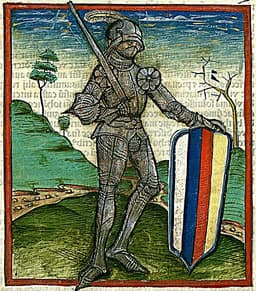
John Hunyadi
General · Medieval
60.7Total
Basic Information
Born
1236
1406
Died
1295
1456
Era
Medieval
Medieval
Nationality
Mongolia
Hungary
Occupation
General
General
Civilization
Eastern
Western
Score Comparison
Military (10%)
88.0
72.8
Political (20%)
68.0
59.2
Influence (20%)
55.0
57.2
Legacy (20%)
58.0
50.0
Leadership (15%)
48.8
69.4
Strategy (15%)
80.8
73.6
TOTAL
62.6
60.7
Bayan of the Baarin — Complete Timeline
1273 AD
Battle of XiangyangWar◆ Major
Bayan oversaw the siege of Xiangyang, a fortified Song city that resisted for six years. The Mongol use of trebuchets and blockade tactics forced its surrender, breaking the Song defensive line and opening the Yangtze River valley to invasion.
SiegeMilitary CampaignSong-Yuan War
Impact: regional
1274 AD
Led the Mongol Conquest of the Southern SongWar
Bayan of the Baarin commanded the Mongol army in the final campaign against the Southern Song dynasty. He captured key cities including Xiangyang and Hangzhou, leading to the surrender of the Song emperor in 1276 and the unification of China under Yuan rule.
Mongol ConquestSouthern SongYuan Dynasty
Impact: global
1277 AD
Appointed Grand Councillor of the Yuan DynastyPolitical Action◆ Major
After the conquest, Bayan was appointed Grand Councillor, the highest civil office in the Yuan government. He helped consolidate Mongol rule over China, advising on administrative integration and military governance.
Yuan DynastyGovernmentPost-Conquest
Impact: nationalconstructive
John Hunyadi — Complete Timeline
1444 AD
Battle of VarnaWar◆ Major
Hunyadi commanded the Hungarian and allied forces against the Ottoman army of Sultan Murad II at Varna. The crusader army was defeated, and King W
CrusadeBattleOttoman Wars
Impact: regionaltragic
1446 AD
Appointed Regent of HungaryPolitical Action◆ Major
Following the death of King Albert II and the minority of Ladislaus V, John Hunyadi was elected regent of Hungary by the Diet. He assumed effective control of the kingdom, organizing defense against Ottoman threats and consolidating royal authority.
RegencyHungarian Politics
Impact: nationalconstructive
1448 AD
Second Battle of KosovoWar◆ Major
Hunyadi led a Hungarian army into Serbia to confront the Ottomans at Kosovo Polje. After three days of fighting, the Hungarian forces were defeated by Sultan Murad II. The loss ended major crusading efforts in the Balkans for decades.
BattleOttoman WarsDefeat
Impact: regionaltragic
1456 AD
Siege of BelgradeWar
Hunyadi, with the help of Franciscan friar John of Capistrano, led a relief force to break the Ottoman siege of Belgrade. The Hungarian victory forced Sultan Mehmed II to retreat, halting Ottoman expansion into Hungary for 70 years. Hunyadi died of plague shortly after.
SiegeVictoryOttoman Wars
Impact: regionalconstructive
Expert Analysis
Origins
Bayan of the Baarin was born around 1236 into the Baarin tribe of the Mongol Empire. His grandfather was a companion of Genghis Khan, and his father served as a governor. Bayan received a traditional Mongol education in horsemanship, archery, and military tactics, and was fluent in Chinese and Mongolian. He entered the service of Kublai Khan, the Mongol ruler who had established the Yuan dynasty in China.
John Hunyadi was born around 1406 in Transylvania, then part of the Kingdom of Hungary. His father was a minor noble of Wallachian origin, and his mother was Hungarian. Hunyadi received a typical knightly education, learning swordsmanship, horsemanship, and military command. He served as a page in the court of Sigismund of Luxembourg, King of Hungary, where he gained experience in warfare against the Ottomans.
Rise to Power
Bayan rose to prominence through his military skills and loyalty to Kublai Khan. In 1253, he accompanied Kublai on a campaign against the Kingdom of Dali. His breakthrough came in 1274 when Kublai appointed him commander-in-chief of the Mongol invasion of the Southern Song dynasty. Bayan led a massive army of 200,000 men and a fleet of 5,000 ships. He captured the key fortress of Xiangyang in 1273 after a six-year siege, using trebuchets and a blockade. This victory opened the way to the Yangtze River. By 1276, Bayan had captured the Song capital of Hangzhou, forcing the surrender of the Song emperor.
John Hunyadi rose to power through military successes against the Ottomans. In 1441, he was appointed Voivode of Transylvania and captain of Belgrade, key defensive posts. He won a series of victories against Ottoman raiders, earning the nickname "The White Knight." In 1443, he led the Long Campaign, penetrating deep into Ottoman territory and capturing Sofia. Following the death of King Albert II in 1439, Hunyadi was elected regent of Hungary in 1446, ruling on behalf of the infant King Ladislaus V.
Leadership & Governance
Bayan of the Baarin was a ruthless but effective military commander. He employed combined arms tactics, integrating Mongol cavalry with Chinese infantry and siege engineers. He was known for his discipline and organization, but also for his harsh treatment of conquered cities. After the conquest, he served as Grand Councillor of the Yuan dynasty, helping to consolidate Mongol rule over China. He implemented policies that favored Mongols over Chinese, such as the enforcement of ethnic segregation laws.
John Hunyadi was a pragmatic leader who focused on strengthening Hungary's defenses. He reformed the Hungarian army, creating a standing force of mercenaries (Black Army) and improving fortifications along the Ottoman border. He also used diplomacy to secure support from the Pope and other Christian powers. As regent, he faced opposition from the Hungarian nobility, who resented his centralizing policies. He scored 69.4 in leadership, reflecting his ability to inspire troops but his struggles with political infighting.
Triumph & Tragedy
Bayan's greatest triumph was the conquest of the Southern Song, which unified China under Mongol rule. He demonstrated strategic brilliance in his use of siege warfare and naval operations. His capture of Hangzhou with minimal destruction preserved the city's cultural treasures. However, his greatest failure was his inability to complete the conquest of Japan. He led an invasion fleet in 1281 that was destroyed by a typhoon, resulting in the loss of over 100,000 men. This disaster weakened the Yuan dynasty and ended Mongol expansion.
John Hunyadi's greatest triumph was the Siege of Belgrade in 1456. He led a relief force that broke the Ottoman siege, forcing Sultan Mehmed II to retreat. The victory secured Hungary's southern border for decades. However, his greatest failure was the Battle of Varna in 1444. He commanded a crusader army that was defeated by the Ottomans, leading to the death of King Władysław III and the collapse of the crusade. He also suffered defeat at the Second Battle of Kosovo in 1448, failing to dislodge the Ottomans from Serbia.
Character & Destiny
Bayan was a disciplined and methodical commander, known for his careful planning and logistical efficiency. He was loyal to Kublai Khan and avoided political intrigue, which allowed him to hold high office despite being a Mongol in a Chinese court. His character was shaped by the Mongol tradition of meritocracy, where skill mattered more than birth. His destiny was to be a conqueror who expanded the largest contiguous land empire in history.
John Hunyadi was a charismatic and determined leader, known for his personal bravery in battle. He was deeply religious and saw himself as a defender of Christendom. His character was marked by resilience in the face of defeat; he never gave up despite setbacks like Varna. His destiny was to be a bulwark against Ottoman expansion, earning him the title "Athlete of Christ" from the Pope.
Legacy
Bayan of the Baarin is remembered as one of the greatest Mongol generals, second only to Subutai. His conquest of the Southern Song ended centuries of Chinese division and established the Yuan dynasty. However, his legacy is tarnished by the destruction of the Song and the imposition of Mongol rule. His military tactics influenced later Chinese warfare, including the use of gunpowder weapons. He scored 58.0 in legacy, reflecting his significant but controversial impact.
John Hunyadi is celebrated as a national hero in Hungary and Romania. His victories against the Ottomans delayed their advance into Europe for decades. His military reforms, particularly the Black Army, influenced European warfare. He is also remembered as the father of Matthias Corvinus, one of Hungary's greatest kings. He scored 50.0 in legacy, reflecting his regional importance but limited long-term global impact.
Conclusion
While both men were skilled commanders, Bayan of the Baarin had a greater impact on world history. His conquest of the Southern Song unified China and created the Yuan dynasty, which ruled over a quarter of the world's population. His military achievements scored 88.0 compared to Hunyadi's 72.8, and his strategic score of 80.8 exceeded Hunyadi's 73.6. Hunyadi's victories, while crucial for Europe, were defensive in nature and did not reshape the global order. Bayan's legacy, though controversial, is more far-reaching. Therefore, Bayan of the Baarin was the greater military figure.
Rankings
🥇
Bayan of the BaarinLeader
Mil: 88.0Pol: 68.0Inf: 55.0
62.6
🥈
John Hunyadi
Mil: 72.8Pol: 59.2Inf: 57.2
60.7
+1.9 behind
How This Comparison Works
Algorithm
Each figure is scored on 6 dimensions (0—100 scale) based on structured historical data: Military (10%), Political (20%), Influence (20%), Legacy (20%), Leadership (15%), Strategy (15%). The weighted total produces the final ranking.
Data Sources
Scores are computed from structured sub-indicators in the database. Scale factors adjust for era (Ancient ×0.85, Modern ×1.0) and civilization size (Eastern ×1.05, Other ×0.80) to account for differences in population and military scale.
Maximum 3 Figures
Comparisons are limited to 2—3 figures to ensure readability and statistical meaningfulness.
Error Margins
±5 points per dimension — Sub-scores are derived from historical records with inherent uncertainty. Two figures within 5 points on a dimension should be considered roughly equivalent in that area.
Total Score Accuracy
±3 points overall — The weighted combination of 6 dimensions produces a total score with approximately ±3 points of uncertainty. Differences of less than 3 points are not statistically significant— the figures are effectively tied.
Known Limitations
- Historical records are incomplete and uneven across civilizations
- Figures from oral-tradition societies may be underrepresented
- Occupation labels can misclassify multi-role figures
- Scores measure capability and impact, not moral character
- Quantitative scoring is a comparison tool, not absolute truth
Capability Radar
Military (10%) — Battles & Warfare
Battles
92
78
Win Rate
90
75
Expansion
95
65
Political (20%) — Governance & Reform
Reform
55
68
Diplomacy
75
74
Economy
50
60
Influence (20%) — Cultural & Global Reach
Cultural
60
60
Global
75
55
Legacy (20%) — Historical Impact
Historical
75
70
Longevity
70
65
Leadership (15%) — Power & Stability
Tenure
60
72
Stability
65
62
Strategy (15%) — Tactics & Innovation
Strategy
95
80
Tactics
88
82
Reform
70
70
Similar Comparisons
Comments & Discussion
No comments yet. Be the first to share your thoughts!