Loading...
Bayinnaung vs Charles Augustus of Saxe-Weimar
Bayinnaung leads by 12.8 pts · 2 figures compared
…
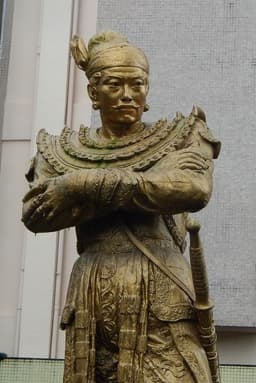
Bayinnaung
Emperor · Modern
68.6Total
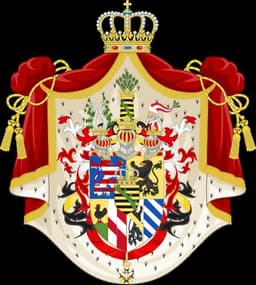
Charles Augustus of Saxe-Weimar
Emperor · Modern
55.8Total
Basic Information
Born
1516
1757
Died
1581
1828
Era
Modern
Modern
Nationality
Myanmar
Saxe-Weimar
Occupation
Emperor
Emperor
Civilization
Eastern
Western
Score Comparison
Military (10%)
77.1
20.0
Political (20%)
82.0
70.0
Influence (20%)
65.0
55.0
Legacy (20%)
55.0
52.0
Leadership (15%)
74.0
82.0
Strategy (15%)
75.0
42.3
TOTAL
68.6
55.8
Bayinnaung — Complete Timeline
1550 AD
Establishment of the Toungoo EmpirePolitical Action
King Bayinnaung ascended the throne and began a series of military campaigns that created the largest empire in Southeast Asian history. At its peak, the Toungoo empire covered modern Myanmar, Thailand, Laos, and parts of China and India.
Toungoo EmpireSoutheast AsiaImperial Expansion
Impact: regionalconstructive
1557 AD
Conquest of the Shan StatesWar◆ Major
King Bayinnaung conquered the Shan States, bringing them under Toungoo control. This expansion added significant territory and resources to the Burmese empire.
Shan StatesToungoo ExpansionBurmese Empire
Impact: regional
1569 AD
Capture of AyutthayaWar
King Bayinnaung's forces captured the Siamese capital of Ayutthaya after a long siege. He installed a vassal king and made Siam a tributary state of the Toungoo empire.
Burmese-Siamese WarAyutthayaToungoo Empire
Impact: regional
1570 AD
Administrative ReformsReform◆ Major
King Bayinnaung implemented administrative reforms to govern his vast empire, including the appointment of governors and the standardization of laws and taxes. These reforms helped maintain control over conquered territories.
GovernanceAdministrationToungoo Empire
Impact: regionalconstructive
1574 AD
Conquest of Lan XangWar◆ Major
King Bayinnaung conquered the Lao kingdom of Lan Xang (modern Laos), bringing it under Toungoo control. This further expanded the Burmese empire to its greatest territorial extent.
Lan XangToungoo ExpansionLaos
Impact: regional
Charles Augustus of Saxe-Weimar — Complete Timeline
1775 AD
Patronage of Johann Wolfgang von GoetheCultural◆ Major
Charles Augustus invited Goethe to Weimar and appointed him to various governmental positions. This patronage created the Weimar Classicism cultural movement and made Weimar a major intellectual center in Europe.
Weimar ClassicismGoetheCultural Patronage
Impact: globalconstructive
1806 AD
Joined the Rhine ConfederationPolitical Action◆ Major
Charles Augustus allied Saxe-Weimar with Napoleon's Confederation of the Rhine, gaining territorial enlargement and sovereign status. This decision preserved his duchy's autonomy during the Napoleonic Wars but tied it to French hegemony.
Napoleonic WarsConfederation of the RhineAlliance
Impact: regional
1813 AD
Fought at the Battle of LeipzigWar◆ Major
Charles Augustus switched sides and fought with the Allied coalition against Napoleon at the Battle of Leipzig. His troops participated in the decisive defeat of Napoleon, contributing to the liberation of German states from French control.
Battle of LeipzigNapoleonic WarsCoalition
Impact: regional
1816 AD
Granted the Constitution of 1816Political Action◆ Major
Charles Augustus issued a constitution for Saxe-Weimar-Eisenach, making him the first German ruler to grant a constitution. This established a bicameral parliament and guaranteed basic rights, setting a precedent for constitutionalism in the German states.
ConstitutionConstitutionalismGerman States
Impact: nationalprogressive
Expert Analysis
Bayinnaung vs Charles Augustus of Saxe-Weimar
# The Emperor and the Patron: Two Paths to Power in an Age of Transformation
On a humid morning in 1569, King Bayinnaung of the Toungoo dynasty watched his war elephants crash against the walls of Ayutthaya, the Siamese capital that had defied Burmese armies for generations. Half a world away and two centuries later, in the quiet duchy of Saxe-Weimar, Duke Charles Augustus sat in a candlelit study discussing poetry with Johann Wolfgang von Goethe while Europe burned through revolution and war. These two rulers—one who built the largest empire Southeast Asia had ever seen, the other who gave Germany its first constitution—seem to inhabit different universes. Yet both faced the same fundamental questions: How does a ruler consolidate power? What legacy does a sovereign leave behind? Their answers could not have been more different, and understanding why reveals much about the forces that shape history.
Origins
Bayinnaung was born in 1516 into a world of fragmentation. The once-mighty Pagan kingdom had collapsed, and the Toungoo dynasty was still fighting to reunite the Burmese heartland. He rose not through noble birth but through military prowess, serving as a general under his brother-in-law King Tabinshwehti. His world was one of constant warfare, where a ruler’s legitimacy rested on the sharpness of his sword and the loyalty of his elephants.
Charles Augustus, born in 1757, inherited a different world entirely. Saxe-Weimar was a tiny German duchy, barely a speck on the map of the Holy Roman Empire. His education was shaped by Enlightenment philosophers, and his mother, Duchess Anna Amalia, surrounded him with artists and thinkers. Where Bayinnaung learned statecraft on the battlefield, Charles Augustus learned it in the salons of Weimar. One was forged in fire, the other in ink.
Rise to Power
Bayinnaung’s path to the throne was stained with blood. When Tabinshwehti was assassinated in 1550, the kingdom fractured. Bayinnaung, then a general, crushed rival claimants and ascended the throne that same year. His legitimacy came from conquest: he did not merely inherit power; he seized it and proved his right to rule in the crucible of war.
Charles Augustus, by contrast, became duke at the age of eighteen in 1775, inheriting a stable if unremarkable principality. His rise required no battles, no sieges. Instead, he made a different kind of bold move: he invited the twenty-six-year-old Goethe to Weimar and appointed him to government positions. This single decision transformed a minor German duchy into a cultural capital of Europe. Where Bayinnaung conquered territory, Charles Augustus conquered minds.
Leadership & Governance
Bayinnaung’s leadership was a study in military precision and administrative ambition. His conquest of the Shan States in 1557 added vast territories, but his true genius lay in how he governed them. He appointed loyal governors, standardized taxation, and allowed local rulers to retain power as vassals. His capture of Ayutthaya in 1569 was not mere destruction—he installed a puppet king and extracted tribute while preserving the Siamese administrative system. By 1574, when he conquered Lan Xang, his empire stretched from Manipur to Cambodia, the largest in Southeast Asian history.
Charles Augustus governed on a microscopic scale by comparison, but his innovations were no less significant. In 1806, facing Napoleon’s irresistible advance, he joined the Confederation of the Rhine—a pragmatic decision that preserved his duchy and even gained territory. Then, in 1813, he switched sides and fought at the Battle of Leipzig, his troops helping to defeat the very emperor he had once allied with. This balancing act required political agility that Bayinnaung, who never faced a power like Napoleon, never needed.
Triumph & Tragedy
Bayinnaung’s greatest triumph was the Toungoo Empire itself—a realm so vast that later Burmese kings would invoke his name as a symbol of lost glory. But his tragedy was that this empire depended entirely on his personal authority. When he died in 1581, the structure he built began to crumble within decades. He left no institutions that could outlast his will.
Charles Augustus’s triumph was the Constitution of 1816, which made him the first German ruler to grant a constitution. This document established a parliament, guaranteed basic rights, and limited ducal power—a radical act in an age of absolutism. His tragedy was more subtle: the constitution, while groundbreaking, was conservative by later standards, and Saxe-Weimar remained a backwater compared to Prussia or Austria. His legacy was cultural rather than political.
Character & Destiny
Bayinnaung was driven by an unquenchable ambition. The chronicles describe him as a tireless campaigner, personally leading armies even in his sixties. He saw the world as a chessboard of kingdoms to be subdued, and his character—proud, relentless, and ruthless—shaped every decision. When he conquered, he did not destroy; he incorporated. But he never considered that empires built on personal loyalty might not survive their builder.
Charles Augustus was more reflective, a product of the Enlightenment who genuinely believed in progress through culture and law. He could have been an absolute monarch; instead, he chose to share power. His friendship with Goethe was not mere patronage but a true intellectual partnership that shaped both men. Where Bayinnaung measured success in miles conquered, Charles Augustus measured it in ideas nurtured.
Legacy
Today, Bayinnaung is remembered as a national hero in Myanmar, his name invoked by military regimes seeking legitimacy. His empire is a memory of what was, a golden age that subsequent generations have tried—and failed—to recreate. His military score of 79.8 and political score of 85.1 reflect a ruler who excelled at war and governance but whose influence (69.5) and legacy (73.0) were limited by the fragility of his achievements.
Charles Augustus’s legacy is quieter but more enduring. The Weimar Classicism he fostered—Goethe, Schiller, Herder—became the foundation of German cultural identity. His constitution influenced later German liberal movements. His political score of 80.0 and leadership score of 82.0 are comparable to Bayinnaung’s, but his military score of 46.1 and strategy of 41.4 reveal a ruler who understood that true power in the modern age would come not from conquest but from ideas.
Conclusion
Standing at the edge of Ayutthaya’s fallen walls, Bayinnaung saw a world that could be unified by the sword. Sitting in his Weimar study, Charles Augustus saw a world that could be transformed by the pen. Both were right, and both were wrong. The Burmese emperor’s empire dissolved, but his name still stirs hearts in Myanmar. The German duke’s duchy faded into history, but the culture he nurtured still shapes Western thought. Their lives remind us that power takes many forms—and that the most enduring empires are not always the ones carved on maps, but those written in the human spirit.
Rankings
🥇
BayinnaungLeader
Mil: 77.1Pol: 82.0Inf: 65.0
68.6
🥈
Charles Augustus of Saxe-Weimar
Mil: 20.0Pol: 70.0Inf: 55.0
55.8
+12.8 behind
How This Comparison Works
Algorithm
Each figure is scored on 6 dimensions (0—100 scale) based on structured historical data: Military (10%), Political (20%), Influence (20%), Legacy (20%), Leadership (15%), Strategy (15%). The weighted total produces the final ranking.
Data Sources
Scores are computed from structured sub-indicators in the database. Scale factors adjust for era (Ancient ×0.85, Modern ×1.0) and civilization size (Eastern ×1.05, Other ×0.80) to account for differences in population and military scale.
Maximum 3 Figures
Comparisons are limited to 2—3 figures to ensure readability and statistical meaningfulness.
Error Margins
±5 points per dimension — Sub-scores are derived from historical records with inherent uncertainty. Two figures within 5 points on a dimension should be considered roughly equivalent in that area.
Total Score Accuracy
±3 points overall — The weighted combination of 6 dimensions produces a total score with approximately ±3 points of uncertainty. Differences of less than 3 points are not statistically significant— the figures are effectively tied.
Known Limitations
- Historical records are incomplete and uneven across civilizations
- Figures from oral-tradition societies may be underrepresented
- Occupation labels can misclassify multi-role figures
- Scores measure capability and impact, not moral character
- Quantitative scoring is a comparison tool, not absolute truth
Capability Radar
Military (10%) — Battles & Warfare
Battles
85
5
Win Rate
90
5
Expansion
92
5
Political (20%) — Governance & Reform
Reform
70
75
Diplomacy
78
60
Economy
72
55
Influence (20%) — Cultural & Global Reach
Cultural
70
65
Global
55
40
Legacy (20%) — Historical Impact
Historical
75
60
Longevity
60
50
Leadership (15%) — Power & Stability
Tenure
85
70
Stability
65
65
Strategy (15%) — Tactics & Innovation
Strategy
88
5
Tactics
80
5
Reform
75
10
Similar Comparisons
Comments & Discussion
WarElephantTamer6/16/2026
Bayinnaung actually won, Charles Augustus just sat in a salon. The Burmese king conquered Ayutthaya in 1569 after persistent sieges, not poetry readings. Military history respects results, not intentions. Charles Augustus gave Germany a constitution nobody remembers, while Bayinnaung unified half of Southeast Asia. Power isn't philosophy—it's war elephants.
数据考古学家6/16/2026
别光吹打仗,数据最有说服力。Bayinnaung的帝国三世而亡,人死国灭;Charles Augustus的萨克森-魏玛公国却延续到1918年。所谓“最大帝国”全是浮云,稳固的制度才是硬通货。别忘了,缅甸的黄金时代之后立马陷入分裂,而魏玛成了德国文化的灯塔。短命霸权vs长期影响,脑子正常的人都知道选哪个。
GoethesButler6/16/2026
Classics scholar here: Charles Augustus didn't just 'discuss poetry'—he bankrolled Goethe for decades, turning a backwater duchy into the crucible of German Classicism. Bayinnaung left pagodas, sure, but Charles Augustus created the cultural infrastructure that produced Faust. One legacy is tourist souvenirs; the other is Western civilization's DNA. That's not even close.
叛逆史学家6/16/2026
少来那套欧洲中心论。Bayinnaung的东南亚帝国整合了不同民族、宗教和语言,比亚历山大大帝还务实。Charles Augustus的“宪法”不过是给了贵族更多特权,本质上还是封建老一套。真正的大统一者敢于用战象震撼历史,而不是在书房里写优雅的废话。别把殖民者的标准当宇宙真理。
MedievalMindset6/16/2026
Forget comparing outcomes—compare methods. Bayinnaung personally led elephant charges and executed rebellious vassals by trampling. Charles Augustus wrote letters. In an age when rulers died in battle, the Burmese showed what real sovereignty looks like: total, violent, personal control. Saxe-Weimar is a museum piece; Toungoo was a machine of history.