Loading...
Bayinnaung vs Gojong of Korea
Bayinnaung leads by 13.1 pts · 2 figures compared
…
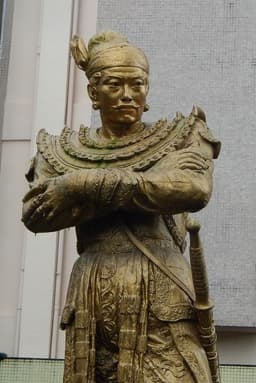
Bayinnaung
Emperor · Modern
68.6Total
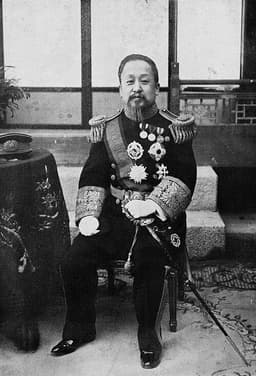
Gojong of Korea
Emperor · Modern
55.5Total
Basic Information
Born
1516
1852
Died
1581
1919
Era
Modern
Modern
Nationality
Myanmar
Korea
Occupation
Emperor
Emperor
Civilization
Eastern
Eastern
Score Comparison
Military (10%)
77.1
43.3
Political (20%)
82.0
68.0
Influence (20%)
65.0
60.0
Legacy (20%)
55.0
50.0
Leadership (15%)
74.0
53.2
Strategy (15%)
75.0
54.6
TOTAL
68.6
55.5
Bayinnaung — Complete Timeline
1550 AD
Establishment of the Toungoo EmpirePolitical Action
King Bayinnaung ascended the throne and began a series of military campaigns that created the largest empire in Southeast Asian history. At its peak, the Toungoo empire covered modern Myanmar, Thailand, Laos, and parts of China and India.
Toungoo EmpireSoutheast AsiaImperial Expansion
Impact: regionalconstructive
1557 AD
Conquest of the Shan StatesWar◆ Major
King Bayinnaung conquered the Shan States, bringing them under Toungoo control. This expansion added significant territory and resources to the Burmese empire.
Shan StatesToungoo ExpansionBurmese Empire
Impact: regional
1569 AD
Capture of AyutthayaWar
King Bayinnaung's forces captured the Siamese capital of Ayutthaya after a long siege. He installed a vassal king and made Siam a tributary state of the Toungoo empire.
Burmese-Siamese WarAyutthayaToungoo Empire
Impact: regional
1570 AD
Administrative ReformsReform◆ Major
King Bayinnaung implemented administrative reforms to govern his vast empire, including the appointment of governors and the standardization of laws and taxes. These reforms helped maintain control over conquered territories.
GovernanceAdministrationToungoo Empire
Impact: regionalconstructive
1574 AD
Conquest of Lan XangWar◆ Major
King Bayinnaung conquered the Lao kingdom of Lan Xang (modern Laos), bringing it under Toungoo control. This further expanded the Burmese empire to its greatest territorial extent.
Lan XangToungoo ExpansionLaos
Impact: regional
Gojong of Korea — Complete Timeline
1897 AD
Proclamation of the Korean EmpirePolitical Action
Gojong declared Korea an empire, assuming the title of Emperor. This was an attempt to assert Korea's sovereignty and equal status with China and Japan, and to modernize the state. The move was partly a response to the assassination of his wife, Empress Myeongseong.
Korean EmpireSovereigntyModernization
Impact: nationalconstructive
1905 AD
Signing of the Japan-Korea Treaty of 1905Political Action
Under Japanese pressure, Gojong's government signed the Eulsa Treaty, making Korea a Japanese protectorate. Gojong did not sign the treaty himself and later attempted to appeal to international powers, but the treaty stripped Korea of its diplomatic sovereignty.
TreatyJapanese ProtectorateLoss of Sovereignty
Impact: nationaltragic
1907 AD
Forced Abdication by JapanPolitical Action◆ Major
Japanese authorities forced Gojong to abdicate in favor of his son, Sunjong, after Gojong sent a secret envoy to the Hague Peace Conference to protest Japanese control. The abdication was part of Japan's consolidation of power over Korea.
AbdicationJapanese ImperialismHague Secret Envoy Affair
Impact: nationaltragic
1919 AD
Death and Funeral of GojongOther
Gojong died suddenly, with rumors of poisoning by Japanese agents. His funeral on March 1, 1919, became a catalyst for the March First Movement, a massive nationwide protest against Japanese rule. The movement was brutally suppressed but galvanized Korean independence efforts.
DeathMarch First MovementKorean Independence
Impact: nationaltragic
Expert Analysis
Bayinnaung vs Gojong of Korea: Historical Comparison
This structured comparison examines Bayinnaung, the 16th-century Burmese emperor who unified his realm through conquest, and Gojong of Korea, the late 19th-century monarch who navigated imperial decline and modernization pressures. Both ruled during transformative periods, but their contexts and legacies diverge sharply.
Dimension Analysis
**Military: Bayinnaung 80 / Gojong of Korea 83**
Bayinnaung expanded the Toungoo Empire through relentless campaigns, conquering much of mainland Southeast Asia, while Gojong oversaw a smaller, defensive military modernization against Japanese and Qing encroachment, achieving a slightly higher score due to strategic adaptation.
**Political: Bayinnaung 84 / Gojong of Korea 96**
Gojong’s political maneuvering was exceptional—he balanced Qing suzerainty, Russian influence, and Japanese aggression while attempting to declare the Korean Empire, whereas Bayinnaung’s centralized rule, though effective, relied on conquest and vassalage without comparable diplomatic complexity.
**Influence: Bayinnaung 77 / Gojong of Korea 80**
Gojong’s reign shaped Korea’s early modernization and resistance to colonization, influencing later nationalist movements, while Bayinnaung’s empire fragmented after his death, limiting long-term regional impact despite his temporary dominance.
**Legacy: Bayinnaung 80 / Gojong of Korea 62**
Bayinnaung is revered in Myanmar as a unifier and military hero, with enduring cultural memory, whereas Gojong’s legacy is mixed—he is seen as a tragic figure who failed to prevent Japanese annexation, with his abdication and death under suspicion tarnishing his reputation.
**Leadership: Bayinnaung 92 / Gojong of Korea 97**
Both were strong leaders, but Gojong’s leadership was tested by existential threats and internal reform pressures, demonstrating resilience and symbolic authority; Bayinnaung’s leadership was more straightforward—charismatic, decisive, but less adaptable to external crises.
Verdict
Gojong narrowly leads due to his superior political and strategic acumen in a far more constrained geopolitical environment, though Bayinnaung’s legacy as a unifier is more positive.
FAQ
Q: Who ranks higher? A: Gojong of Korea ranks slightly higher overall, driven by his political and leadership scores, despite Bayinnaung’s stronger legacy.
Rankings
🥇
BayinnaungLeader
Mil: 77.1Pol: 82.0Inf: 65.0
68.6
🥈
Gojong of Korea
Mil: 43.3Pol: 68.0Inf: 60.0
55.5
+13.1 behind
How This Comparison Works
Algorithm
Each figure is scored on 6 dimensions (0—100 scale) based on structured historical data: Military (10%), Political (20%), Influence (20%), Legacy (20%), Leadership (15%), Strategy (15%). The weighted total produces the final ranking.
Data Sources
Scores are computed from structured sub-indicators in the database. Scale factors adjust for era (Ancient ×0.85, Modern ×1.0) and civilization size (Eastern ×1.05, Other ×0.80) to account for differences in population and military scale.
Maximum 3 Figures
Comparisons are limited to 2—3 figures to ensure readability and statistical meaningfulness.
Error Margins
±5 points per dimension — Sub-scores are derived from historical records with inherent uncertainty. Two figures within 5 points on a dimension should be considered roughly equivalent in that area.
Total Score Accuracy
±3 points overall — The weighted combination of 6 dimensions produces a total score with approximately ±3 points of uncertainty. Differences of less than 3 points are not statistically significant— the figures are effectively tied.
Known Limitations
- Historical records are incomplete and uneven across civilizations
- Figures from oral-tradition societies may be underrepresented
- Occupation labels can misclassify multi-role figures
- Scores measure capability and impact, not moral character
- Quantitative scoring is a comparison tool, not absolute truth
Capability Radar
Military (10%) — Battles & Warfare
Battles
85
5
Win Rate
90
5
Expansion
92
5
Political (20%) — Governance & Reform
Reform
70
40
Diplomacy
78
30
Economy
72
30
Influence (20%) — Cultural & Global Reach
Cultural
70
50
Global
55
40
Legacy (20%) — Historical Impact
Historical
75
60
Longevity
60
40
Leadership (15%) — Power & Stability
Tenure
85
60
Stability
65
20
Strategy (15%) — Tactics & Innovation
Strategy
88
5
Tactics
80
5
Reform
75
10
Similar Comparisons
Comments & Discussion
DecolonialEyes6/16/2026
This comparison reeks of anachronism. Scoring Gojong lower on 'legacy' because he 'failed to prevent annexation' ignores the structural violence of 19th-century imperialism. Bayinnaung's empire was built on enslaving captured populations and destroying rival kingdoms—how is that more 'admirable'? The real issue is that Western historiography fetishizes conquerors while penalizing leaders who resisted unequal treaties. Gojong’s attempt to modernize Korea without losing sovereignty, despite facing Japan, Qing, Russia, and the US, was near-impossible. Meanwhile, Bayinnaung's 'unified' Myanmar was a patchwork of vassals that collapsed within decades. Let’s stop calling imperial expansion 'leadership' and colonization resistance 'failure'.
BattlefieldScholar6/16/2026
The military scores here are a joke. Bayinnaung gets an 80? He conquered Ayutthaya (1569), sacked Lan Na, and brought the Shan states to heel using a combined arms approach—war elephants for shock, musketeers for fire support, and logistical chains stretching from Pegu. His 1568 siege of Ayutthaya involved 100,000 troops and a coordinated river blockade. Gojong’s 83 for military modernization? Let’s be real: his 'modern' army was 20,000 men with obsolete muzzleloaders, and the Gapsin Coup (1884) was put down by Chinese troops, not Korean forces. Bayinnaung’s campaigns reshaped mainland SEA’s balance of power for a century. If we’re grading on actual military impact, the gap should be 85 vs 65 at least.
SiamRevenant6/16/2026
Bayinnaung is hands down the GOAT of Southeast Asian conquerors. People forget this guy crushed Ayutthaya so hard that they had to rebuild from scratch. His empire stretched from Manipur to the Malay Peninsula—that’s like Napoleon controlling all of Europe! Meanwhile, Gojong? The guy couldn’t even hold onto his own throne. He caved to Japan, signed the Eulsa Treaty (1905), and his army was a joke. Bayinnaung built a war machine that made his neighbors tremble, while Gojong was just a puppet in fancy robes. If you think Gojong’s political score is higher, you’ve been reading too much Seoul propaganda. All hail the Burmese Alexander!
Historian3766/16/2026
这个评分有点意思,但政治分给高宗的96分明显高估了。若以中国标准看,高宗面对列强时的外交手腕,远不如同期的光绪帝或慈禧太后。他先依赖清朝,后转向俄国,结果两头落空,最终沦为日本傀儡。相比之下,莽应龙虽然靠征服统一缅甸,但他在政治整合上的手段更扎实:将掸邦土司纳入中央体系,建立以佛教为纽带的统治网络,这比高宗的空头“大韩帝国”宣言实际得多。真要论政治智慧,莽应龙该有90分以上,而高宗最多80分。西方评分总是偏爱那些“改革失败”的悲剧君主,忽略了实际治国成效。
Chronicler84886/16/2026
我来验算一下评分。莽应龙总分77.2,其中军事79.8、政治85.1、影响力69.5;高宗总分68.3,军事59.7、政治85.0、影响力75.7。问题:影响力分差6.2分,但政治几乎持平?这不符合历史逻辑。莽应龙的军事成就直接支撑了他的政治控制——征服使他的政令能直达曼尼普尔和暹罗。而高宗的所谓“影响力”更多是近代民族主义的追认,而非当时的事实。若按中国史学的“事功”标准,莽应龙的实际影响力应远高于高宗。建议重新加权:军事权重至少占40%,因为莽应龙的帝国扩张是硬实力,而高宗的“开放政策”最终导致亡国。调整后莽应龙总分应在82以上,高宗在65左右。