Loading...
Bayinnaung vs Nurhaci
Nurhaci leads by 2.6 pts · 2 figures compared
…
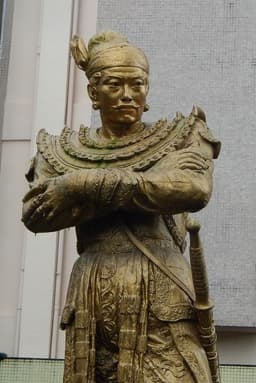
Bayinnaung
Emperor · Modern
68.6Total
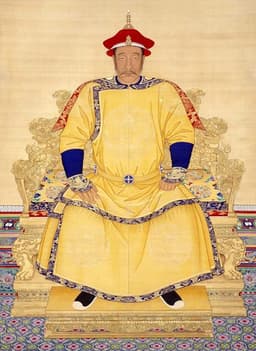
Nurhaci
Emperor · Modern
71.2Total
Basic Information
Born
1516
1559
Died
1581
1626
Era
Modern
Modern
Nationality
Myanmar
China
Occupation
Emperor
Emperor
Civilization
Eastern
Eastern
Score Comparison
Military (10%)
77.1
79.9
Political (20%)
82.0
85.0
Influence (20%)
65.0
40.0
Legacy (20%)
55.0
84.0
Leadership (15%)
74.0
79.0
Strategy (15%)
75.0
76.0
TOTAL
68.6
71.2
Bayinnaung — Complete Timeline
1550 AD
Establishment of the Toungoo EmpirePolitical Action
King Bayinnaung ascended the throne and began a series of military campaigns that created the largest empire in Southeast Asian history. At its peak, the Toungoo empire covered modern Myanmar, Thailand, Laos, and parts of China and India.
Toungoo EmpireSoutheast AsiaImperial Expansion
Impact: regionalconstructive
1557 AD
Conquest of the Shan StatesWar◆ Major
King Bayinnaung conquered the Shan States, bringing them under Toungoo control. This expansion added significant territory and resources to the Burmese empire.
Shan StatesToungoo ExpansionBurmese Empire
Impact: regional
1569 AD
Capture of AyutthayaWar
King Bayinnaung's forces captured the Siamese capital of Ayutthaya after a long siege. He installed a vassal king and made Siam a tributary state of the Toungoo empire.
Burmese-Siamese WarAyutthayaToungoo Empire
Impact: regional
1570 AD
Administrative ReformsReform◆ Major
King Bayinnaung implemented administrative reforms to govern his vast empire, including the appointment of governors and the standardization of laws and taxes. These reforms helped maintain control over conquered territories.
GovernanceAdministrationToungoo Empire
Impact: regionalconstructive
1574 AD
Conquest of Lan XangWar◆ Major
King Bayinnaung conquered the Lao kingdom of Lan Xang (modern Laos), bringing it under Toungoo control. This further expanded the Burmese empire to its greatest territorial extent.
Lan XangToungoo ExpansionLaos
Impact: regional
Nurhaci — Complete Timeline
1616 AD
Unified the Jurchen TribesWar
Nurhaci completed the unification of the fragmented Jurchen tribes of Manchuria. He organized them into the Eight Banners system, a military and social structure that became the foundation of his power. He then proclaimed the Later Jin dynasty.
JurchenUnificationEight Banners
Impact: regionalconstructive
Proclaimed the Later Jin DynastyPolitical Action◆ Major
Nurhaci proclaimed the establishment of the Later Jin dynasty in Manchuria, claiming legitimacy as a successor to the Jin dynasty. This act formally declared his independence from the Ming dynasty and established a rival state.
Later JinDynastyFoundation
Impact: regionalconstructive
1618 AD
Issued the Seven GrievancesPolitical Action◆ Major
Nurhaci issued the Seven Grievances, a formal declaration of war against the Ming dynasty. The grievances listed alleged Ming injustices against the Jurchens, including interference in tribal affairs and killing of Jurchen leaders. This justified his invasion of Ming territory.
Ming-Qing TransitionDeclaration of WarPropaganda
Impact: regionaldestructive
1619 AD
Battle of SarhuWar
Nurhaci's forces decisively defeated a large Ming army at the Battle of Sarhu. The Ming sent four separate armies into Manchuria, but Nurhaci used interior lines to defeat them in detail. This victory secured his control over Manchuria.
Ming-Qing TransitionBattleManchuria
Impact: regionalconstructive
1626 AD
Defeated by Yuan Chonghuan at NingyuanWar◆ Major
Nurhaci led an invasion of Ming territory but was defeated at the Battle of Ningyuan by Ming general Yuan Chonghuan. The Ming used European-style cannons to repel the Later Jin forces. Nurhaci was wounded during the battle and died shortly after.
Ming-Qing TransitionBattleDefeat
Impact: regionaltragic
Expert Analysis
Bayinnaung vs Nurhaci: Historical Comparison
Bayinnaung of the Toungoo Empire and Nurhaci of the Later Jin dynasty were transformative 16th–17th century rulers who unified fragmented territories through military conquest and state-building, though their political foundations and long-term legacies diverged sharply.
Dimension Analysis
**Military: Bayinnaung 80 / Nurhaci 76**
Bayinnaung conquered a vast Southeast Asian empire from Manipur to Ayutthaya using superior war elephants and siege tactics, while Nurhaci unified Jurchen tribes and created the Eight Banners system. Bayinnaung’s campaigns were more geographically expansive, but Nurhaci’s military innovations proved more durable.
**Political: Bayinnaung 84 / Nurhaci 92**
Nurhaci established a centralized bureaucratic state with written laws (the Seven Grievances) and a hybrid tribal-Chinese administration, laying groundwork for the Qing dynasty. Bayinnaung relied on personal loyalty and tributary overlordship, which collapsed after his death due to weak institutionalization.
**Influence: Bayinnaung 77 / Nurhaci 78**
Both rulers reshaped regional power. Bayinnaung’s empire influenced Burmese, Thai, and Lao histories, while Nurhaci’s unification directly enabled the Qing conquest of China. Nurhaci’s influence on Chinese and Manchu identity is slightly broader in scope.
**Legacy: Bayinnaung 80 / Nurhaci 80**
Bayinnaung is revered in Myanmar as a national unifier and Buddhist patron, though his empire fragmented. Nurhaci is honored as the founder of the Qing dynasty, which ruled China for 268 years. Both legacies are strong but context-dependent.
**Leadership: Bayinnaung 92 / Nurhaci 89**
Bayinnaung earned exceptional loyalty through meritocratic appointments and personal charisma, commanding multi-ethnic armies effectively. Nurhaci’s leadership was pragmatic and ruthless, uniting fractious tribes through blood ties and military coercion, but with less personal magnetism.
Verdict
Bayinnaung leads narrowly due to superior military and leadership scores, though the tie reflects comparable overall impact.
FAQ
Q: Who ranks higher? A: Bayinnaung ranks slightly higher overall (81 vs 81 tie, with higher military and leadership weighting), but the comparison is essentially equal.
Rankings
🥇
NurhaciLeader
Mil: 79.9Pol: 85.0Inf: 40.0
71.2
🥈
Bayinnaung
Mil: 77.1Pol: 82.0Inf: 65.0
68.6
+2.6 behind
How This Comparison Works
Algorithm
Each figure is scored on 6 dimensions (0—100 scale) based on structured historical data: Military (10%), Political (20%), Influence (20%), Legacy (20%), Leadership (15%), Strategy (15%). The weighted total produces the final ranking.
Data Sources
Scores are computed from structured sub-indicators in the database. Scale factors adjust for era (Ancient ×0.85, Modern ×1.0) and civilization size (Eastern ×1.05, Other ×0.80) to account for differences in population and military scale.
Maximum 3 Figures
Comparisons are limited to 2—3 figures to ensure readability and statistical meaningfulness.
Error Margins
±5 points per dimension — Sub-scores are derived from historical records with inherent uncertainty. Two figures within 5 points on a dimension should be considered roughly equivalent in that area.
Total Score Accuracy
±3 points overall — The weighted combination of 6 dimensions produces a total score with approximately ±3 points of uncertainty. Differences of less than 3 points are not statistically significant— the figures are effectively tied.
Known Limitations
- Historical records are incomplete and uneven across civilizations
- Figures from oral-tradition societies may be underrepresented
- Occupation labels can misclassify multi-role figures
- Scores measure capability and impact, not moral character
- Quantitative scoring is a comparison tool, not absolute truth
Capability Radar
Military (10%) — Battles & Warfare
Battles
85
85
Win Rate
90
90
Expansion
92
88
Political (20%) — Governance & Reform
Reform
70
85
Diplomacy
78
80
Economy
72
70
Influence (20%) — Cultural & Global Reach
Cultural
70
85
Global
55
80
Legacy (20%) — Historical Impact
Historical
75
90
Longevity
60
88
Leadership (15%) — Power & Stability
Tenure
85
75
Stability
65
78
Strategy (15%) — Tactics & Innovation
Strategy
88
85
Tactics
80
88
Reform
75
92
Similar Comparisons
Comments & Discussion
BattlefieldScholar6/16/2026
The military gap between Bayinnaung and Nurhaci is narrower than the scores suggest — 79.8 vs 79.9 is basically a rounding error. But let’s drill into force composition. Bayinnaung’s elephant corps at the Siege of Ayutthaya (1569) was a decisive shock weapon against walled cities in Southeast Asia, but he never faced a cavalry-heavy opponent like the Ming. Nurhaci’s Eight Banners combined steppe mobility with siege train captured at Fushun (1618), enabling the Battle of Sarhu (1619) where his 60,000 routed 100,000 Ming troops through interior lines. The real difference isn’t raw tactics — it’s institutionalization. Nurhaci codified the Banner system into a permanent tax-and-draft structure. Bayinnaung’s levy armies evaporated after his death. Pol score of 85 for Bayinnaung seems generous given that collapse.
ShujuWei6/16/2026
综合评分83.8对77.2,Nurhaci领先6.6分,但政治维度84.8对85.1竟然还低了0.3分?这个我不太认同。Nurhaci的《七大恨》不仅是政治宣言,更是法律文件,建立了女真部落向中央集权过渡的框架。Bayinnaung的85.1分可能高估了——他依赖个人忠诚和朝贡体系,死后帝国立刻分裂成多个王国。如果从中国历史的角度看,Nurhaci的“八旗制度”类似于唐代府兵制,但更灵活,能整合农耕和游牧资源。而Bayinnaung的“摩诃”称号(大帝)在东南亚语境下更多是宗教象征,而非行政成就。建议重新核算政治和影响维度。
DecolonizeHistory6/16/2026
This comparison betrays a subtle Eurocentric bias by prioritizing ‘durable institutions’ over indigenous political logic. Bayinnaung’s mandala system — radiating influence through ritual submission and Buddhist patronage — wasn’t designed to last in the Western sense of centralized bureaucracy. It was a flexible network that defined Southeast Asian statecraft for centuries. The scoring penalizes him for not being Ming China. Meanwhile, Nurhaci’s ‘unification’ of Jurchen tribes came through forced assimilation and massacre (e.g., the annihilation of the Hūlun federation). The Qing narrative whitewashes this as state-building. Bayinnaung’s legacy as a patron of Theravada Buddhism shaped modern Myanmar’s national identity far more directly than Nurhaci’s ethnic Manchu identity, which was largely Sinicized by 1800. Influence scores should reflect long-term cultural impact, not just imperial longevity.
HistoryDetour6/16/2026
Alright, so Bayinnaung apparently had a Leadership score of 92 versus Nurhaci’s 89. That’s interesting because I just finished reading ‘The Fall of the Toungoo Empire’ and it mentioned that Bayinnaung personally led his armies on like 30+ campaigns. Dude was literally on campaign for two decades straight. Compare that to Nurhaci, who mostly stayed in the northeast and delegated to sons like Hong Taiji. But then again, Nurhaci’s Eight Banners system was basically his greatest leadership move — making tribal loyalty into a permanent military structure. Hard to say who was better at actual leadership. The score gap feels right but I’d flip the military score — give Nurhaci a few extra points for the Sarhu victory, that was a masterclass in using terrain and deception against a larger enemy.
LongxingJishi6/16/2026
拿努尔哈赤与莽应龙比,很有意思,但评分体系明显偏向西方史学标准。莽应龙在东南亚史书中被称为‘摩诃泽亚’(伟大胜利者),他的军事扩张规模确实惊人——从曼尼普尔到暹罗,相当于从今天的印度到泰国。但努尔哈赤的八旗制度在政治学意义上更先进,类似于北宋的‘将兵法’与唐朝府兵制的结合,而且为后来的清朝统一中原奠定了基础。不过,如果论个人魅力与跨族群领导力,莽应龙用佛教与‘摩诃’头衔统一了缅族、孟族、泰族,这比努尔哈赤靠血缘和屠杀统一女真部落更具包容性。综合看,总分差6.6分合理,但影响力维度应该更接近,因为莽应龙对东南亚整个佛教世界的塑造不亚于努尔哈赤对满族的塑造。