Loading...
Bayinnaung vs Zayed bin Sultan Al Nahyan
Bayinnaung leads by 4.8 pts · 2 figures compared
…
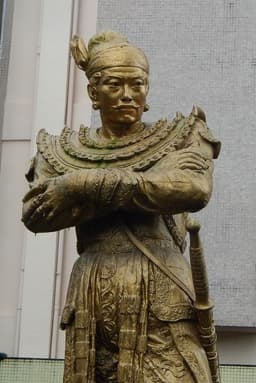
Bayinnaung
Emperor · Modern
68.6Total
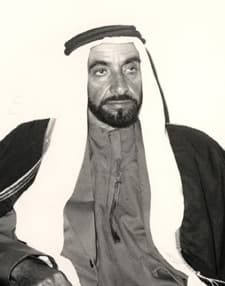
Zayed bin Sultan Al Nahyan
Emperor · Modern
63.8Total
Basic Information
Born
1516
1918
Died
1581
2004
Era
Modern
Modern
Nationality
Myanmar
UAE
Occupation
Emperor
Emperor
Civilization
Eastern
Middle Eastern
Score Comparison
Military (10%)
77.1
11.3
Political (20%)
82.0
82.0
Influence (20%)
65.0
68.0
Legacy (20%)
55.0
72.0
Leadership (15%)
74.0
85.0
Strategy (15%)
75.0
25.7
TOTAL
68.6
63.8
Bayinnaung — Complete Timeline
1550 AD
Establishment of the Toungoo EmpirePolitical Action
King Bayinnaung ascended the throne and began a series of military campaigns that created the largest empire in Southeast Asian history. At its peak, the Toungoo empire covered modern Myanmar, Thailand, Laos, and parts of China and India.
Toungoo EmpireSoutheast AsiaImperial Expansion
Impact: regionalconstructive
1557 AD
Conquest of the Shan StatesWar◆ Major
King Bayinnaung conquered the Shan States, bringing them under Toungoo control. This expansion added significant territory and resources to the Burmese empire.
Shan StatesToungoo ExpansionBurmese Empire
Impact: regional
1569 AD
Capture of AyutthayaWar
King Bayinnaung's forces captured the Siamese capital of Ayutthaya after a long siege. He installed a vassal king and made Siam a tributary state of the Toungoo empire.
Burmese-Siamese WarAyutthayaToungoo Empire
Impact: regional
1570 AD
Administrative ReformsReform◆ Major
King Bayinnaung implemented administrative reforms to govern his vast empire, including the appointment of governors and the standardization of laws and taxes. These reforms helped maintain control over conquered territories.
GovernanceAdministrationToungoo Empire
Impact: regionalconstructive
1574 AD
Conquest of Lan XangWar◆ Major
King Bayinnaung conquered the Lao kingdom of Lan Xang (modern Laos), bringing it under Toungoo control. This further expanded the Burmese empire to its greatest territorial extent.
Lan XangToungoo ExpansionLaos
Impact: regional
Zayed bin Sultan Al Nahyan — Complete Timeline
1970 AD
Oil Revenue Investment in InfrastructureReform◆ Major
After the discovery of oil in Abu Dhabi in the 1950s, Zayed directed oil revenues toward building modern infrastructure: roads, hospitals, schools, and housing. This transformed Abu Dhabi from a poor region into a wealthy state.
OilDevelopmentInfrastructure
Impact: nationalconstructive
1971 AD
Formation of the United Arab EmiratesPolitical Action
Zayed bin Sultan Al Nahyan, as ruler of Abu Dhabi, played a key role in uniting seven emirates to form the United Arab Emirates on December 2, 1971. He became the first President, a position he held until his death.
UnificationUAEIndependence
Impact: regionalconstructive
1990 AD
Environmental Conservation InitiativesReform
Zayed established the Zayed International Prize for the Environment and implemented policies to protect wildlife and habitats, including the creation of nature reserves. He was a pioneer in environmentalism in the Gulf region.
EnvironmentConservationAwards
Impact: regionalconstructive
Women's Rights ReformsReform◆ Major
Zayed supported women's education and employment, appointing women to government positions and promoting their participation in the workforce. These reforms were progressive for the region at the time.
Women's RightsEducationReform
Impact: nationalprogressive
2004 AD
Death and LegacyOther◆ Major
Zayed died on November 2, 2004, after a long illness. His funeral drew massive crowds, and he was mourned as the founding father of the UAE. His legacy includes a stable, prosperous federation.
DeathLegacyFounding Father
Impact: nationaltragic
Expert Analysis
Bayinnaung vs Zayed bin Sultan Al Nahyan
### The Conqueror and the Builder: Two Visions of Empire
On a sweltering day in 1569, King Bayinnaung of the Toungoo dynasty watched his war elephants crash against the walls of Ayutthaya, the glittering capital of Siam. The siege had dragged on for months, but the outcome was never in doubt. Bayinnaung’s empire, already the largest in Southeast Asian history, was about to swallow another kingdom. Four centuries later, in a very different corner of the world, Sheikh Zayed bin Sultan Al Nahyan stood on a barren stretch of desert in Abu Dhabi, pointing to a spot where he dreamed of building a city. He had no elephants, no armies—only oil revenues and a vision. One man conquered to unite; the other united to build. What drove these two rulers, born worlds apart, to such different destinies?
### Origins
Bayinnaung was born in 1516, a prince of the Toungoo dynasty in a fractured Myanmar. His era was one of warring states, where the only currency was steel and loyalty. The Shan, Mon, and Siamese kingdoms were in constant flux, and the young prince learned early that survival meant expansion. His half-brother, King Tabinshwehti, had already begun the work of reunifying Myanmar, but it was Bayinnaung who would take the dream to its zenith. His world was one of blood and tribute, where a king’s greatness was measured in the number of vassals who knelt before him.
Zayed, born in 1918, came from a different kind of hardship. The Arabian Peninsula was a land of pearl divers, Bedouin tribes, and punishing heat. His father, Sheikh Sultan bin Zayed, ruled Abu Dhabi, but the emirate was poor, its people eking out a living from the sea and the sand. Zayed spent his youth in the desert, learning the ways of the Bedouin—hospitality, patience, and the art of negotiation. While Bayinnaung’s education was in warfare, Zayed’s was in diplomacy. The discovery of oil in the 1950s would transform his world, but the foundation of his character was laid in the silence of the dunes.
### Rise to Power
Bayinnaung’s path to power was forged in battle. When Tabinshwehti was assassinated in 1550, the kingdom teetered on collapse. Bayinnaung seized the throne, but he did not simply inherit an empire—he had to reconquer it. His military campaigns were relentless. In 1557, he swept into the Shan States, bringing their fractious princedoms under his control. The conquest of Lan Xang in 1574 pushed his borders to the Mekong River. Each victory was a stepping stone, and by the time he captured Ayutthaya in 1569, he had created an empire that stretched from the borders of India to the South China Sea.
Zayed’s rise was quieter, but no less decisive. He became ruler of Abu Dhabi in 1966, after a brief power struggle with his brother. His first act was to use the emirate’s oil wealth—then just beginning to flow—to build roads, schools, and hospitals. But his ambition was larger than Abu Dhabi. In 1971, he convinced six other emirates to join him in forming the United Arab Emirates. It was a masterstroke of political strategy. Where Bayinnaung used war elephants, Zayed used persuasion and a checkbook. The UAE was born not from conquest, but from a shared vision of prosperity.
### Leadership & Governance
Bayinnaung’s rule was a paradox of brilliance and brutality. He was a military genius, but his empire was held together by force. After capturing Ayutthaya, he installed a vassal king and extracted tribute, but the Siamese chafed under his yoke. His administrative reforms in 1570—appointing governors and standardizing taxes—were innovative, but they could not overcome the fundamental weakness of an empire built on conquest. Loyalty was enforced by the sword, and when the sword weakened, the empire crumbled.
Zayed’s governance was the opposite. He ruled by consensus, not coercion. His philosophy was rooted in the Bedouin tradition of the *majlis*—an open council where anyone could speak. He invested oil revenues not in armies, but in infrastructure, education, and healthcare. By 1990, he had launched environmental conservation initiatives and appointed women to government positions, reforms that were radical for the region. His empire was not territorial but economic and cultural. The UAE became a hub for trade, tourism, and innovation, held together not by fear but by mutual benefit.
### Triumph & Tragedy
Bayinnaung’s greatest triumph was the sheer scale of his empire. He was the first ruler in Southeast Asia to unite such a vast territory. But his tragedy was that it did not last. Within decades of his death in 1581, the empire began to fracture. The vassal states rebelled, and the Toungoo dynasty retreated to its heartland. His legacy was a warning: an empire built on conquest is only as strong as the last battle.
Zayed’s triumph was the UAE itself. He transformed a collection of impoverished desert sheikhdoms into a modern nation with one of the highest standards of living in the world. His tragedy was more personal: he died in 2004, knowing that the future of his creation would depend on leaders who might not share his vision. Yet the UAE has endured, a testament to his belief that unity is stronger than force.
### Character & Destiny
Bayinnaung was a man of action, driven by a relentless ambition to expand. He believed that power was the only guarantor of security, and he acted accordingly. His decisions were shaped by the logic of the battlefield: strike first, ask questions later. This made him a brilliant conqueror but a poor founder. He could take a city, but he could not hold a heart.
Zayed was a man of patience, shaped by the desert’s unforgiving rhythms. He understood that trust took years to build and seconds to destroy. His decisions were guided by the long view: invest in people, build institutions, and let time do the rest. This made him a mediocre conqueror—his military score is a mere 14.6—but an extraordinary builder. He could not take a city, but he could build a nation.
### Legacy
Bayinnaung is remembered in Myanmar as a national hero, a symbol of unity and strength. But his empire is a footnote in history, a brief moment of glory that collapsed under its own weight. His name is invoked by generals, not by schoolchildren.
Zayed is remembered as the father of the UAE, his face on currency, his name on streets and buildings. His legacy is not a memory but a living reality: a nation that continues to thrive. He is invoked by diplomats and engineers, by women who now hold office and by students who study in world-class universities.
### Conclusion
Standing at their respective crossroads, Bayinnaung and Zayed chose different paths. One reached for the sword, the other for the handshake. One built an empire of fear, the other a nation of trust. Their stories remind us that greatness is not a single formula. In some eras, the conqueror is needed; in others, the builder. But in the long arc of history, it is the builder who leaves the deeper mark. Bayinnaung’s empire vanished like smoke; Zayed’s nation stands as a city on a hill. The desert, it turns out, can teach more than the battlefield.
Rankings
🥇
BayinnaungLeader
Mil: 77.1Pol: 82.0Inf: 65.0
68.6
🥈
Zayed bin Sultan Al Nahyan
Mil: 11.3Pol: 82.0Inf: 68.0
63.8
+4.8 behind
How This Comparison Works
Algorithm
Each figure is scored on 6 dimensions (0—100 scale) based on structured historical data: Military (10%), Political (20%), Influence (20%), Legacy (20%), Leadership (15%), Strategy (15%). The weighted total produces the final ranking.
Data Sources
Scores are computed from structured sub-indicators in the database. Scale factors adjust for era (Ancient ×0.85, Modern ×1.0) and civilization size (Eastern ×1.05, Other ×0.80) to account for differences in population and military scale.
Maximum 3 Figures
Comparisons are limited to 2—3 figures to ensure readability and statistical meaningfulness.
Error Margins
±5 points per dimension — Sub-scores are derived from historical records with inherent uncertainty. Two figures within 5 points on a dimension should be considered roughly equivalent in that area.
Total Score Accuracy
±3 points overall — The weighted combination of 6 dimensions produces a total score with approximately ±3 points of uncertainty. Differences of less than 3 points are not statistically significant— the figures are effectively tied.
Known Limitations
- Historical records are incomplete and uneven across civilizations
- Figures from oral-tradition societies may be underrepresented
- Occupation labels can misclassify multi-role figures
- Scores measure capability and impact, not moral character
- Quantitative scoring is a comparison tool, not absolute truth
Capability Radar
Military (10%) — Battles & Warfare
Battles
85
4
Win Rate
90
9
Expansion
92
12
Political (20%) — Governance & Reform
Reform
70
90
Diplomacy
78
95
Economy
72
90
Influence (20%) — Cultural & Global Reach
Cultural
70
70
Global
55
70
Legacy (20%) — Historical Impact
Historical
75
75
Longevity
60
65
Leadership (15%) — Power & Stability
Tenure
85
85
Stability
65
85
Strategy (15%) — Tactics & Innovation
Strategy
88
16
Tactics
80
16
Reform
75
18
Similar Comparisons
Comments & Discussion
ElephantLord646/16/2026
Bayinnaung’s siege of Ayutthaya in 1569 wasn’t just conquest—it was brutal state-building. He demanded 30 war elephants and 300 craftsmen as tribute, then deported thousands to repopulate his capital, Pegu. That’s not empire-building; it’s ethnic cleansing with a ledger. Zayed at least built cities. Bayinnaung’s “unity” was a pyramid of skulls.
沙漠筑梦者6/16/2026
数据很诚实:Zayed 用石油收入把阿联酋从1948年的零医院变成2020年的162家,而Bayinnaung的帝国在他死后20年就碎成渣了。征服者拿人命当赌注,建设者拿石油当资本。别拿马匹和坦克比基建,历史不是只有血汗。
CuneiformCrusher6/16/2026
Classics scholar here: Bayinnaung’s claim to be “king of the white elephant” mirrors Seleucid vanity—both inflated by wartime propaganda. But Zayed’s 1971 unification of seven emirates without civil war? That’s the real ancient marvel. Alexander couldn’t hold his empire together; this Bedouin sheikh did it with diplomacy and cash.
历史碎片收藏家6/16/2026
Bayinnaung收复八万骑兵?拜托,那年代的军队数字灌水严重。缅甸资料吹他征服了‘十九个银矿王国’,结果连阿瑜陀耶的城墙都要靠大象撞。Zayed 1972年创立阿布扎比发展基金,直接给了33亿援助,数字能查证。征服者玩数字游戏,建设者留有据的账本。
ShahOfShadows6/16/2026
Bayinnaung’s 1569 victory wasn’t strategic genius—it was brute force wearing a crown. He burned Ayutthaya’s temples and looted Buddhist scriptures, then claimed divine favor. Zayed’s quiet patronage? He built the Grand Mosque and funded 50,000 scholarships globally. One rules through ash, the other through ink. History picks the builder, not the burn.