Loading...
Analysis will be generated on first visit.
Scores and timeline are available below. The page will refresh automatically when ready.
Benazir Bhutto vs Julius Caesar
Julius Caesar leads by 17.1 pts · 2 figures compared
…

Benazir Bhutto
Politician · Modern
66.2Total
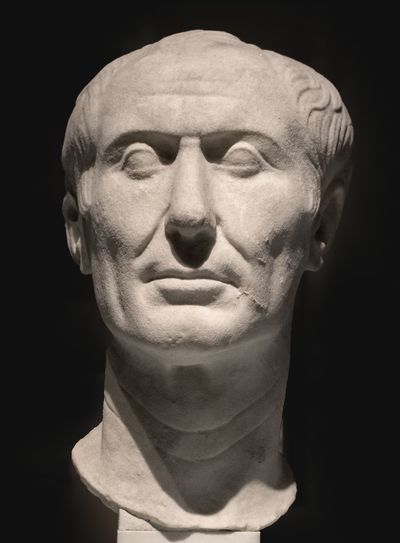
Julius Caesar
General · Ancient
83.3Total
Basic Information
Born
1953
-100
Died
—
-44
Era
Modern
Ancient
Nationality
Pakistan
Roman Republic
Occupation
Politician
General
Civilization
Indian
Western
Score Comparison
Military (10%)
52.2
88.0
Political (20%)
64.0
78.0
Influence (20%)
76.5
85.0
Legacy (20%)
66.1
82.0
Leadership (15%)
72.7
82.0
Strategy (15%)
58.7
88.0
TOTAL
66.2
83.3
Rankings
🥇
Julius CaesarLeader
Mil: 88.0Pol: 78.0Inf: 85.0
83.3
🥈
Benazir Bhutto
Mil: 52.2Pol: 64.0Inf: 76.5
66.2
+17.1 behind
How This Comparison Works
Algorithm
Each figure is scored on 6 dimensions (0—100 scale) based on structured historical data: Military (10%), Political (20%), Influence (20%), Legacy (20%), Leadership (15%), Strategy (15%). The weighted total produces the final ranking.
Data Sources
Scores are computed from structured sub-indicators in the database. Scale factors adjust for era (Ancient ×0.85, Modern ×1.0) and civilization size (Eastern ×1.05, Other ×0.80) to account for differences in population and military scale.
Maximum 3 Figures
Comparisons are limited to 2—3 figures to ensure readability and statistical meaningfulness.
Error Margins
±5 points per dimension — Sub-scores are derived from historical records with inherent uncertainty. Two figures within 5 points on a dimension should be considered roughly equivalent in that area.
Total Score Accuracy
±3 points overall — The weighted combination of 6 dimensions produces a total score with approximately ±3 points of uncertainty. Differences of less than 3 points are not statistically significant— the figures are effectively tied.
Known Limitations
- Historical records are incomplete and uneven across civilizations
- Figures from oral-tradition societies may be underrepresented
- Occupation labels can misclassify multi-role figures
- Scores measure capability and impact, not moral character
- Quantitative scoring is a comparison tool, not absolute truth
Capability Radar
Military (10%) — Battles & Warfare
Battles
44
95
Win Rate
44
92
Expansion
47
97
Political (20%) — Governance & Reform
Reform
45
90
Diplomacy
55
85
Economy
30
82
Influence (20%) — Cultural & Global Reach
Cultural
60
88
Global
60
94
Legacy (20%) — Historical Impact
Historical
55
95
Longevity
40
96
Leadership (15%) — Power & Stability
Tenure
40
75
Stability
20
60
Strategy (15%) — Tactics & Innovation
Strategy
53
94
Tactics
56
96
Reform
57
88
Analysis will be generated on first visit.
Scores and timeline are available below. The page will refresh automatically when ready.
Benazir Bhutto — Complete Timeline
1988 AD
Elected Prime Minister of PakistanPolitical Action
Benazir Bhutto became the first female prime minister of Pakistan and the first woman to lead a Muslim-majority country. Her Pakistan People's Party won the elections after the death of Zia-ul-Haq. Her tenure was marked by economic challenges and political instability.
First Female PMDemocracy
Impact: globalprogressive
1990 AD
Dismissed from Office by President Ghulam Ishaq KhanPolitical Action◆ Major
President Ghulam Ishaq Khan dismissed Bhutto's government under Article 58(2)(b), citing corruption and mismanagement. The dismissal led to new elections, which she lost. This event highlighted the fragility of democratic governance in Pakistan.
DismissalPolitical Crisis
Impact: nationaldestructive
1993 AD
Re-elected Prime MinisterPolitical Action◆ Major
Bhutto returned to power after winning the 1993 general elections. Her second term focused on economic reforms and social development. However, her government faced allegations of corruption and nepotism, leading to another dismissal in 1996.
ElectionSecond Term
Impact: national
1999 AD
Exiled to DubaiPolitical Action◆ Major
After the military coup by Pervez Musharraf, Bhutto went into self-exile in Dubai to avoid prosecution on corruption charges. She remained in exile for nearly a decade, continuing to lead the PPP from abroad. Her exile weakened the party's domestic presence.
ExilePolitical Struggle
Impact: nationaltragic
2007 AD
Returned to Pakistan After ExilePolitical Action◆ Major
Bhutto returned to Pakistan after reaching a power-sharing agreement with President Musharraf. Her return was met with massive public rallies. She aimed to contest the 2008 elections. The event was overshadowed by a suicide bombing at her welcome procession in Karachi, killing over 130 people.
ReturnAssassination Attempt
Impact: nationaltragic
Assassinated in RawalpindiPolitical Action
Benazir Bhutto was assassinated in a suicide attack after a political rally in Rawalpindi. The attack killed at least 20 others. Her death triggered nationwide riots and international condemnation. The circumstances remain disputed, with allegations of government involvement.
AssassinationPolitical Violence
Impact: globaltragic
Similar Comparisons
Comments & Discussion
No comments yet. Be the first to share your thoughts!