Loading...
Benjamin Mkapa vs Murad Ali Shah
Benjamin Mkapa leads by 5.7 pts · 2 figures compared
…

Benjamin Mkapa
Politician · Modern
53.0Total
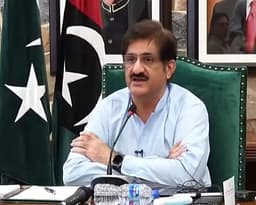
Murad Ali Shah
Politician · Modern
47.3Total
Basic Information
Born
1938
1962
Died
—
—
Era
Modern
Modern
Nationality
Tanzania
Pakistan
Occupation
Politician
Politician
Civilization
Other
Indian
Score Comparison
Military (10%)
25.9
10.9
Political (20%)
62.7
68.0
Influence (20%)
54.1
48.6
Legacy (20%)
45.8
37.5
Leadership (15%)
78.0
72.0
Strategy (15%)
43.7
36.9
TOTAL
53.0
47.3
Benjamin Mkapa — Complete Timeline
1995 AD
Elected President of TanzaniaPolitical Action◆ Major
Mkapa won the presidential election as the candidate of the Chama Cha Mapinduzi party, succeeding Ali Hassan Mwinyi. His victory marked a continuation of single-party dominance in Tanzania's transition to multiparty politics.
ElectionTanzaniaMultiparty Transition
Impact: national
1996 AD
Implemented Economic ReformsReform◆ Major
Mkapa launched a series of market-oriented economic reforms including privatization of state-owned enterprises, trade liberalization, and fiscal discipline. These policies were supported by the IMF and World Bank and aimed at stabilizing Tanzania's economy.
Economic ReformPrivatizationIMF
Impact: nationalconstructive
2000 AD
Re-elected President of TanzaniaPolitical Action
Mkapa won a second term in the presidential election with 71.7% of the vote. The election was criticized by opposition parties for irregularities, but Mkapa's victory was upheld by the courts.
ElectionTanzaniaControversy
Impact: national
2005 AD
Retired from PresidencyPolitical Action◆ Major
Mkapa stepped down after two terms, respecting constitutional term limits. He was succeeded by Jakaya Kikwete. His peaceful transfer of power was noted as a positive example in the region.
Term LimitsPeaceful TransitionTanzania
Impact: nationalconstructive
Murad Ali Shah — Complete Timeline
2016 AD
Elected Chief Minister of SindhPolitical Action◆ Major
Murad Ali Shah became the Chief Minister of Sindh after the death of his predecessor. He has since been re-elected, leading the PPP government in the province and focusing on infrastructure and social development.
Chief MinisterSindhPPP
Impact: regionalconstructive
2017 AD
Launched Karachi Transformation PlanReform◆ Major
Shah initiated the Karachi Transformation Plan, a comprehensive development project aimed at improving infrastructure, water supply, and transport in Karachi. The plan faced delays and funding issues but represented a major effort to address urban challenges.
KarachiUrban DevelopmentInfrastructure
Impact: regionalconstructive
2020 AD
Managed COVID-19 Response in SindhPolitical Action◆ Major
Shah led Sindh's response to the COVID-19 pandemic, implementing lockdowns and health measures. His approach was praised for being proactive but also criticized for economic impacts and coordination issues with the federal government.
COVID-19Pandemic ResponseSindh
Impact: regionalconstructive
2022 AD
Survived No-Confidence MotionPolitical Action
Shah faced a no-confidence motion in the Sindh Assembly, which he survived due to PPP's majority. The motion was part of broader political turmoil following the ouster of Prime Minister Imran Khan.
No-ConfidenceSindh AssemblyPolitical Turmoil
Impact: regional
Expert Analysis
Origins
Benjamin Mkapa was born in 1938 in Mtwara, Tanganyika (now Tanzania). He studied at Makerere University in Uganda, earning a Bachelor of Arts in English, and later worked as a journalist and diplomat. His early career included serving as editor of the government newspaper and as press secretary to President Julius Nyerere. Mkapa's background in media and diplomacy shaped his communication skills and political acumen.
Murad Ali Shah was born in 1961 in Karachi, Pakistan. He is the son of Abdullah Shah, a prominent politician. Shah earned a degree in civil engineering from NED University of Engineering and Technology, Karachi. He initially worked as an engineer before entering politics. His technical background influenced his focus on infrastructure and development projects.
Rise to Power
Mkapa's rise began under President Nyerere, serving as Minister of Foreign Affairs (1977–1980) and later as Minister of Information. He was elected President of Tanzania in 1995 as the candidate of the Chama Cha Mapinduzi (CCM) party, succeeding Ali Hassan Mwinyi. His victory was part of a peaceful transition of power. Mkapa was re-elected in 2000 with 71.7% of the vote, despite opposition allegations of irregularities.
Shah entered politics after his father's death, winning a seat in the Sindh Assembly in 2002. He served as Minister for Local Government and later as Senior Minister. In 2016, he became Chief Minister of Sindh after the death of his predecessor, Syed Qaim Ali Shah. He was re-elected in 2018 and again in 2023, leading the Pakistan Peoples Party (PPP) government in Sindh.
Leadership & Governance
Mkapa's leadership style was technocratic and reform-oriented. He implemented structural adjustment programs under the IMF and World Bank, privatizing state-owned enterprises and liberalizing trade. His governance focused on economic growth, inflation control, and foreign investment. However, his reforms faced criticism for increasing inequality and corruption. Mkapa's political score is 62.7, reflecting his ability to navigate Tanzania's single-party dominance.
Shah's leadership is marked by infrastructure development and crisis management. He launched the Karachi Transformation Plan (KTP) in 2016, a $1.5 billion project for water supply, drainage, and roads. He also led Sindh's COVID-19 response, implementing early lockdowns and health measures, which earned him a leadership score of 72.0. However, his governance has been criticized for inefficiency and political patronage. His political score is 68.0.
Triumph & Tragedy
Mkapa's greatest success was stabilizing Tanzania's economy after years of stagnation. Under his tenure, GDP growth averaged 5% per year, and inflation dropped from 30% to single digits. He also oversaw a peaceful transfer of power in 2005. However, his legacy is tarnished by rising corruption and poverty reduction that lagged behind growth. His legacy score is 45.8.
Shah's triumph includes the KTP, which improved Karachi's infrastructure, and his COVID-19 response, which was praised for its proactive measures. However, his administration has struggled with water shortages, power outages, and law and order issues in Karachi. His legacy score is 37.5, reflecting limited long-term impact outside Sindh.
Character & Destiny
Mkapa was known as a disciplined, no-nonsense leader. He was a close ally of Nyerere and maintained CCM's dominance. His decision to step down after two terms respected term limits, a rare feat in Africa. However, his authoritarian tendencies and tolerance of corruption undermined his reforms.
Shah is an engineer-politician, often described as pragmatic and reserved. He survived a no-confidence motion in 2022 amid political turmoil in Pakistan. His destiny is tied to the PPP's fortunes in Sindh, where he remains a key figure.
Legacy
Mkapa's economic reforms set the stage for Tanzania's sustained growth in the 2000s. His peaceful exit from power reinforced democratic norms. However, his legacy is mixed due to corruption. He is remembered as a reformer who modernized Tanzania's economy.
Shah's legacy is still evolving. The KTP has improved Karachi's infrastructure, but many projects remain incomplete. He is likely to be remembered as a competent administrator within Sindh, but his national influence is limited.
Conclusion
Benjamin Mkapa had a greater impact than Murad Ali Shah. Mkapa's total score of 53.0 exceeds Shah's 47.3, and his reforms transformed Tanzania's economy. Shah's achievements are more localized and less transformative. Mkapa's influence extends beyond his tenure, while Shah's legacy is constrained by Pakistan's political instability. Therefore, Mkapa is the more significant figure.
Rankings
🥇
Benjamin MkapaLeader
Mil: 25.9Pol: 62.7Inf: 54.1
53.0
🥈
Murad Ali Shah
Mil: 10.9Pol: 68.0Inf: 48.6
47.3
+5.7 behind
How This Comparison Works
Algorithm
Each figure is scored on 6 dimensions (0—100 scale) based on structured historical data: Military (10%), Political (20%), Influence (20%), Legacy (20%), Leadership (15%), Strategy (15%). The weighted total produces the final ranking.
Data Sources
Scores are computed from structured sub-indicators in the database. Scale factors adjust for era (Ancient ×0.85, Modern ×1.0) and civilization size (Eastern ×1.05, Other ×0.80) to account for differences in population and military scale.
Maximum 3 Figures
Comparisons are limited to 2—3 figures to ensure readability and statistical meaningfulness.
Error Margins
±5 points per dimension — Sub-scores are derived from historical records with inherent uncertainty. Two figures within 5 points on a dimension should be considered roughly equivalent in that area.
Total Score Accuracy
±3 points overall — The weighted combination of 6 dimensions produces a total score with approximately ±3 points of uncertainty. Differences of less than 3 points are not statistically significant— the figures are effectively tied.
Known Limitations
- Historical records are incomplete and uneven across civilizations
- Figures from oral-tradition societies may be underrepresented
- Occupation labels can misclassify multi-role figures
- Scores measure capability and impact, not moral character
- Quantitative scoring is a comparison tool, not absolute truth
Capability Radar
Military (10%) — Battles & Warfare
Battles
20
21
Win Rate
23
26
Expansion
28
29
Political (20%) — Governance & Reform
Reform
70
45
Diplomacy
60
50
Economy
75
55
Influence (20%) — Cultural & Global Reach
Cultural
30
20
Global
35
10
Legacy (20%) — Historical Impact
Historical
40
20
Longevity
35
15
Leadership (15%) — Power & Stability
Tenure
65
60
Stability
65
50
Strategy (15%) — Tactics & Innovation
Strategy
30
30
Tactics
33
39
Reform
37
38
Similar Comparisons
Comments & Discussion
No comments yet. Be the first to share your thoughts!