Loading...
Berke vs Yaqub al-Mansur
Berke leads by 6.8 pts · 2 figures compared
…
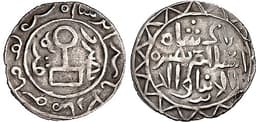
Berke
Emperor · Medieval
68.4Total
Yaqub al-Mansur
Emperor · Medieval
61.6Total
Basic Information
Born
1209
1160
Died
1266
1199
Era
Medieval
Medieval
Nationality
Golden Horde
Almohad Caliphate
Occupation
Emperor
Emperor
Civilization
Eastern
Middle Eastern
Score Comparison
Military (10%)
74.7
82.0
Political (20%)
57.0
62.7
Influence (20%)
68.0
55.0
Legacy (20%)
72.0
54.0
Leadership (15%)
72.0
68.0
Strategy (15%)
66.3
65.4
TOTAL
68.4
61.6
Berke — Complete Timeline
1257 AD
Conversion to IslamCultural
Berke converted to Islam, becoming the first Mongol ruler to adopt the faith. This decision created a religious divide within the Mongol Empire, aligning Berke with the Mamluk Sultanate and against the Ilkhanate, which remained Buddhist and Christian.
ReligionMongol EmpireIslam
Impact: regionalconstructive
1259 AD
Raid on Poland and HungaryWar
Under Berke's command, the Golden Horde launched a major raid into Poland and Hungary, led by general Burundai. The Mongols sacked Sandomierz and Krak
Mongol InvasionEastern EuropeRaid
Impact: regionaldestructive
1261 AD
Alliance with the MamluksPolitical Action◆ Major
Berke formed a diplomatic and military alliance with the Mamluk Sultan Baibars against the Ilkhanate. This alliance included trade agreements and joint military planning, and it helped the Mamluks resist Mongol invasions of Syria.
DiplomacyMamluk SultanateAnti-Ilkhanate
Impact: regionalconstructive
1262 AD
Berke–Hulagu WarWar◆ Major
Berke initiated war against his cousin Hulagu, ruler of the Ilkhanate, after Hulagu's sack of Baghdad and the execution of the Abbasid caliph. Berke allied with the Mamluks, leading to battles in the Caucasus that weakened both Mongol states.
Mongol Civil WarCaucasusMamluk Alliance
Impact: regionaldestructive
Yaqub al-Mansur — Complete Timeline
1184 AD
Accession as CaliphPolitical Action◆ Major
Yaqub al-Mansur succeeded his father Abu Yaqub Yusuf as Almohad caliph after the latter's death in battle. He inherited a stable empire and immediately faced challenges from Christian kingdoms in Iberia and internal Berber revolts.
Almohad CaliphateSuccessionDynasty
Impact: regional
1195 AD
Battle of AlarcosWar
Yaqub al-Mansur defeated King Alfonso VIII of Castile at the Battle of Alarcos in central Iberia. The Almohad victory was decisive, forcing Castile to sue for peace and halting Christian expansion for over a decade.
AlarcosAlmohad VictoryReconquista
Impact: regionalconstructive
1197 AD
Construction of the Koutoubia MosqueCultural◆ Major
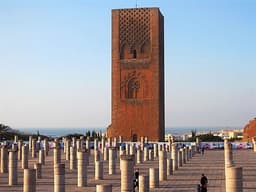
Yaqub al-Mansur commissioned the expansion and completion of the Koutoubia Mosque in Marrakesh. The mosque became a masterpiece of Almohad architecture, featuring a 77-meter minaret that served as a model for later structures like the Giralda in Seville.
ArchitectureKoutoubiaAlmohad Culture
Impact: regionalconstructive
Peace Treaty with CastilePolitical Action◆ Major
After the Battle of Alarcos, Yaqub al-Mansur negotiated a truce with Alfonso VIII of Castile. The treaty secured Almohad control over central Iberia and established a period of peace that allowed the caliph to focus on internal consolidation.
DiplomacyTruceAlmohad-Castile Relations
Impact: regionalconstructive
1198 AD
Suppression of Berber RevoltsWar
Yaqub al-Mansur crushed a series of revolts by Berber tribes in the Atlas Mountains and the Sahara. He executed rebel leaders and reasserted Almohad authority, but the campaigns drained the treasury and sowed resentment among the Berber population.
Berber RevoltAlmohad RepressionInternal Conflict
Impact: regionaldestructive
Expert Analysis
Origins
Berke (c. 1208–1266) was a grandson of Genghis Khan, born into the Mongol ruling family. His early life was shaped by the Mongol conquests, but he converted to Islam through the influence of Sufi missionaries, becoming the first Mongol ruler to adopt the faith. This decision set him apart from other Mongol leaders and created a religious divide within the empire. In contrast, Yaqub al-Mansur (c. 1160–1199) was born into the Almohad dynasty, the son of Caliph Abu Yaqub Yusuf. He was raised in a structured Islamic court and received a comprehensive education in theology, law, and military strategy. His father's reign was marked by expansion in the Iberian Peninsula, providing Yaqub with early exposure to governance and warfare.
Rise to Power
Berke rose to power after the death of his brother Batu Khan in 1255. As a commander of the Golden Horde, he consolidated control over the western Mongol territories. His conversion to Islam in 1252 was a turning point, as it alienated him from the traditionalist Mongol factions. In 1259, the Mongol Empire fragmented, and Berke asserted independence, leading to the Berke–Hulagu War (1262–1266) against his cousin Hulagu, ruler of the Ilkhanate. Yaqub al-Mansur succeeded his father in 1184 after Abu Yaqub Yusuf was killed in battle near Santarém. Yaqub quickly suppressed internal dissent and consolidated power. In 1195, he led the Almohad army to a decisive victory at the Battle of Alarcos, where his military score of 82.0 proved decisive against King Alfonso VIII of Castile. This victory forced Castile to pay tribute and secured Almohad dominance in Iberia for a decade.
Leadership & Governance
Berke's leadership was characterized by pragmatic alliances and religious identity. He allied with the Mamluk Sultan Baibars against the Ilkhanate, facilitating trade and military cooperation. However, his political score of 57.0 reflects his struggles with internal Mongol resistance to Islam. He also launched raids into Poland and Hungary, but these were more plundering expeditions than sustained conquests. Yaqub al-Mansur, with a political score of 62.7, focused on administrative consolidation. He commissioned the expansion of the Koutoubia Mosque in Marrakesh, a masterpiece of Almohad architecture. He suppressed Berber revolts in the Atlas Mountains, executing rebel leaders to maintain control. His governance emphasized religious orthodoxy and centralized authority, but his influence score of 55.0 indicates limited long-term impact beyond his reign.
Triumph & Tragedy
Berke's greatest triumph was his conversion to Islam, which established a precedent for later Mongol khans. His war against Hulagu, though indecisive, prevented the Ilkhanate from expanding into the Golden Horde's sphere. His alliance with the Mamluks contributed to the survival of Islamic states in the Middle East. However, his failure to fully integrate Islam into Mongol society led to internal strife after his death. His total score of 68.4 reflects a mixed legacy. Yaqub al-Mansur's triumph at Alarcos was his defining moment, with a military score of 82.0. He also expanded the Koutoubia Mosque, leaving a cultural mark. Yet his empire began to decline after his death, as his successors lacked his military and political acumen. His legacy score of 54.0 indicates that his achievements were not sustained.
Character & Destiny
Berke was a pragmatic and calculated leader, willing to break with Mongol tradition for strategic advantage. His conversion to Islam was both a personal choice and a political move to gain support from Muslim subjects. He was ruthless in war, as seen in the sack of Kraków, but also diplomatically astute. Yaqub al-Mansur was a devout Muslim and a capable military commander, but his rule was marked by intolerance toward non-conformist Berber tribes. His personality was more rigid than Berke's, which may have limited his ability to adapt. Historical assessments suggest Berke had greater strategic vision, reflected in his strategy score of 66.3 versus Yaqub's 65.4.
Legacy
Berke's conversion to Islam had a lasting impact on the Golden Horde, which eventually became a Muslim state. His alliance with the Mamluks shaped the geopolitics of the Middle East for decades. However, his military campaigns did not lead to permanent territorial gains. Yaqub al-Mansur's victory at Alarcos temporarily halted Christian reconquest in Iberia, but the Almohad Caliphate collapsed within three decades of his death. The Koutoubia Mosque remains a symbol of Almohad architecture, but his political legacy was ephemeral. In terms of influence score, Berke scores 68.0 versus Yaqub's 55.0, indicating broader impact.
Conclusion
While Yaqub al-Mansur achieved a higher military score (82.0 vs 74.7) and a decisive battlefield victory, Berke's overall impact was greater. His conversion to Islam altered the trajectory of the Mongol Empire and contributed to the spread of Islam in Eurasia. His political maneuvering and alliances had longer-lasting consequences than Yaqub's temporary dominance in Iberia. Berke's total score of 68.4 surpasses Yaqub's 61.6, and his legacy score of 72.0 versus 54.0 underscores his enduring significance. Therefore, Berke had a greater historical impact than Yaqub al-Mansur.
Rankings
🥇
BerkeLeader
Mil: 74.7Pol: 57.0Inf: 68.0
68.4
🥈
Yaqub al-Mansur
Mil: 82.0Pol: 62.7Inf: 55.0
61.6
+6.8 behind
How This Comparison Works
Algorithm
Each figure is scored on 6 dimensions (0—100 scale) based on structured historical data: Military (10%), Political (20%), Influence (20%), Legacy (20%), Leadership (15%), Strategy (15%). The weighted total produces the final ranking.
Data Sources
Scores are computed from structured sub-indicators in the database. Scale factors adjust for era (Ancient ×0.85, Modern ×1.0) and civilization size (Eastern ×1.05, Other ×0.80) to account for differences in population and military scale.
Maximum 3 Figures
Comparisons are limited to 2—3 figures to ensure readability and statistical meaningfulness.
Error Margins
±5 points per dimension — Sub-scores are derived from historical records with inherent uncertainty. Two figures within 5 points on a dimension should be considered roughly equivalent in that area.
Total Score Accuracy
±3 points overall — The weighted combination of 6 dimensions produces a total score with approximately ±3 points of uncertainty. Differences of less than 3 points are not statistically significant— the figures are effectively tied.
Known Limitations
- Historical records are incomplete and uneven across civilizations
- Figures from oral-tradition societies may be underrepresented
- Occupation labels can misclassify multi-role figures
- Scores measure capability and impact, not moral character
- Quantitative scoring is a comparison tool, not absolute truth
Capability Radar
Military (10%) — Battles & Warfare
Battles
75
75
Win Rate
70
80
Expansion
75
70
Political (20%) — Governance & Reform
Reform
68
60
Diplomacy
80
65
Economy
65
60
Influence (20%) — Cultural & Global Reach
Cultural
65
60
Global
65
55
Legacy (20%) — Historical Impact
Historical
70
65
Longevity
60
50
Leadership (15%) — Power & Stability
Tenure
70
70
Stability
60
55
Strategy (15%) — Tactics & Innovation
Strategy
78
75
Tactics
72
70
Reform
65
65
Similar Comparisons
Comments & Discussion
No comments yet. Be the first to share your thoughts!